
Find the right fireplace for your Nodaway County home.
Wood, gas, pellet, and electric fireplace resources for every city and rural community in Nodaway County—from Maryville to Skidmore. Find the right unit and connect with a trusted local hearth retailer.
Every Project Starts From One of These Five Situations
Northwest Missouri farm country, built for real winters.
Nodaway County sits in the rolling farmland of northwest Missouri, where a heating season on par with Madison, WI, and winter lows averaging 14°F put it on par with heating demands you'd see in a place like Madison, WI—not the mild-winter image some picture when they think of Missouri. The county's oak, hickory, walnut, and maple woodlots have supplied local firewood for generations, and with no air quality restrictions on wood burning here, that tradition continues without the curtailment days some other regions deal with. Maryville anchors the county as the largest town, but most of Nodaway County's roughly 14,000 residents live across smaller communities and farmsteads spread through the county.
What you'll find on this hub: hearth retailers, service technicians, and fuel suppliers serving every community in the county—from Maryville out to Ravenwood, Ovid, Hopkins, Clearmont, Elmo, Skidmore, and Burlington Junction. Pick your fuel below to drill into specifics—local dealers, installation costs, recommended units, and the resources that match your project. Whether you're heating a farmhouse on acreage or a home in town, this is the starting point.
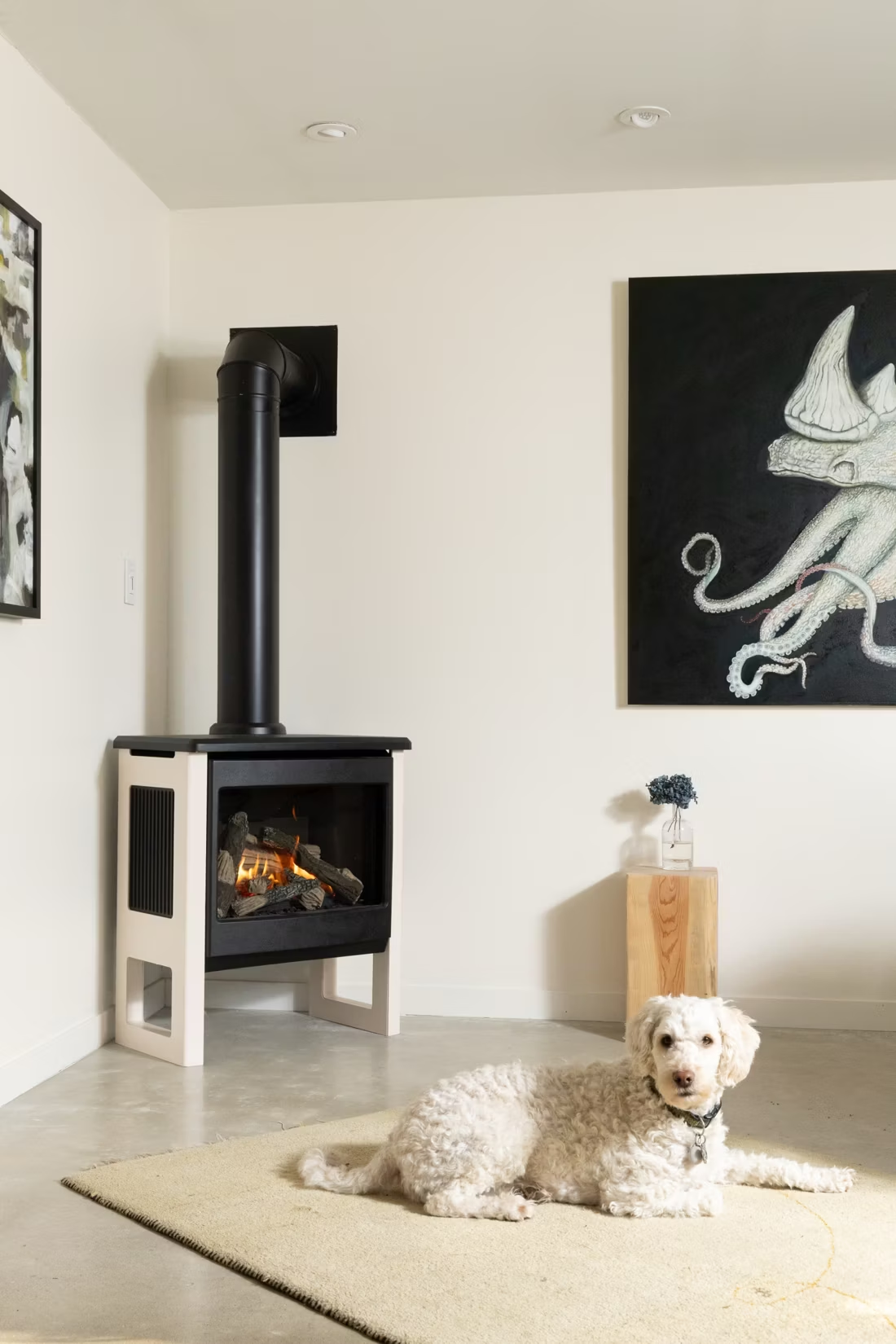
Four fuels. One honest answer for Nodaway County.
Three steps. No salesperson until you're ready.
Tell us about your project
Your zip code, your situation, and the fuel you're leaning toward—or let the answers point you to one.
See what's actually available
The brands dealers within 100 miles genuinely carry—real options, never a catalog mirage.
Get your dealer & Project Guide
A trusted local dealer, plus the free Project Guide & Parts List that names every component of the job.
Frequently Asked Questions
Which fuel works best in Nodaway County?
It depends on your home and how you use it. Wood is a strong fit here—Nodaway County's oak, hickory, and walnut woodlots have kept farmhouses warm for generations, and a well-loaded catalytic or non-cat stove can carry a home through a stretch of single-digit nights without much trouble. Gas is the low-maintenance choice for homes in and around Maryville with natural gas service, or propane for rural properties off the gas main—no wood handling, consistent heat, easy to run. Pellet is the middle ground: regional supply from brands like Lignetics keeps fuel accessible, and a pellet stove gives you wood-style ambiance with a thermostat instead of a hatchet. Electric works well as a supplemental heater in bedrooms or finished basements, but on its own it won't carry a Nodaway County winter the way wood, gas, or pellet will. Many county homes end up running two fuels—a wood or pellet stove as the workhorse, gas or electric for secondary rooms.
Do I need a permit to install a fireplace in Nodaway County?
Typically yes, though requirements vary by jurisdiction within the county. Inside Maryville city limits, new wood stoves, inserts, gas appliances, and pellet stoves generally require a building permit, and gas installations need a licensed gas-fitter and a separate gas permit for line work. In unincorporated parts of Nodaway County, permit requirements are often lighter, but manufacturer installation specs and clearances still apply regardless of jurisdiction. Electric fireplaces usually skip the permit process unless you're hardwiring a built-in unit into a new circuit. Most local hearth retailers handle the permit paperwork as part of the installation, so you're rarely filing anything yourself.
Are there air quality restrictions on wood burning in Nodaway County?
No—Nodaway County has no air quality non-attainment status and no winter burn curtailment program, unlike counties in inversion-prone basins. That means wood stove owners here aren't dealing with yellow or red burn advisory days. That said, new wood stove installations still need to meet current EPA emissions standards, and a well-seasoned load of local oak or hickory will always burn cleaner and hotter than green wood—worth keeping in mind even without a regulatory requirement pushing you toward it.
Can one local hearth retailer handle all four fuel types?
Many hearth retailers serving Nodaway County carry at least three of the four fuel types, with wood, gas, and pellet being the most common combination given local demand. Fewer dealers stock a deep electric fireplace lineup, since electric units here are mostly bought as supplemental heaters rather than primary systems. If you're cross-shopping fuels—say deciding between a wood insert and a pellet stove for the same fireplace opening—a multi-fuel dealer can show you working displays and talk through the real differences in labor, ongoing fuel cost, and maintenance for your specific home.
How does service work in rural areas of Nodaway County?
Most technicians serving Nodaway County are based near Maryville and drive out to the rest of the county—Ravenwood, Hopkins, Clearmont, Elmo, Skidmore, and the farmsteads in between. Expect a modest travel charge for calls well outside town, and know that scheduling tends to fill up fast once cold weather sets in. Booking your annual chimney sweep or gas inspection in late summer or early fall, before the first hard freeze, is the easiest way to avoid a multi-week wait when everyone else calls at the same time.
What's the typical cost range for fireplace installation across all fuel types in Nodaway County?
Costs vary by fuel and by how much existing infrastructure you have. Wood stove or insert installation: roughly $4,000–$8,500 for a typical retrofit, higher for new chimney construction. Gas fireplace, insert, or stove: roughly $4,000–$10,000, with the low end applying when gas service already runs to the room and the high end covering new line runs and venting. Pellet stove or insert: roughly $4,000–$7,000 for most installs. Electric fireplace: $200–$3,000 for the unit itself, plus $300–$1,000 in labor unless it's a simple plug-and-play placement. For details specific to your fuel, see the county + fuel pages above.
How much should I budget for a fireplace?
For an average home—covering the fireplace, the vent pipe, and basic installation—a budget between $3,900 and $5,500 gives you a lot of options across wood, gas, and pellet. By the time you add finish work, gas line, and electrical, the average complete installation lands between $5,000 and $12,000 all-in. In a remodel or new build, a good rule is to put about 2.5% of the total project cost toward the fireplace.
Can I install a fireplace myself?
If you're putting a fire in your house on purpose, it's best to work with an expert. Unless you're genuinely experienced in framing, gas line, vent pipe, and the national code on clearances to combustibles, have a professional do it—and ideally the same company that sells you the fireplace, so warranty, service, and liability all live under one roof.
What are the biggest mistakes people make buying a fireplace?
Five come up constantly: budgeting for the unit but not the full job (vent, gas line, electrical, finish work); drowning in options instead of starting from style and fuel; buying without an in-home preview; handing installation to a handyman instead of a pro; and giving up out of sheer indecision. Every one is avoidable with a clear plan—step one, step two, step three.
Wood, gas, pellet, or electric—how do I choose?
Match the fuel to your life, not the other way around. Wood: lowest fuel cost and total power-outage independence, but you're hauling and stacking. Gas: press a button, set a thermostat, no maintenance to speak of. Pellet: wood economics with automatic feeding, in exchange for weekly cleaning and a need for electricity. Electric: plugs in anywhere with honest supplemental heat. Nobody regrets the fuel that fits how they actually live.
Stove and Fireplace Dealers in Nodaway County
Listings include WhyFire partner dealers, dealers we have verified as authorized for the brands we recommend, and established local businesses that carry hearth products. Every listing shows which one it is. The ones marked Preferred run on WhyFire's software, so they can show you real pricing and book your appointment right here. No manufacturer pays for placement. How we verify dealers →
Steinhauser Woodworks
Alternative Heat Resource
Buck Stove & Spa
Edelman's Home Center
Solar Systems Of Iowa
Find your fireplace in Nodaway County.
Pick your fuel below to get matched with a trusted local dealer and receive a free Project Guide & Parts List—the exact parts, including the vent kit, for your project.
Find Your Fireplace →