
Warm your Moniteau County home the right way.
Wood, gas, pellet, and electric fireplace resources for every town in Moniteau County—from the county seat of California to Tipton, Clarksburg, and Fortuna. Get matched with a trusted local hearth retailer who knows what actually works here.
Every Project Starts From One of These Five Situations
Hardwood country in the heart of mid-Missouri.
Moniteau County sits in the rolling hills of mid-Missouri, roughly halfway between Jefferson City and Sedalia, where oak-hickory forest lines the farmland's edges and creek bottoms. Winters average lows near 20°F with about 4,943 heating degree days a year—less than half the annual total of a place like Madison, Wisconsin, but still enough for a solid five-month burn season running October through March. Farms and rural properties across the county cut their own oak, hickory, walnut, and maple from woodlots and fence rows, and wood heat remains a practical, low-cost option for the roughly 8,000 residents spread across the county's small towns and open country.
This hub covers every fuel and every community—the county seat of California, plus Tipton (home to Co-Mo Electric Cooperative's headquarters), Clarksburg, Fortuna, and the unincorporated crossroads that make up the rest of the county. Pick a fuel below to see local retailers, installation costs, and the units that make sense for a mid-Missouri winter, whether you're heating a farmhouse outside Latham or a home near the county courthouse in California.
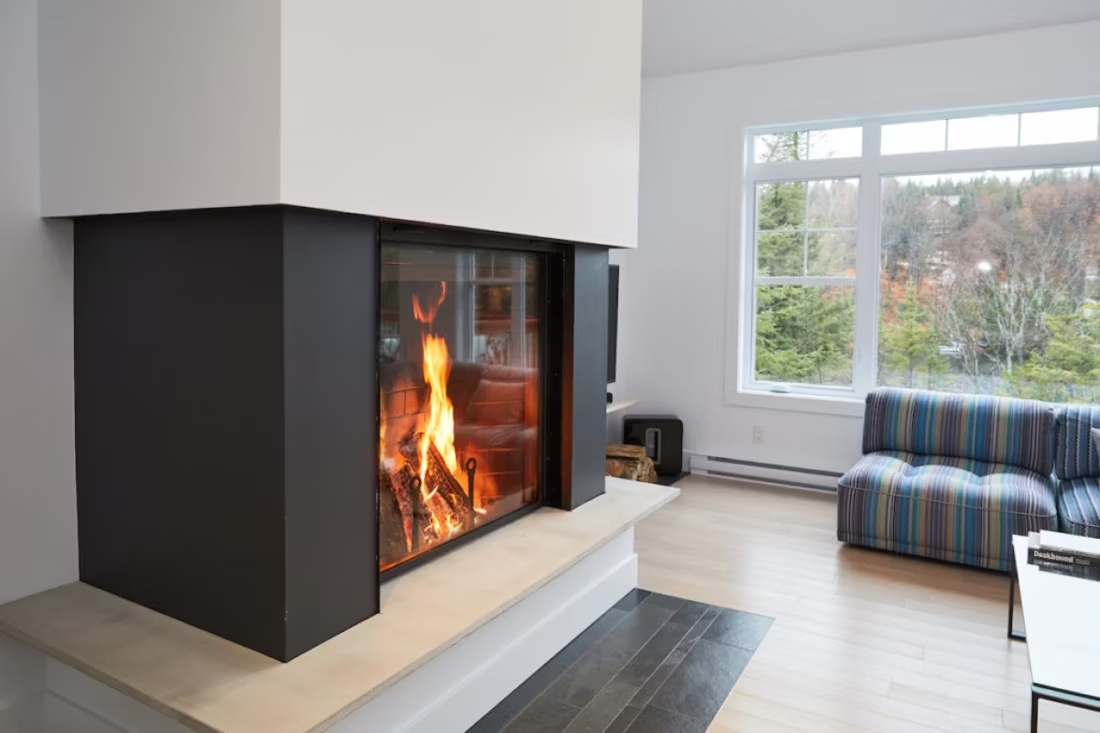
Four fuels. One honest answer for Moniteau County.
Three steps. No salesperson until you're ready.
Tell us about your project
Your zip code, your situation, and the fuel you're leaning toward—or let the answers point you to one.
See what's actually available
The brands dealers within 100 miles genuinely carry—real options, never a catalog mirage.
Get your dealer & Project Guide
A trusted local dealer, plus the free Project Guide & Parts List that names every component of the job.
Frequently Asked Questions
Which fuel works best for a home in Moniteau County?
It depends on the property. Wood is the traditional choice for rural Moniteau County—oak, hickory, walnut, and maple are all cut locally from farm woodlots and fence rows, and a good catalytic or non-catalytic stove handles the county's roughly 4,943 annual heating degree days without much trouble. Gas is the convenience option, but natural gas lines mostly run within California and Tipton city limits; outside those towns, propane from a local delivery service is the practical substitute. Pellet stoves are a solid middle ground—Lignetics and Indeck Energy Services both stock the region, so fuel supply isn't a concern, and pellet units skip the splitting-and-stacking labor of cordwood. Electric fireplaces work well as supplemental heat in bedrooms or additions, and with Co-Mo Electric Cooperative serving most of the county, running one doesn't strain a rural electric bill the way it might elsewhere. Plenty of Moniteau County homes end up running two fuels—wood or pellet as the workhorse, electric or gas in a room that doesn't need full-time heat.
Do I need a permit to install a fireplace or stove in Moniteau County?
In most cases, yes, if you're inside California or Tipton city limits—both towns require a building permit for new wood stoves, inserts, gas appliances, and pellet stoves, and gas work needs a licensed installer for the line connection. Outside the incorporated towns, permitting is lighter—Moniteau County itself doesn't run a full building code program the way a larger county might, so check with the county courthouse in California before you assume you're exempt, especially for anything involving new gas piping or electrical circuits. Wood-burning appliances should still meet current EPA emissions standards even where local permitting is minimal—it affects insurance and resale either way. Most hearth retailers who serve the county handle the paperwork as part of the installation, so it's rarely something homeowners have to sort out solo.
Are there any air quality restrictions on wood burning in Moniteau County?
No—Moniteau County isn't in a nonattainment area and doesn't have the winter inversion problems that trigger burn bans in basin or valley counties out West. There's no local ordinance restricting wood smoke here. That said, burning well-seasoned oak or hickory (moisture content under 20%) still matters for efficiency and chimney safety, and it cuts down on the visible smoke that can become a neighbor issue in the tighter lot spacing around California and Tipton. If you're buying a new EPA-certified stove, you'll get cleaner burns and less creosote buildup regardless of local rules.
Can one hearth retailer in Moniteau County handle all four fuel types?
Most of the hearth retailers serving the county carry at least three fuel types, though the exact lineup varies by dealer—some emphasize wood and pellet, given how much local firewood is cut from oak and hickory woodlots, while others lean harder into gas and electric for customers closer to town gas service. If you're not sure which fuel fits your home, a multi-fuel dealer can walk you through working displays side by side rather than relying on a single-fuel showroom. Given the county's small population, dealers here tend to know the local building department contacts and typical propane or gas-line situations block by block, which matters more than it would in a bigger market.
How does service and installation work in the rural parts of Moniteau County?
Most technicians and retailers are based out of California or Tipton and drive out to the rest of the county—Clarksburg, Fortuna, Latham, McGirk, and the farm roads in between. Expect a modest trip charge for the more remote calls, and expect scheduling to tighten up fast once cold weather actually hits—booking your annual chimney sweep or gas inspection in September or early October, before the first hard freeze, gets you ahead of the rush. If you're on a rural electric line through Co-Mo, it's also worth asking your installer about backup heat options; wood or propane units that don't depend on grid power are common choices for farms that see occasional winter outages.
What does fireplace installation typically cost across fuel types in Moniteau County?
Wood stove or insert installation typically runs $3,800–$7,500, more if new masonry chimney work is required. Gas fireplaces, inserts, or stoves run $4,000–$9,000 depending on whether you're extending a gas line or converting an existing hearth, with propane conversions often landing at the lower end since there's no municipal line tie-in involved. Pellet stoves or inserts generally cost $4,000–$6,500 installed. Electric fireplaces are the least expensive across the board—$200–$2,500 for the unit itself, plus $300–$1,000 in labor for anything beyond a simple plug-in install, like a built-in or wall recess. These are rough county-wide ranges; the fuel-specific pages above break down local retailer pricing in more detail.
Does a fireplace add value to my home?
On average, a fireplace adds back to the home about the same amount you spent installing it. Add the monthly savings from heating the rooms you actually use instead of the whole house—often hundreds of dollars a year—and the value case is strong before you even count what a fire does for how your family uses the room.
Wood, gas, pellet, or electric—how do I choose?
Match the fuel to your life, not the other way around. Wood: lowest fuel cost and total power-outage independence, but you're hauling and stacking. Gas: press a button, set a thermostat, no maintenance to speak of. Pellet: wood economics with automatic feeding, in exchange for weekly cleaning and a need for electricity. Electric: plugs in anywhere with honest supplemental heat. Nobody regrets the fuel that fits how they actually live.
What is an in-home preview and do I need one?
It's a visit where a hearth professional measures your space, confirms the model you picked actually works in your home, and walks the specs—framing, gas line, venting, finish work—before anything is ordered. Some details you just can't know until you see the house. Never make a down payment without one; it's the single most-skipped step that burns buyers.
How much should I budget for a fireplace?
For an average home—covering the fireplace, the vent pipe, and basic installation—a budget between $3,900 and $5,500 gives you a lot of options across wood, gas, and pellet. By the time you add finish work, gas line, and electrical, the average complete installation lands between $5,000 and $12,000 all-in. In a remodel or new build, a good rule is to put about 2.5% of the total project cost toward the fireplace.
Stove and Fireplace Dealers in Moniteau County
Listings include WhyFire partner dealers, dealers we have verified as authorized for the brands we recommend, and established local businesses that carry hearth products. Every listing shows which one it is. The ones marked Preferred run on WhyFire's software, so they can show you real pricing and book your appointment right here. No manufacturer pays for placement. How we verify dealers →
Forshaw Of St Louis - Jefferson City
Chimney Safe
Dr Soot Chimney Sweep
Hmi Fireplace Shop
Get matched with a hearth dealer in Moniteau County.
Tell us about your home and we'll match you with a trusted local dealer and send a free Project Guide & Parts List—the right unit, the vent kit, and a plan for your fuel and your address, no matter which town in the county you're in.
Find Your Fireplace →