
Find the Right Fireplace for Your Miller County Home.
Wood, gas, pellet, and electric fireplace resources for every town in Miller County—from Eldon and Tuscumbia to Iberia and the northern shoreline of the Lake of the Ozarks. Get matched with a trusted local hearth retailer who can actually get the job done.
Every Project Starts From One of These Five Situations
Ozark hardwoods and moderate winters in Miller County, Missouri.
Miller County sits in the Ozark foothills of central Missouri, with the county seat in Tuscumbia and the largest city, Eldon, a few miles north. With a winter low average of 22°F, the heating season here runs a real but moderate stretch—call it October through early April—well short of what a town like Fargo, ND deals with at nearly double the winter heating load. Oak, hickory, walnut, and maple grow throughout the county's woodlots and river bottoms, and because most of the land is private rather than federal forest, firewood here tends to come from your own property, a neighbor's timber, or a local sawmill rather than a Forest Service cutting permit.
What you'll find on this hub: hearth retailers, service technicians, and fuel suppliers covering every community in the county—Eldon, Tuscumbia, Iberia, St. Elizabeth, and the lake homes along the northern arm of the Lake of the Ozarks. Because natural gas mains are limited outside the larger towns, a lot of the county's gas appliances run on propane instead. Pick your fuel below to see local dealers, install costs, and the right unit for your address, whether that's a farmhouse outside Iberia or a weekend place on the lake.
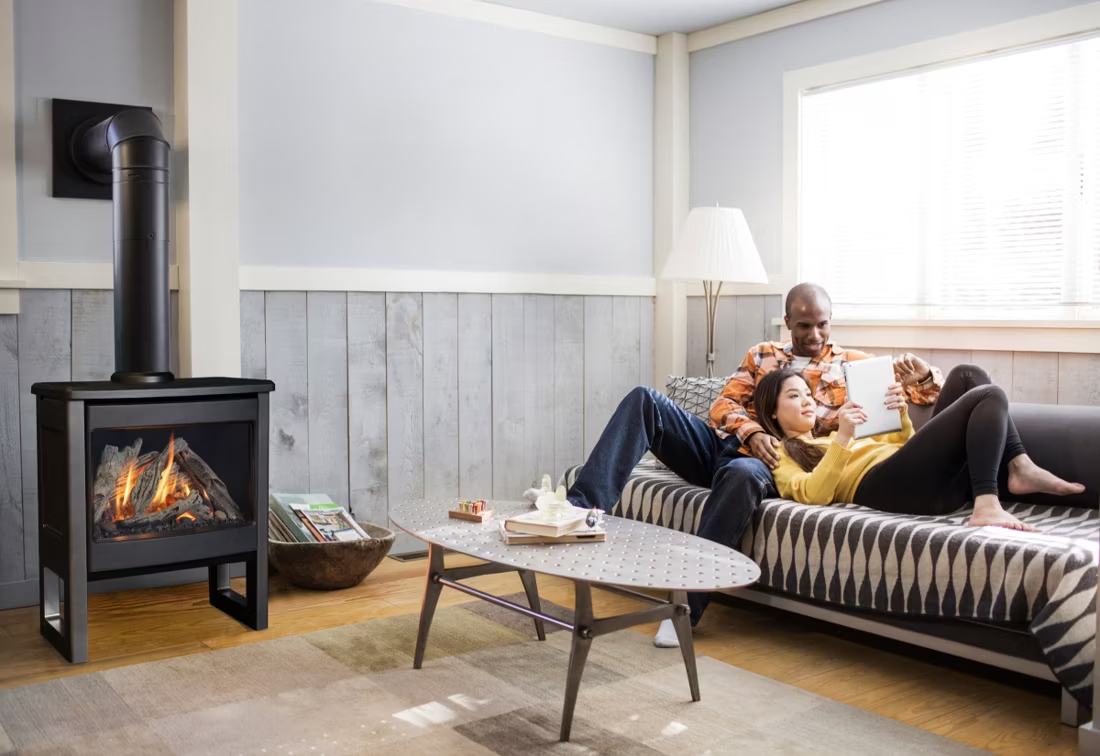
Four fuels. One honest answer for Miller County.
Three steps. No salesperson until you're ready.
Tell us about your project
Your zip code, your situation, and the fuel you're leaning toward—or let the answers point you to one.
See what's actually available
The brands dealers within 100 miles genuinely carry—real options, never a catalog mirage.
Get your dealer & Project Guide
A trusted local dealer, plus the free Project Guide & Parts List that names every component of the job.
Frequently Asked Questions
Which fuel works best in Miller County?
It depends on your home and your land. Wood is a natural fit for a lot of Miller County properties—oak, hickory, walnut, and maple are all common on private woodlots, and a lot of homeowners are cutting and splitting their own supply rather than buying it. Propane is the practical convenience choice for most homes since natural gas mains don't reach far outside Eldon; it's especially popular for lake houses that sit empty part of the week and need instant, no-fuss heat. Pellet stoves are a solid middle ground—Lignetics has good regional distribution—for homeowners who want wood-style ambiance without processing a woodpile. Electric is mostly supplemental here; with winter lows averaging 22°F rather than single digits, an electric insert can genuinely carry a bedroom or sunroom rather than just serve as decoration. Plenty of county homes run wood or propane as primary heat with electric in a secondary room.
Do I need a permit to install a fireplace in Miller County?
It depends on where you are. Inside city limits—Eldon or Tuscumbia—check with the city before you install a wood stove, insert, or gas appliance, since municipal codes can require a permit even where the county doesn't. Outside those city limits, Miller County does not run a countywide building code for single-family homes, so permitting for wood stoves is less uniform than you'd find in a larger metro county. That said, any gas or propane line work should still go through a licensed gas fitter regardless of jurisdiction, and it's worth installing a wood stove that meets current EPA emissions standards anyway—it matters for insurance, resale, and safety even where no inspector is checking. Most local retailers can tell you exactly what applies to your specific address.
Are there air quality restrictions on wood burning in Miller County?
No. Miller County has no nonattainment designation and no wood-burning curtailment program. The county's rural layout—under 9,000 residents spread across roughly 600 square miles, with homes and woodlots well spaced out—means woodsmoke doesn't concentrate the way it can in tighter valley air basins elsewhere in the country. You're free to burn wood as your primary heat source without checking a daily air advisory, though basic common sense still applies: a well-seasoned split of oak or hickory burns cleaner and hotter than green wood, and it's easier on your chimney too.
Can one local hearth retailer handle all four fuel types?
In a county this size, most hearth shops end up carrying three or four fuel types rather than specializing narrowly—a single-fuel shop has a hard time staying in business serving under 9,000 residents spread across the county. It's common to find a retailer near Eldon or Tuscumbia with working floor models of a wood stove, a propane fireplace, and a pellet insert side by side, which is genuinely useful if you're still deciding between fuels. Ask to see units running rather than just sitting cold—it's the fastest way to compare flame appearance and heat output across fuel types before you commit.
How does service work in rural parts of Miller County?
Technicians serving Miller County are typically based in or near Eldon and travel out to Iberia, St. Elizabeth, Tuscumbia, and the lake properties along the Lake of the Ozarks' northern arm. Lake homes add a wrinkle—a lot of them are seasonal or weekend properties, so scheduling a sweep or gas inspection before the owners arrive for the season (rather than after the first cold snap) tends to go smoother. Expect a modest travel fee for the more remote parts of the county, and book pre-season service in September or early October if you can—mid-winter emergency calls are harder to slot in once the first hard freeze hits.
What's the typical cost range for fireplace installation across all fuel types in Miller County?
Wood stove or insert: roughly $3,500–$8,000 for a standard install, climbing toward $12,000 for new construction with full chimney work. Gas or propane fireplace, insert, or stove: about $4,000–$9,000, with line work and tank setup driving the higher end for homes without existing propane service. Pellet stove or insert: typically $4,000–$6,500 installed. Electric fireplace: the unit itself runs $200–$2,500, with $300–$1,000 in labor for anything beyond a plug-and-play wall unit. Ask your local retailer for a number tied to your specific address—venting length, chimney condition, and existing gas or propane service all move these ranges.
What is an in-home preview and do I need one?
It's a visit where a hearth professional measures your space, confirms the model you picked actually works in your home, and walks the specs—framing, gas line, venting, finish work—before anything is ordered. Some details you just can't know until you see the house. Never make a down payment without one; it's the single most-skipped step that burns buyers.
Can a fireplace actually lower my heating bill?
Yes—by creating a comfort zone. A furnace heats every square foot of the house just to warm the one room you're in; a gas fireplace on low burns roughly a sixth of the gas a typical furnace does. Set the furnace around 55–60 degrees as a baseline, then heat the rooms your family actually uses. Families who heat this way commonly save $20–$60 a month.
How much should I budget for a fireplace?
For an average home—covering the fireplace, the vent pipe, and basic installation—a budget between $3,900 and $5,500 gives you a lot of options across wood, gas, and pellet. By the time you add finish work, gas line, and electrical, the average complete installation lands between $5,000 and $12,000 all-in. In a remodel or new build, a good rule is to put about 2.5% of the total project cost toward the fireplace.
Wood, gas, pellet, or electric—how do I choose?
Match the fuel to your life, not the other way around. Wood: lowest fuel cost and total power-outage independence, but you're hauling and stacking. Gas: press a button, set a thermostat, no maintenance to speak of. Pellet: wood economics with automatic feeding, in exchange for weekly cleaning and a need for electricity. Electric: plugs in anywhere with honest supplemental heat. Nobody regrets the fuel that fits how they actually live.
Stove and Fireplace Dealers in Miller County
Listings include WhyFire partner dealers, dealers we have verified as authorized for the brands we recommend, and established local businesses that carry hearth products. Every listing shows which one it is. The ones marked Preferred run on WhyFire's software, so they can show you real pricing and book your appointment right here. No manufacturer pays for placement. How we verify dealers →
Dr Soot Chimney Sweep
Hmi Fireplace Shop
Get matched with a Miller County hearth retailer.
Tell us your fuel and your town, and we'll match you with a trusted local dealer and send over a free Project Guide & Parts List—the exact parts, vent kit included, for your home and their recommended installer.
Find Your Fireplace →