
Warm Your Home the Way Maries County Always Has.
Wood, gas, pellet, and electric fireplace resources for Vienna, Belle, Vichy, Brinktown, and the farms and hollows between them. Find the right unit and connect with a local hearth pro who actually serves this part of the Ozarks.
Every Project Starts From One of These Five Situations
Ozark hardwood country with a shorter, milder heating season.
Maries County sits in the south-central Missouri Ozarks along the Maries River, bordered on the south by the Mark Twain National Forest. With roughly 2,045 residents spread across the county seat of Vienna and small unincorporated communities like Vichy, Brinktown, and Argyle, this is farm-and-woodlot country. Climate zone 4A gives the county a real winter—freezing nights, occasional ice, some snow—but nothing close to the sustained sub-zero stretches that define places like Duluth, MN or Bismarck, ND. Oak, hickory, walnut, and maple grow thick on local woodlots, and dense, high-BTU firewood is often free for anyone with a saw, a truck, and a woodlot to work.
This hub covers the whole county: hearth retailers, service technicians, and fuel suppliers reaching Vienna, Belle, Vichy, Brinktown, and the rural routes between them. Maries County has no air-quality non-attainment designation and no reported burn restrictions, so wood-burning here isn't subject to the curtailment days you'll find in western basin counties—burn when it's cold, without checking an advisory page first. Pick your fuel below for local dealers, install costs, and the specifics that fit a farmhouse, a cabin, or a place off the county road grid.
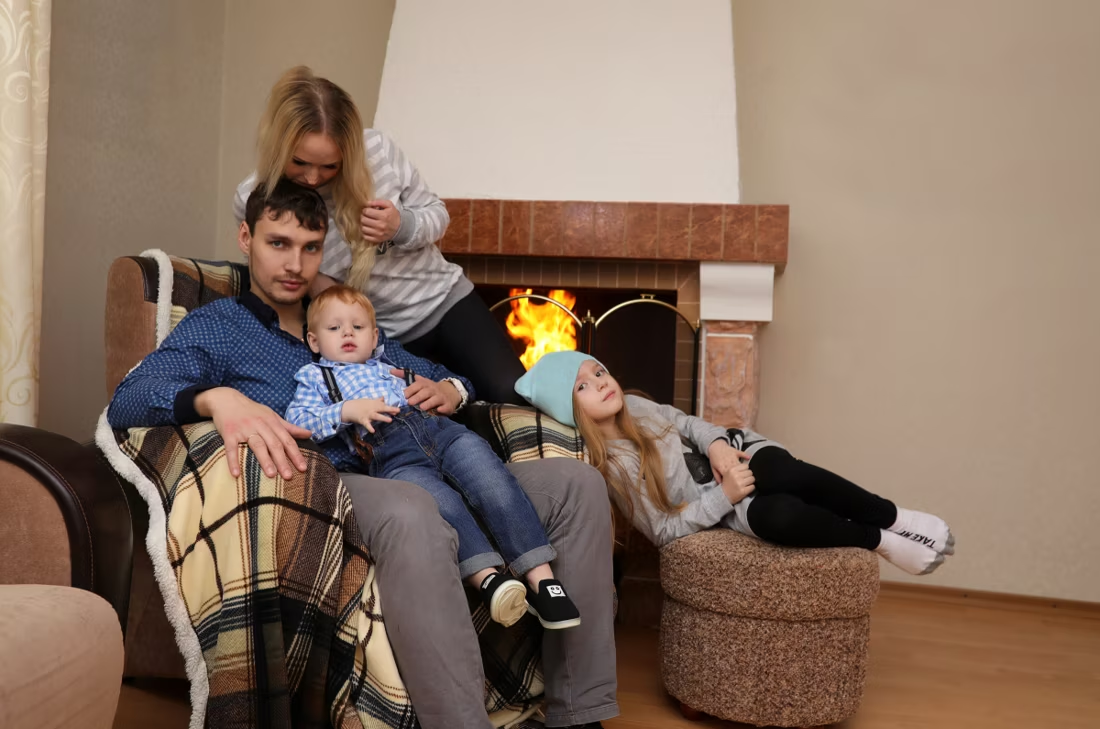
Four fuels. One honest answer for Maries County.
Three steps. No salesperson until you're ready.
Tell us about your project
Your zip code, your situation, and the fuel you're leaning toward—or let the answers point you to one.
See what's actually available
The brands dealers within 100 miles genuinely carry—real options, never a catalog mirage.
Get your dealer & Project Guide
A trusted local dealer, plus the free Project Guide & Parts List that names every component of the job.
Frequently Asked Questions
Which fuel works best in a Maries County home?
Wood remains the practical default here—oak and hickory from local woodlots burn hot and long, and a lot of Maries County households already have a chainsaw, a truck, and a place to season a woodpile. A cast-iron or steel wood stove sized for a farmhouse can knock out most of a winter's heating bill. Gas is less common simply because natural gas service is thin outside the towns; where it's used, it's almost always propane, valued for instant heat with no wood-hauling. Pellet stoves are a middle option—you lose the free firewood but gain thermostat-like control and easier daily handling; supply comes through regional brands like Lignetics rather than a local pellet retailer. Electric fireplaces show up mostly as supplemental heat or ambiance in a den or bedroom, not as a primary heat source for a county with real winter nights. Plenty of homes here run wood as primary heat with a propane or electric unit as backup.
Do I need a permit to install a fireplace or stove in Maries County?
It depends on where you are. Maries County doesn't operate a countywide building permit department, so most installations in unincorporated areas—which is most of the county—aren't subject to a formal permit review, though the appliance still needs to meet manufacturer clearance specs and NFPA 211 chimney standards, and your insurer will likely want proof of a proper install. Inside Vienna or Belle city limits, check with the town clerk's office before starting work, since municipal permitting requirements can differ from the surrounding county. Gas line work should still go through a licensed propane installer regardless of permitting, and a reputable hearth retailer will know exactly what your specific address requires.
Are there air quality restrictions on wood burning in Maries County?
No. Maries County has no air-quality non-attainment designation and no reported winter burn advisories or curtailment periods—unlike basin counties in the West that see winter inversions trap wood smoke. That means you can run a wood stove on a cold night without checking an air quality advisory first. It's still worth installing a stove that meets current EPA emissions standards, both for efficiency (you'll burn less wood for the same heat) and because older uncertified stoves are getting harder to insure or resell with a home.
Can one local retailer handle all four fuel types in Maries County?
Given the county's size, there isn't a hearth showroom sitting inside Maries County itself—most homeowners end up working with a retailer based in Rolla, St. James, or Jefferson City who then travels out for the consultation and install. Larger regional retailers in that corridor often carry three or four fuel types, so you can compare wood, gas, pellet, and electric units with one dealer rather than shopping fuel-by-fuel. Smaller specialty shops may lean heavily wood-and-pellet or gas-and-electric, so it's worth asking upfront what a given retailer actually stocks and installs before you drive out to look at a showroom floor.
How does hearth service work for rural parts of Maries County?
Almost every technician covering Maries County—whether for chimney sweeping, gas service, or pellet stove cleaning—is based outside the county and drives in, most commonly from Rolla or St. James. Expect a modest travel charge for addresses well off Highway 63 or Highway 28, and expect scheduling to tighten up once cold weather hits. Booking your annual sweep or gas inspection in late summer or early fall, before the first cold snap, is the difference between a routine appointment and a multi-week wait in December.
What's the typical cost range for fireplace or stove installation in Maries County?
Costs run close to general Ozark-region averages, sometimes a bit lower given simpler chimney runs on most local farmhouses. Wood stove or insert installation typically runs $3,500–$8,000, more for new masonry chimney work. Gas fireplace, insert, or stove installation runs $4,000–$9,500, largely driven by propane line work and venting since natural gas service is limited outside the towns. Pellet stove or insert installs run $3,500–$6,500. Electric fireplace units run $200–$3,000 for the unit itself, plus $300–$1,000 in labor unless it's a simple plug-and-play insert. Rural addresses may see a modest travel fee added on top of the install cost—worth asking about when you get a quote.
What is an in-home preview and do I need one?
It's a visit where a hearth professional measures your space, confirms the model you picked actually works in your home, and walks the specs—framing, gas line, venting, finish work—before anything is ordered. Some details you just can't know until you see the house. Never make a down payment without one; it's the single most-skipped step that burns buyers.
How much should I budget for a fireplace?
For an average home—covering the fireplace, the vent pipe, and basic installation—a budget between $3,900 and $5,500 gives you a lot of options across wood, gas, and pellet. By the time you add finish work, gas line, and electrical, the average complete installation lands between $5,000 and $12,000 all-in. In a remodel or new build, a good rule is to put about 2.5% of the total project cost toward the fireplace.
Can I install a fireplace myself?
If you're putting a fire in your house on purpose, it's best to work with an expert. Unless you're genuinely experienced in framing, gas line, vent pipe, and the national code on clearances to combustibles, have a professional do it—and ideally the same company that sells you the fireplace, so warranty, service, and liability all live under one roof.
Wood, gas, pellet, or electric—how do I choose?
Match the fuel to your life, not the other way around. Wood: lowest fuel cost and total power-outage independence, but you're hauling and stacking. Gas: press a button, set a thermostat, no maintenance to speak of. Pellet: wood economics with automatic feeding, in exchange for weekly cleaning and a need for electricity. Electric: plugs in anywhere with honest supplemental heat. Nobody regrets the fuel that fits how they actually live.
Stove and Fireplace Dealers in Maries County
Listings include WhyFire partner dealers, dealers we have verified as authorized for the brands we recommend, and established local businesses that carry hearth products. Every listing shows which one it is. The ones marked Preferred run on WhyFire's software, so they can show you real pricing and book your appointment right here. No manufacturer pays for placement. How we verify dealers →
Hartley's Climate Control & Fireplace
Forshaw Of St Louis - Jefferson City
Get matched with a dealer serving Maries County.
Tell us about your home and fuel preference, and we'll match you with a trusted local dealer and send a free Project Guide & Parts List—the exact parts, vent kit, and dealer recommendation for your project in Maries County.
Find Your Fireplace →