
Find the Right Fireplace for Your Lewis County Home.
Wood, gas, pellet, and electric fireplace resources for Canton, La Grange, Monticello, Ewing, Williamstown, and every farm and river-bluff community in between. Connect with a trusted local hearth retailer who knows what actually works here.
Every Project Starts From One of These Five Situations
Steady Midwest winters along Missouri's Mississippi River bluffs.
Lewis County sits in far northeast Missouri along the Mississippi River, with the county seat in Monticello and the largest town, Canton, anchoring the river side of the county. Just over 5,500 people live here, spread across small towns like La Grange, Ewing, and Williamstown and the farmland and river-bluff acreage between them. Winters run cold but not extreme—average lows around 17°F and a real heating season stretching from October into April put Lewis County in climate zone 5A, though nowhere near what a place like Buffalo, NY sees in a typical winter. The bluffs and creek bottoms grow dense hardwood—oak, hickory, walnut, and maple—that local homeowners have relied on for long, hot wood-stove burns for generations.
What you'll find on this hub: hearth retailers, service technicians, and fuel suppliers covering the whole county—from Canton and La Grange near the river to Ewing and Williamstown inland. Lewis County has no listed air quality restrictions on wood burning, so there's no inversion advisory or curtailment schedule to plan around here, unlike some larger river valleys downstream. Pick your fuel below to get into local dealers, installation costs, and the specifics that match your project—whether that's a farmhouse wood stove or a propane insert in town.
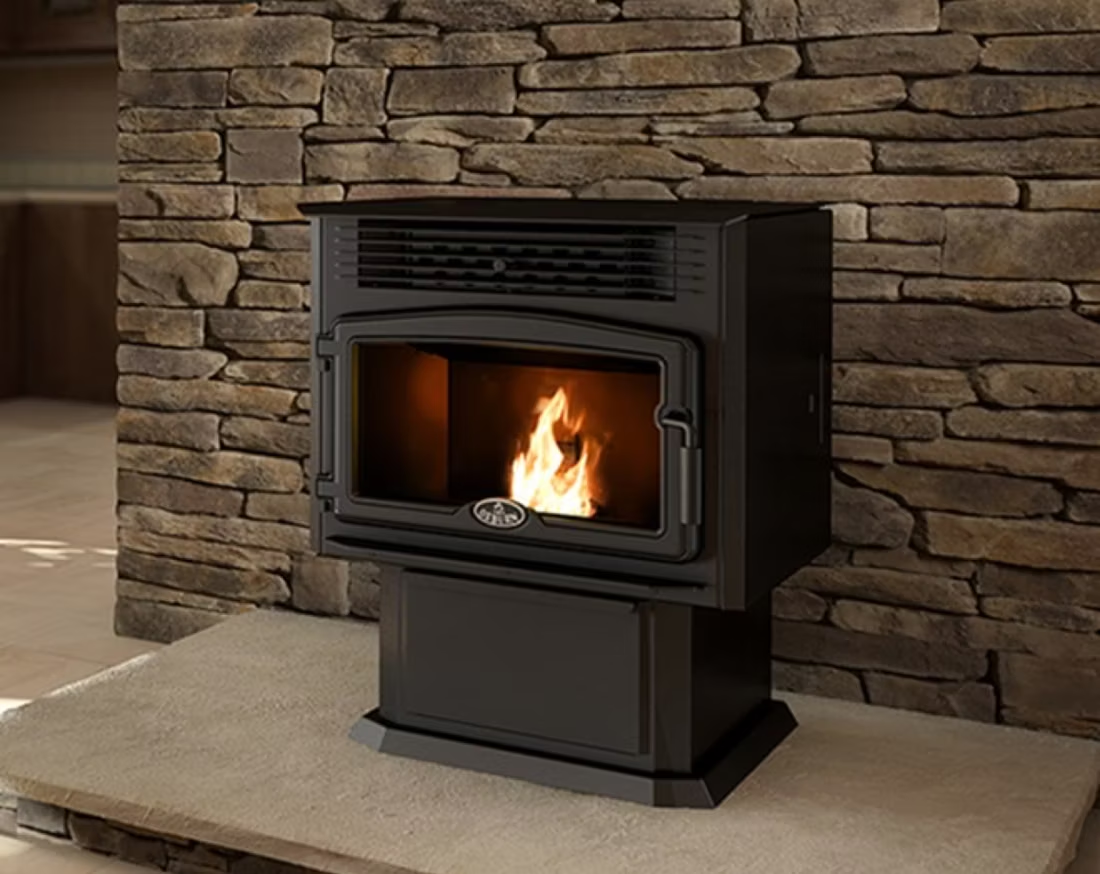
Four fuels. One honest answer for Lewis County.
Three steps. No salesperson until you're ready.
Tell us about your project
Your zip code, your situation, and the fuel you're leaning toward—or let the answers point you to one.
See what's actually available
The brands dealers within 100 miles genuinely carry—real options, never a catalog mirage.
Get your dealer & Project Guide
A trusted local dealer, plus the free Project Guide & Parts List that names every component of the job.
Frequently Asked Questions
Which fuel works best in Lewis County?
It depends on your property and how hands-on you want to be. Wood is a natural fit for the many Lewis County homes on farm acreage—oak, hickory, walnut, and maple grow thick along the river bluffs, and a lot of households still cut their own firewood, which keeps fuel costs near zero through a winter that runs from October into April. Gas, almost always via propane tank delivery out here rather than piped natural gas, is the convenience choice—instant heat with none of the splitting and stacking. Pellet stoves are the middle ground, and with Lignetics and Indeck Energy Services both distributing regionally, fuel supply isn't a concern; you trade woodpile labor for a hopper you fill from a bag. Electric fireplaces work well as supplemental heat in bedrooms, additions, or a lake cabin near the river, but with winter lows averaging around 17°F, they're not what most Lewis County homes lean on as a primary heat source.
Do I need a permit to install a fireplace in Lewis County?
In most cases, yes, though the process is lighter here than in a larger jurisdiction. Incorporated towns like Canton, La Grange, and Monticello typically require a permit for new wood stoves, inserts, gas appliances, and pellet stoves, handled through the town clerk or a county building contact based in Monticello. In unincorporated parts of the county—a large share of Lewis County's land—permitting requirements can be more limited, but any propane tank installation still needs sign-off from a licensed gas fitter for the line and connection work. Electric fireplace installs usually skip permitting unless they involve new wiring for a built-in unit. Most hearth retailers serving the county handle the paperwork as part of the installation, so it's rarely something a homeowner has to chase down alone.
Are there air quality restrictions on wood burning in Lewis County?
No—Lewis County has no listed air quality concerns, no non-attainment designation, and no winter inversion advisories to work around, which is different from some of the larger river valleys and metro areas downstream on the Mississippi. That said, any new wood stove sold and installed still has to meet the federal EPA 2020 NSPS emissions standard, which applies nationwide regardless of local air quality. Practically, that means you can burn on a cold January night in Canton or out on a farm near Ewing without worrying about a curtailment notice—just make sure whatever unit you install is EPA-certified.
Can one local retailer handle all four fuel types in a county this small?
Not always, and that's normal for a county with roughly 5,500 residents. Some Lewis County homeowners end up matched with a retailer based across the river or down the highway in Hannibal or Quincy that carries wood, gas, pellet, and electric and regularly services Canton and La Grange. Smaller shops closer to home may specialize—a stove-and-insert dealer focused on wood and pellet, for instance, or a propane company that also handles gas fireplace hookups. Find My Fireplace matches you with whichever trusted dealer actually covers your address and carries the fuel you're after, rather than assuming a single storefront down the street can do it all.
How does installation and service work in the rural parts of Lewis County?
Most technicians serving Lewis County are based in or near Canton and travel out to the townships—past Ewing, up toward Williamstown, and along the river road to La Grange and Monticello. Expect a modest travel fee for calls further from town, and know that pre-season scheduling (late summer into early fall) is easier to book than a mid-winter emergency visit after an ice storm knocks out power. Because ice storms and outages happen here, a lot of rural households keep a wood stove as backup heat even if propane or a pellet stove is the daily driver—oak and hickory both split and burn well, and a wood stove doesn't care whether the lines are down.
What's the typical cost range for fireplace installation across all fuel types in Lewis County?
Wood stove or insert installation: roughly $3,500–$8,000 for a typical setup, more if new chimney or hearth work is involved. Gas fireplace, insert, or stove (propane): roughly $4,000–$9,500, with tank and line work pushing toward the higher end for homes without existing propane service. Pellet stove or insert: roughly $4,000–$7,000 for a standard install. Electric fireplace: $200–$2,800 for the unit itself, plus $300–$1,000 in labor for anything beyond a simple plug-in placement. Exact numbers depend on your specific home and the dealer you're matched with—the county + fuel pages above break down pricing by fuel type in more detail.
How much should I budget for a fireplace?
For an average home—covering the fireplace, the vent pipe, and basic installation—a budget between $3,900 and $5,500 gives you a lot of options across wood, gas, and pellet. By the time you add finish work, gas line, and electrical, the average complete installation lands between $5,000 and $12,000 all-in. In a remodel or new build, a good rule is to put about 2.5% of the total project cost toward the fireplace.
Wood, gas, pellet, or electric—how do I choose?
Match the fuel to your life, not the other way around. Wood: lowest fuel cost and total power-outage independence, but you're hauling and stacking. Gas: press a button, set a thermostat, no maintenance to speak of. Pellet: wood economics with automatic feeding, in exchange for weekly cleaning and a need for electricity. Electric: plugs in anywhere with honest supplemental heat. Nobody regrets the fuel that fits how they actually live.
Can I install a fireplace myself?
If you're putting a fire in your house on purpose, it's best to work with an expert. Unless you're genuinely experienced in framing, gas line, vent pipe, and the national code on clearances to combustibles, have a professional do it—and ideally the same company that sells you the fireplace, so warranty, service, and liability all live under one roof.
What is an in-home preview and do I need one?
It's a visit where a hearth professional measures your space, confirms the model you picked actually works in your home, and walks the specs—framing, gas line, venting, finish work—before anything is ordered. Some details you just can't know until you see the house. Never make a down payment without one; it's the single most-skipped step that burns buyers.
Stove and Fireplace Dealers in Lewis County
Listings include WhyFire partner dealers, dealers we have verified as authorized for the brands we recommend, and established local businesses that carry hearth products. Every listing shows which one it is. The ones marked Preferred run on WhyFire's software, so they can show you real pricing and book your appointment right here. No manufacturer pays for placement. How we verify dealers →
Peters Heating & Ac
Kraus & Son's Heating
Peters Heating & Ac
Find your fireplace match in Lewis County.
Tell us about your home and heating goals, and we'll match you with a trusted local dealer and send a free Project Guide & Parts List—the exact parts, vent kit included, and the right local pro for your Lewis County project.
Find Your Fireplace →