
Find the right hearth for Gentry County winters.
Wood, gas, pellet, and electric fireplace resources for Albany, King City, Stanberry, and every farm and rural route across Gentry County. Find the right unit and connect with a trusted local hearth retailer.
Every Project Starts From One of These Five Situations
Northwest Missouri heating, from oak woodlots to farmhouse hearths.
Gentry County sits in the rolling farm country of northwest Missouri, with roughly 5,800 heating degree days and average winter lows around 14°F—a climate closer to Madison, WI than to the Ozarks. Cold fronts sweep down off the plains with little to block them, and a good stretch of single-digit nights is normal most winters. The county's woodlots are heavy with oak, hickory, walnut, and maple—dense hardwoods that split well and burn long, which is a big reason wood heat has stayed practical here for generations of farm families splitting their own supply.
What you'll find on this hub: hearth retailers, service technicians, and fuel suppliers serving every community in the county—Albany, King City, Stanberry, and the rural routes between. Pick your fuel below to drill into specifics—local dealers, installation costs, recommended units, and the resources that match your project. Whether you're heating a farmhouse outside Albany or a home on King City's Main Street, this is the starting point.
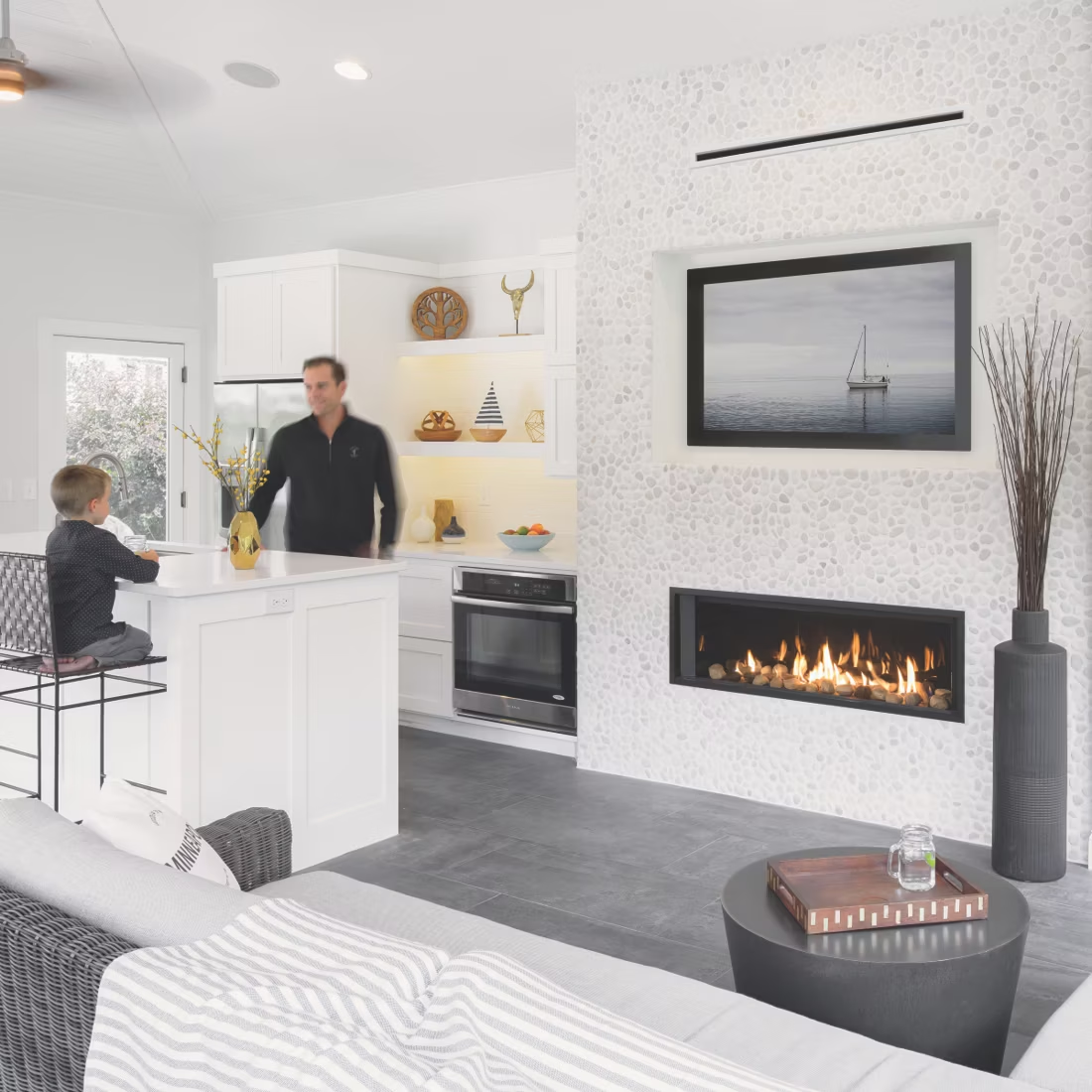
Four fuels. One honest answer for Gentry County.
Three steps. No salesperson until you're ready.
Tell us about your project
Your zip code, your situation, and the fuel you're leaning toward—or let the answers point you to one.
See what's actually available
The brands dealers within 100 miles genuinely carry—real options, never a catalog mirage.
Get your dealer & Project Guide
A trusted local dealer, plus the free Project Guide & Parts List that names every component of the job.
Frequently Asked Questions
Which fuel works best for a Gentry County home?
It depends on the house and how hands-on you want to be with fuel. Wood is a natural fit here—Gentry County's oak, hickory, walnut, and maple woodlots mean a lot of farm families still split and season their own supply, and a well-loaded cast-iron or catalytic stove can carry a farmhouse through a stretch of single-digit nights without leaning on the furnace. Gas is the low-maintenance choice for homes with propane service (most of rural Gentry County runs on propane rather than piped natural gas)—no wood handling, consistent heat, good for folks who travel or can't manage a woodpile. Pellet is the middle ground, though bag availability is worth checking before you commit—regional brands like Lignetics reach this part of Missouri through farm and hardware stores, but supply isn't as dense as in bigger markets. Electric works well as a supplemental unit in a bedroom or den, but with 5,800 heating degree days, it's not a realistic primary heat source here. Most Gentry County homes end up pairing wood or propane as the main heat with electric for the rooms farthest from the furnace.
Do I need a building permit to install a fireplace in Gentry County?
Requirements are lighter here than in a larger jurisdiction, but you still need to check. Within Albany, King City, and Stanberry, permits for wood stoves, inserts, gas appliances, and pellet stoves typically run through the city clerk's office rather than a dedicated building department—call ahead since these are small offices with limited hours. In unincorporated Gentry County, there's no county-wide building code enforcement for most residential construction, though any gas line work still requires a licensed propane or gas fitter regardless of jurisdiction, and your insurance carrier will usually want proof the installation meets NFPA 211 clearances even where no permit is pulled. Most local dealers who install regularly in the county can tell you exactly what your specific town requires.
Is wood burning restricted in Gentry County due to air quality?
No. Gentry County has no air quality non-attainment designations, no winter inversion advisories, and no burn-ban ordinances tied to particulate levels—unlike basin or valley counties out West where wood smoke can pool during cold snaps. That doesn't mean emissions don't matter: a newer EPA-certified stove will still burn cleaner, use less wood, and hold a fire longer overnight than an old pre-1988 unit, which is worth factoring into a replacement decision even without a regulatory push behind it.
How far will I need to travel for hearth service or a new install?
With a population under 4,200 spread across the whole county, Gentry County itself doesn't support a large roster of dedicated hearth retailers—most Albany, King City, and Stanberry households work with a dealer based in St. Joseph or another regional hub, roughly 30-45 minutes out. That's typical for rural northwest Missouri counties this size. The upside is that regional dealers serving this stretch are used to farm and acreage installs, including longer chimney runs and detached shop or garage installations. Expect a modest trip charge for service calls on the far edges of the county, and try to book pre-season chimney sweeps and gas inspections in September or October before the regional techs' schedules fill up with emergency winter calls.
What does a wood stove or fireplace installation typically cost in Gentry County?
Costs track regional Midwest pricing fairly closely. A wood stove or insert installation, including a properly sized chimney liner or Class A pipe run, generally lands between $4,000 and $8,500 for a typical single-story farmhouse; a full masonry chimney build for new construction runs higher. Gas fireplace, insert, or stove installs range from about $4,000 to $10,000, with propane tank setup and line work pushing costs toward the top of that range for homes without existing service. Pellet stove or insert installs typically run $4,000 to $7,000. Electric units are the outlier—most run $200 to $2,500 for the unit itself, with $300 to $1,000 in labor unless it's a simple plug-and-play placement. The county + fuel pages above break these down further against local dealer pricing.
How should I plan for firewood supply given the local hardwoods?
Gentry County's mix of oak, hickory, walnut, and maple is about as good as firewood gets—dense, high-BTU hardwoods that split cleanly and burn long, especially oak and hickory once properly seasoned. The catch is seasoning time: oak in particular needs 12-18 months of split, stacked, covered storage to drop below 20% moisture content, so wood cut this fall won't be ready to burn well until next winter at the earliest. If you're buying rather than cutting your own, ask any supplier for moisture content, not just species—unseasoned 'green' hardwood is a common source of poor draft and heavy creosote buildup in this region's stoves and chimneys.
What is an in-home preview and do I need one?
It's a visit where a hearth professional measures your space, confirms the model you picked actually works in your home, and walks the specs—framing, gas line, venting, finish work—before anything is ordered. Some details you just can't know until you see the house. Never make a down payment without one; it's the single most-skipped step that burns buyers.
Can a fireplace actually lower my heating bill?
Yes—by creating a comfort zone. A furnace heats every square foot of the house just to warm the one room you're in; a gas fireplace on low burns roughly a sixth of the gas a typical furnace does. Set the furnace around 55–60 degrees as a baseline, then heat the rooms your family actually uses. Families who heat this way commonly save $20–$60 a month.
Can I install a fireplace myself?
If you're putting a fire in your house on purpose, it's best to work with an expert. Unless you're genuinely experienced in framing, gas line, vent pipe, and the national code on clearances to combustibles, have a professional do it—and ideally the same company that sells you the fireplace, so warranty, service, and liability all live under one roof.
Does a fireplace add value to my home?
On average, a fireplace adds back to the home about the same amount you spent installing it. Add the monthly savings from heating the rooms you actually use instead of the whole house—often hundreds of dollars a year—and the value case is strong before you even count what a fire does for how your family uses the room.
Stove and Fireplace Dealers in Gentry County
Listings include WhyFire partner dealers, dealers we have verified as authorized for the brands we recommend, and established local businesses that carry hearth products. Every listing shows which one it is. The ones marked Preferred run on WhyFire's software, so they can show you real pricing and book your appointment right here. No manufacturer pays for placement. How we verify dealers →
Steinhauser Woodworks
Alternative Heat Resource
Montana Log & Hearth, Llc.
Jamesport Stove & Chimney
Get matched with a Gentry County hearth dealer.
Tell us about your project and we'll match you with a trusted local dealer and send a free Project Guide & Parts List—the exact parts, vent kit included, and the dealer we recommend for your home.
Find Your Fireplace →