
Find the right hearth fuel for your Dade County home.
Wood, gas, pellet, and electric fireplace resources for Greenfield, Dadeville, Everton, South Greenfield, Lockwood, and every farm and rural address in between. Find the right unit and connect with a trusted local hearth retailer.
Every Project Starts From One of These Five Situations
Ozark-country heating for a county of under 3,000 people.
Dade County sits in the rolling farm and timber country of southwest Missouri's Ozark foothills, home to just under 2,900 residents spread across small towns and family farms. The climate falls in zone 4A—cold enough for a real heating season, with occasional single-digit nights, but nowhere near the sustained deep-freeze you'd get in Madison, Wisconsin, or Fargo, North Dakota. Oak, hickory, walnut, and maple grow thick on local farm woodlots, and cutting your own firewood off family land is still more common here than buying it split and delivered—wood heat has never gone out of style in a county this rural.
This hub rounds up hearth retailers, service technicians, and fuel suppliers covering every community in the county—Greenfield, the county seat, plus Dadeville, Everton, South Greenfield, Lockwood, and Arcola. Because Dade County's population is small, many of the dealers and technicians who service local homes are actually based out of Springfield, Bolivar, or Lamar and travel in for consultations and installs. Pick your fuel below to see local pricing, recommended units, and which dealers actually cover your zip code.
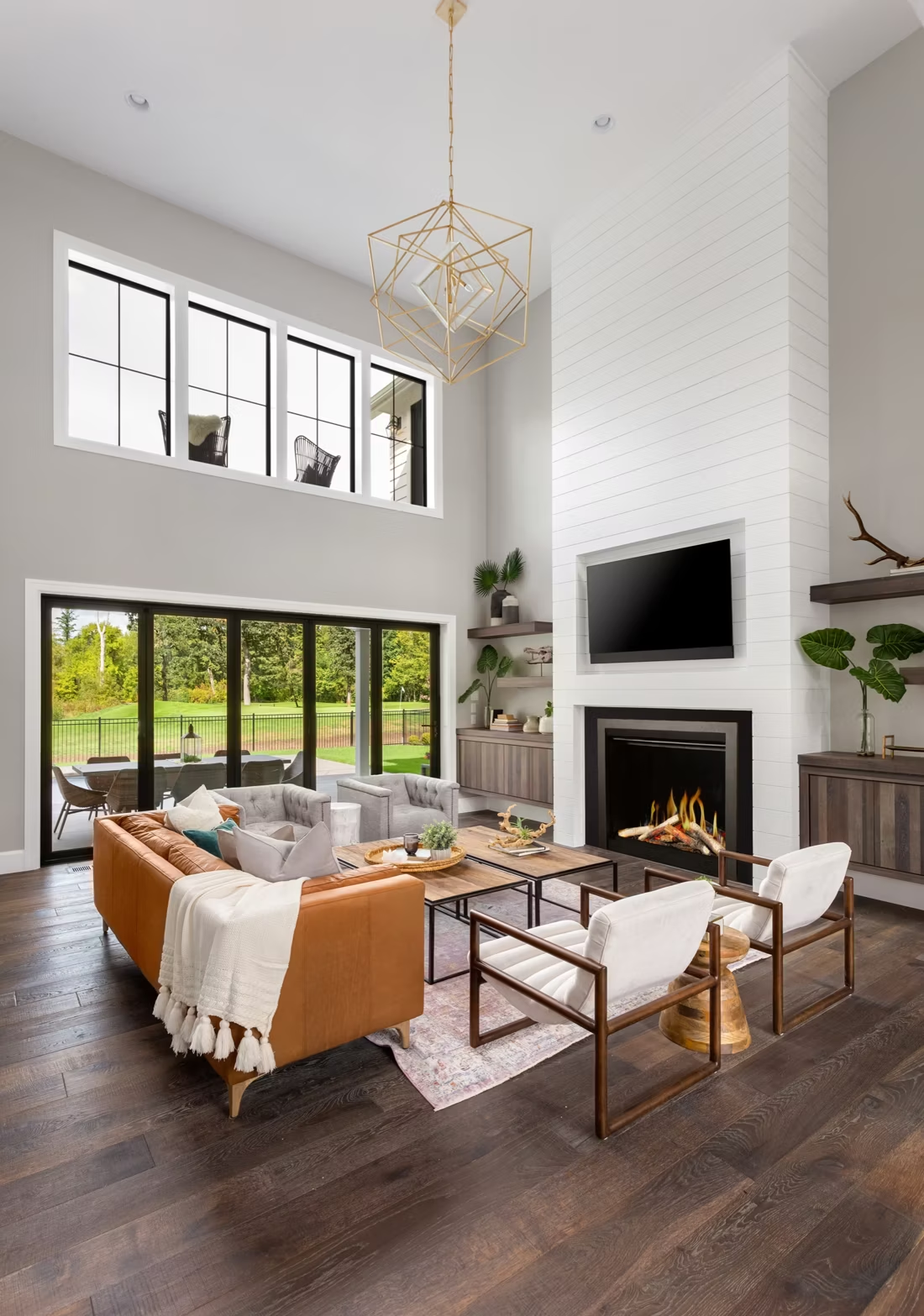
Four fuels. One honest answer for Dade County.
Three steps. No salesperson until you're ready.
Tell us about your project
Your zip code, your situation, and the fuel you're leaning toward—or let the answers point you to one.
See what's actually available
The brands dealers within 100 miles genuinely carry—real options, never a catalog mirage.
Get your dealer & Project Guide
A trusted local dealer, plus the free Project Guide & Parts List that names every component of the job.
Frequently Asked Questions
Which fuel works best for a home in Dade County?
Wood remains the default here, and for good reason—oak, hickory, walnut, and maple are all over the county's farm woodlots, and a lot of homeowners cut and split their own rather than buy it. A good catalytic or non-catalytic EPA-certified stove will comfortably carry a farmhouse through the occasional single-digit night without running up a fuel bill. Gas is mostly propane in Dade County—there's little to no piped natural gas out here, so gas fireplace or insert installs run on a propane tank, which still gives you instant, thermostat-controlled heat without hauling wood. Pellet stoves are a solid middle ground if you want wood-style ambiance without the splitting and stacking—Lignetics and Indeck Energy Services pellets are both reasonably easy to find locally. Electric is mostly supplemental here—good for a bedroom, a rental, or a room that doesn't get its own chimney or gas line, but not a primary heat source through a real Ozark winter. Most households end up pairing wood or propane as the main heat with electric or pellet in a secondary space.
Do I need a permit to install a fireplace in Dade County?
It depends on where in the county you're building. Like a lot of rural Missouri counties, Dade County does not enforce a county-wide building code for unincorporated areas, so a farm or acreage outside city limits often doesn't require a county permit for a wood stove or insert. Inside incorporated towns—Greenfield, Dadeville, Everton, South Greenfield, Lockwood, or Arcola—check with your town's city hall, since some require a permit for new construction, gas line work, or electrical hookups even if the county doesn't. Regardless of permitting, any propane line connection should be done by a licensed gas fitter, and most reputable installers will handle that piece as part of the job. Electric fireplaces generally don't need a permit unless you're hardwiring a built-in unit into a new circuit.
Are there any wood-burning restrictions in Dade County?
No. Dade County has no air quality non-attainment designation, no winter inversion problem, and no mandatory or voluntary burn-curtailment program like you'd find in a basin or valley community. You're free to burn wood without worrying about advisory days. That said, an EPA-certified stove still burns cleaner and more efficiently than an old pre-1990s box stove, uses less wood per BTU, and produces less creosote buildup in the chimney—worth considering even without a regulatory push behind it.
Can one local retailer handle all four fuel types?
Given how small the county's population is, the dealers with the broadest fuel lineup—wood, gas, pellet, and electric all under one roof—tend to be based in Springfield or Bolivar rather than inside Dade County itself. If you want to walk into a showroom and compare a wood insert next to a gas unit and a pellet stove side by side, that's where you're headed. Smaller shops closer to home, if any operate directly in towns like Greenfield or Lockwood, are more likely to specialize in one or two fuels—usually wood and propane, since those are the two most common heat sources on rural properties here.
How does fireplace service work if I live outside of town in Dade County?
Most chimney sweeps, propane technicians, and pellet stove service techs covering Dade County are based in Springfield or Bolivar and drive out to reach Greenfield, Dadeville, Everton, South Greenfield, Lockwood, and the farms in between. Expect a modest trip charge for rural calls, and expect fall (September–October) to book up fast as everyone tries to get their chimney swept or gas unit inspected before the first cold snap. If you're on a remote county road, it's worth scheduling early and keeping your installer's number handy—a mid-January emergency call for a rural address can mean a multi-day wait.
What's the typical cost range for fireplace installation across all fuel types in Dade County?
Wood stove or insert: roughly $4,000–$8,500 for a typical install, more if a full chimney liner or masonry work is needed. Propane fireplace, insert, or stove: roughly $4,000–$9,500, with the tank setup and gas line run being the biggest cost swing. Pellet stove or insert: roughly $4,000–$7,000 for most installs. Electric fireplace: the unit itself usually runs $200–$2,800, with labor from $300–$1,000 for anything beyond a simple plug-in wall unit. Rural travel fees from Springfield- or Bolivar-based installers can add a bit to any of these, so it's worth asking upfront when you get a quote.
Does a fireplace add value to my home?
On average, a fireplace adds back to the home about the same amount you spent installing it. Add the monthly savings from heating the rooms you actually use instead of the whole house—often hundreds of dollars a year—and the value case is strong before you even count what a fire does for how your family uses the room.
What are the biggest mistakes people make buying a fireplace?
Five come up constantly: budgeting for the unit but not the full job (vent, gas line, electrical, finish work); drowning in options instead of starting from style and fuel; buying without an in-home preview; handing installation to a handyman instead of a pro; and giving up out of sheer indecision. Every one is avoidable with a clear plan—step one, step two, step three.
Wood, gas, pellet, or electric—how do I choose?
Match the fuel to your life, not the other way around. Wood: lowest fuel cost and total power-outage independence, but you're hauling and stacking. Gas: press a button, set a thermostat, no maintenance to speak of. Pellet: wood economics with automatic feeding, in exchange for weekly cleaning and a need for electricity. Electric: plugs in anywhere with honest supplemental heat. Nobody regrets the fuel that fits how they actually live.
Should the dealer who sells my fireplace also install it?
Ideally, yes. A fireplace project involves vent pipe, gas line, electrical, and often tile or stone. Hire three or four separate trades and you own the liability and the game of telephone between them. One company selling and installing means one accountable party, start to finish—ask about factory training, on-time completion records, and what happens if an inspection fails.
Stove and Fireplace Dealers in Dade County
Listings include WhyFire partner dealers, dealers we have verified as authorized for the brands we recommend, and established local businesses that carry hearth products. Every listing shows which one it is. The ones marked Preferred run on WhyFire's software, so they can show you real pricing and book your appointment right here. No manufacturer pays for placement. How we verify dealers →
Aaron's Fireplace Co.
Smitty's Chimney Service
Meek's The Builder's Choice
Abc Block And Brick
Country Side Cottage
Hmi Fireplace Shop
Find your fireplace in Dade County.
Tell us your fuel and your town—Greenfield, Dadeville, Everton, South Greenfield, Lockwood, or Arcola—and we'll match you with a trusted local dealer and send over a free Project Guide & Parts List: the exact parts, vent kit included, and the installer we'd recommend for your project.
Find Your Fireplace →