
Heat your Cedar County home the right way, whatever the fuel.
Wood, gas, pellet, and electric fireplace resources for Stockton and the rural communities around it—built for a county where oak and hickory firewood are abundant and winter lows average 22°F. Find the right unit and connect with a trusted local dealer.
Every Project Starts From One of These Five Situations
Rural hardwood country in southwest Missouri.
Cedar County is home to just 5,733 people spread across small farms, acreages, and the county seat of Stockton. Sitting in climate zone 4A with a fairly typical winter chill and an average winter low of 22°F, the heating season here is real but manageable—colder than a Missouri river town, milder than Duluth, Minnesota's winters, which run nearly twice as long and cold. What the county has in abundance is hardwood: oak, hickory, walnut, and maple stands cover much of the Ozark foothill terrain, and a lot of local households split their own firewood or buy it from a neighbor rather than a big-box store.
What you'll find on this hub: hearth retailers, service technicians, and fuel suppliers covering Cedar County—most based in or near Stockton, with some traveling in from larger service centers like Springfield or El Dorado Springs. Pick your fuel below to see local dealers, typical installation costs, and unit recommendations suited to a rural Missouri property, whether you're heating a farmhouse woodstove or adding a propane insert to a newer build.
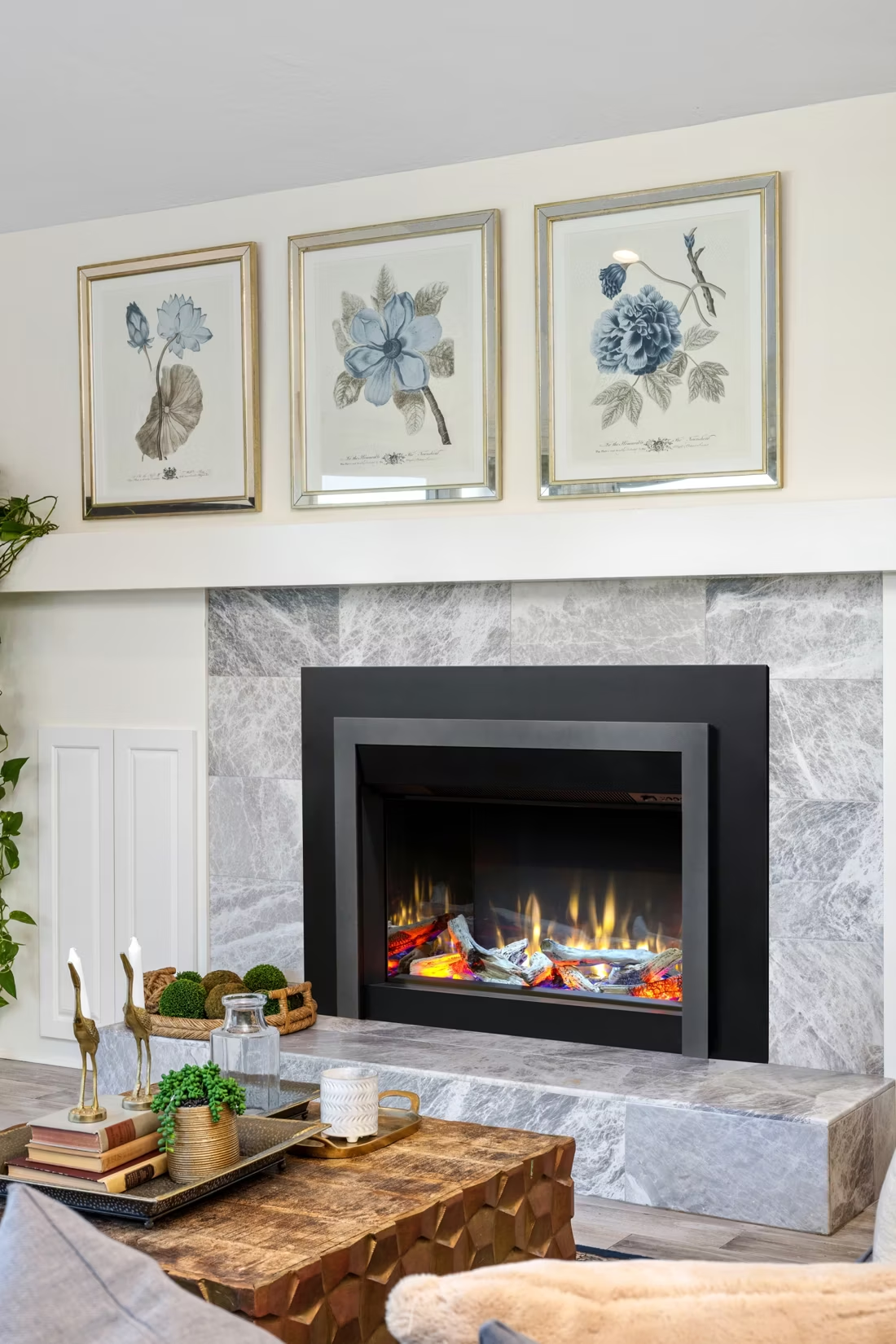
Four fuels. One honest answer for Cedar County.
Three steps. No salesperson until you're ready.
Tell us about your project
Your zip code, your situation, and the fuel you're leaning toward—or let the answers point you to one.
See what's actually available
The brands dealers within 100 miles genuinely carry—real options, never a catalog mirage.
Get your dealer & Project Guide
A trusted local dealer, plus the free Project Guide & Parts List that names every component of the job.
Frequently Asked Questions
Which fuel works best in Cedar County?
It depends on the home and the household. Wood is a natural fit given the oak, hickory, walnut, and maple stands throughout the county—many Cedar County residents already split their own firewood or buy it locally, and a good wood stove or insert handles the 22°F average winter lows without strain. Gas is the convenience option, and in a rural county like this it usually means propane rather than piped natural gas—instant heat with no wood-splitting labor. Pellet stoves are a solid middle ground; Lignetics and Indeck Energy Services both distribute into this part of Missouri, so fuel supply isn't a concern. Electric fireplaces work well as supplemental heat in bedrooms or additions but aren't built to carry a whole house through a Cedar County winter on their own. Plenty of homes here run wood or propane as primary heat with an electric unit for ambiance in a secondary room.
Do I need a permit to install a fireplace in Cedar County?
In most cases, yes, though requirements are lighter here than in larger jurisdictions. New wood stoves, inserts, gas appliances, and pellet stoves generally need a permit through your local building department, and any gas line work should go through a licensed installer. Wood-burning appliances installed today should meet current EPA emissions standards, which most retailer-installed units already do. Electric fireplaces usually skip the permit process unless you're hardwiring a built-in unit into a new circuit. Given Cedar County's small population, most homeowners work directly with their installing retailer, who typically handles the permit paperwork rather than leaving it to the homeowner.
Are there air quality restrictions on wood burning in Cedar County?
No—Cedar County has no listed air quality concerns, no non-attainment designation, and no history of winter burn advisories. This is a low-density rural county without the inversion or wildfire-smoke issues that trigger burn restrictions in other regions. That said, an EPA-certified wood stove is still worth choosing for efficiency and lower creosote buildup, even without a regulatory requirement—you'll get more heat per cord of oak or hickory and less chimney maintenance either way.
Can one local hearth retailer handle all four fuel types?
Some can, though in a county this size the retailer footprint is smaller than in a metro area. Multi-fuel dealers based in or near Stockton, or traveling in from the Springfield area, are your best bet for comparing wood, gas, pellet, and electric side by side under one roof. Smaller local shops may focus mainly on wood and pellet, given the county's hardwood supply, and refer out for gas line work or built-in electric installs. If you're not sure which fuel fits your home, a multi-fuel dealer can walk you through working displays and the real trade-offs for a rural Cedar County property.
How does service work in rural areas of Cedar County?
Most technicians serving Cedar County are based outside it—Stockton has some local coverage, but many chimney sweeps, gas techs, and pellet service providers travel in from El Dorado Springs or the greater Springfield area. Expect to schedule a bit further ahead than you would in a city, and don't be surprised by a modest travel fee for outlying properties. Fall is the best window to book annual chimney sweeping before oak and hickory creosote builds up over a full heating season, and before winter propane demand makes gas techs harder to schedule on short notice.
What's the typical cost range for fireplace installation across all fuel types in Cedar County?
Costs run similar to other rural Missouri counties, sometimes slightly lower given local labor rates. Wood stove or insert installation: roughly $3,500–$8,000 for a typical setup, more for new chimney construction. Gas fireplace, insert, or stove: roughly $4,000–$10,000, with propane tank and line work factored in for homes without existing gas service. Pellet stove or insert: roughly $4,000–$7,000 installed. Electric fireplace: $200–$3,000 for the unit itself, plus $300–$1,000 in labor for anything beyond a simple plug-in placement. Exact pricing depends on your chosen retailer and the specifics of your home—a local dealer walk-through gives the most accurate number.
Wood, gas, pellet, or electric—how do I choose?
Match the fuel to your life, not the other way around. Wood: lowest fuel cost and total power-outage independence, but you're hauling and stacking. Gas: press a button, set a thermostat, no maintenance to speak of. Pellet: wood economics with automatic feeding, in exchange for weekly cleaning and a need for electricity. Electric: plugs in anywhere with honest supplemental heat. Nobody regrets the fuel that fits how they actually live.
Can a fireplace actually lower my heating bill?
Yes—by creating a comfort zone. A furnace heats every square foot of the house just to warm the one room you're in; a gas fireplace on low burns roughly a sixth of the gas a typical furnace does. Set the furnace around 55–60 degrees as a baseline, then heat the rooms your family actually uses. Families who heat this way commonly save $20–$60 a month.
How much should I budget for a fireplace?
For an average home—covering the fireplace, the vent pipe, and basic installation—a budget between $3,900 and $5,500 gives you a lot of options across wood, gas, and pellet. By the time you add finish work, gas line, and electrical, the average complete installation lands between $5,000 and $12,000 all-in. In a remodel or new build, a good rule is to put about 2.5% of the total project cost toward the fireplace.
Does a fireplace add value to my home?
On average, a fireplace adds back to the home about the same amount you spent installing it. Add the monthly savings from heating the rooms you actually use instead of the whole house—often hundreds of dollars a year—and the value case is strong before you even count what a fire does for how your family uses the room.
Stove and Fireplace Dealers in Cedar County
Listings include WhyFire partner dealers, dealers we have verified as authorized for the brands we recommend, and established local businesses that carry hearth products. Every listing shows which one it is. The ones marked Preferred run on WhyFire's software, so they can show you real pricing and book your appointment right here. No manufacturer pays for placement. How we verify dealers →
Smitty's Chimney Service
Aaron's Fireplace Co.
Abc Block And Brick
Meek's The Builder's Choice
Country Side Cottage
The Fireplace And More Store
Find your fireplace in Cedar County.
Tell us about your home and we'll match you with a trusted local dealer and send a free Project Guide & Parts List—the exact parts, including the vent kit, and the dealer we recommend for your Cedar County project.
Find Your Fireplace →