
Find Your Fireplace in Carroll County, Missouri.
Wood, gas, pellet, and electric fireplace resources for Carrollton, Norborne, Tina, Bosworth, and every farm and town across Carroll County. Find the right unit and connect with a trusted local hearth retailer.
Every Project Starts From One of These Five Situations
Rural heat for rural Missouri: hearth options across Carroll County.
Carroll County sits in north-central Missouri along the Missouri River, anchored by the county seat of Carrollton and home to just over 5,200 people spread across farms, river bottoms, and small towns like Norborne and Tina. The 4A climate zone here means humid, changeable weather—summers are hot, but winters still average lows near 17°F, and the county logs roughly 5,336 heating degree days a year. That's a real heating season, five to six months of it, though nowhere near the load carried by a place like Madison, WI, which sees closer to 7,500 HDD. What Carroll County has going for it is fuel: oak, hickory, walnut, and maple grow throughout the county's woodlots and river bottoms, and those hardwoods split, season, and burn well in a modern EPA-certified stove.
This hub rounds up hearth retailers, service technicians, and fuel suppliers covering every corner of the county—from Carrollton down to Norborne, Tina, Bosworth, Hale, and DeWitt. There's no air-quality nonattainment designation here and no seasonal burn curtailment to plan around, so wood heat runs on its own schedule rather than a regulatory one. Pick your fuel below to see local dealers, typical installation costs, and the resources that fit a Carroll County home—whether that's a farmhouse burning split oak all winter or a Carrollton property switching to a propane-fed gas insert.
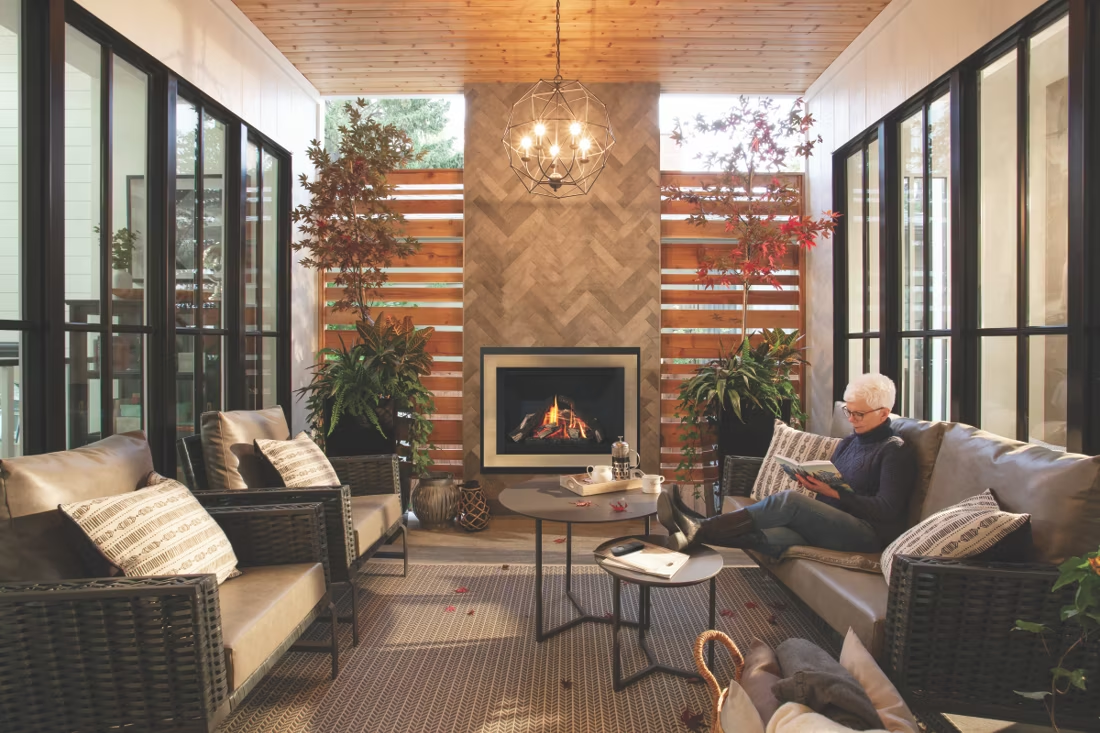
Four fuels. One honest answer for Carroll County.
Three steps. No salesperson until you're ready.
Tell us about your project
Your zip code, your situation, and the fuel you're leaning toward—or let the answers point you to one.
See what's actually available
The brands dealers within 100 miles genuinely carry—real options, never a catalog mirage.
Get your dealer & Project Guide
A trusted local dealer, plus the free Project Guide & Parts List that names every component of the job.
Frequently Asked Questions
Which fuel works best in Carroll County?
It depends on the property. Wood is the traditional choice for Carroll County's farms and acreages—oak, hickory, and walnut from local woodlots split and season well, and a catalytic or non-catalytic EPA-certified stove will comfortably carry a home through the county's 17°F average winter lows. Gas is the convenience option, though most of the county outside Carrollton runs on propane rather than piped natural gas, so a gas fireplace or insert here usually means a propane tank and a local propane supplier rather than a utility hookup. Pellet stoves are a solid middle ground—Lignetics and Indeck Energy Services both distribute into this part of Missouri, so fuel supply isn't the obstacle it can be in more remote counties. Electric fireplaces work well as supplemental heat in bedrooms or additions, but with 5,336 heating degree days a year, they're not a realistic primary heat source here. Plenty of Carroll County homes run wood or pellet as the main heater and lean on gas or electric in secondary rooms.
Do I need a permit to install a fireplace in Carroll County?
In most cases, yes, though Carroll County is small enough that permitting isn't as centralized as it is in bigger counties. New wood stoves, inserts, gas appliances, and pellet stoves typically need a permit, with the Carroll County Courthouse in Carrollton handling unincorporated-area permitting and the city halls in Carrollton and Norborne handling anything inside their limits. Wood-burning appliances need to meet current EPA 2020 NSPS emissions standards, and gas work—running a new line from a propane tank or tying into an existing one—should go through a licensed gas fitter regardless of whether a separate gas permit is required. Electric fireplaces are usually permit-free unless they involve new wiring or a dedicated circuit. Most hearth retailers serving the county handle the permit paperwork as part of the installation, which is worth confirming up front.
Are there air quality restrictions on wood burning in Carroll County?
No. Carroll County isn't in a nonattainment area and doesn't have the winter inversion problems that trigger burn advisories in some parts of the country. There's no curtailment schedule to check before lighting a fire and no county ordinance limiting wood smoke. That said, an EPA-certified stove still makes sense here—the oak and hickory that's plentiful in the county burns hot and clean in a modern catalytic or non-catalytic unit, and you'll get more heat per cord than you would from an old uncertified stove or open fireplace, restrictions or not.
Can one local dealer handle all four fuel types in a county this size?
Often, yes. With a population just over 5,200, Carroll County doesn't support the kind of specialized, single-fuel dealers you'd find in a larger market—most hearth retailers serving the county carry wood, gas, and pellet at minimum, and several also stock electric units for customers who want supplemental heat without venting. That's actually an advantage if you're still deciding between fuels: a multi-fuel dealer can show you a wood stove, a propane insert, and a pellet unit side by side and talk through what fits your house, your woodlot access, and your budget.
How does service work for outlying communities like Tina, Bosworth, and DeWitt?
Most chimney sweeps and hearth technicians covering Carroll County are based in or near Carrollton and drive out to the smaller towns and farm properties for both installs and annual service. Expect a modest trip charge for stops in Tina, Bosworth, DeWitt, or Hale, and expect scheduling to tighten up in October and November as everyone tries to get their chimney swept or gas unit inspected before the first cold snap. Booking service in late summer, before the rush, is the easiest way to avoid a multi-week wait once temperatures start dropping toward that 17°F average low.
What's the typical cost range for fireplace installation across fuel types in Carroll County?
Costs run lower here than in bigger metro markets, but the fuel still drives the range. Wood stove or insert: roughly $3,500–$7,000 installed, more if new chimney or hearth work is needed. Gas fireplace, insert, or stove: roughly $4,000–$8,500, with propane tank setup or line work adding to the low end of that range. Pellet stove or insert: roughly $3,500–$6,000 for a typical install. Electric fireplace: $200–$2,500 for the unit itself, plus $300–$900 in labor for anything beyond a plug-and-play wall unit. See the county + fuel pages above for cost detail tied to specific local retailers.
Can I install a fireplace myself?
If you're putting a fire in your house on purpose, it's best to work with an expert. Unless you're genuinely experienced in framing, gas line, vent pipe, and the national code on clearances to combustibles, have a professional do it—and ideally the same company that sells you the fireplace, so warranty, service, and liability all live under one roof.
Can a fireplace actually lower my heating bill?
Yes—by creating a comfort zone. A furnace heats every square foot of the house just to warm the one room you're in; a gas fireplace on low burns roughly a sixth of the gas a typical furnace does. Set the furnace around 55–60 degrees as a baseline, then heat the rooms your family actually uses. Families who heat this way commonly save $20–$60 a month.
Does a fireplace add value to my home?
On average, a fireplace adds back to the home about the same amount you spent installing it. Add the monthly savings from heating the rooms you actually use instead of the whole house—often hundreds of dollars a year—and the value case is strong before you even count what a fire does for how your family uses the room.
Should the dealer who sells my fireplace also install it?
Ideally, yes. A fireplace project involves vent pipe, gas line, electrical, and often tile or stone. Hire three or four separate trades and you own the liability and the game of telephone between them. One company selling and installing means one accountable party, start to finish—ask about factory training, on-time completion records, and what happens if an inspection fails.
Stove and Fireplace Dealers in Carroll County
Listings include WhyFire partner dealers, dealers we have verified as authorized for the brands we recommend, and established local businesses that carry hearth products. Every listing shows which one it is. The ones marked Preferred run on WhyFire's software, so they can show you real pricing and book your appointment right here. No manufacturer pays for placement. How we verify dealers →
Clemens Pool, Spa & Fireplace
Dillon Heating & Cooling Solutions
Fox Heating & Cooling
Jamesport Stove & Chimney
Montana Log & Hearth, Llc.
Controlled Aire
Find your fireplace in Carroll County.
Pick your fuel below to see local dealers, review installation costs, and get matched with a free Project Guide & Parts List for your Carroll County project.
Find Your Fireplace →