
Find the right heat source for your Buchanan County home.
Wood, gas, pellet, and electric fireplace resources for St. Joseph and every surrounding community in Buchanan County—from the Missouri River bluffs to the farmland east of I-29. Find the right unit and get matched with a trusted local hearth retailer.
Every Project Starts From One of These Five Situations
Missouri River bluffs and four-fuel heating in Buchanan County.
Buchanan County sits along the Missouri River in the northwest corner of the state, anchored by St. Joseph and stretching out through DeKalb, Easton, Rushville, and Agency. Winters here run cold but not brutal—average lows around 17°F, about two-thirds the winter heating load you'd see in Madison, Wisconsin. That's a Zone 5A winter: cold enough that a properly sized stove or insert earns its keep from November through March, mild enough that oversizing is a real risk if you don't plan for it. The county's hardwood mix—oak, hickory, walnut, and maple—is what fills most wood racks here, and it burns hot and clean when properly seasoned.
What you'll find on this hub: hearth retailers, service technicians, and fuel suppliers covering every corner of Buchanan County, from St. Joseph's older neighborhoods to the rural stretches near the Kansas and Iowa lines. Pick your fuel below to get specific—local dealers, installation costs, recommended units, and the details that apply to your project. Whether you're heating a Hall Street-era Victorian in St. Joseph or a newer build out toward Rushville, this is the starting point.
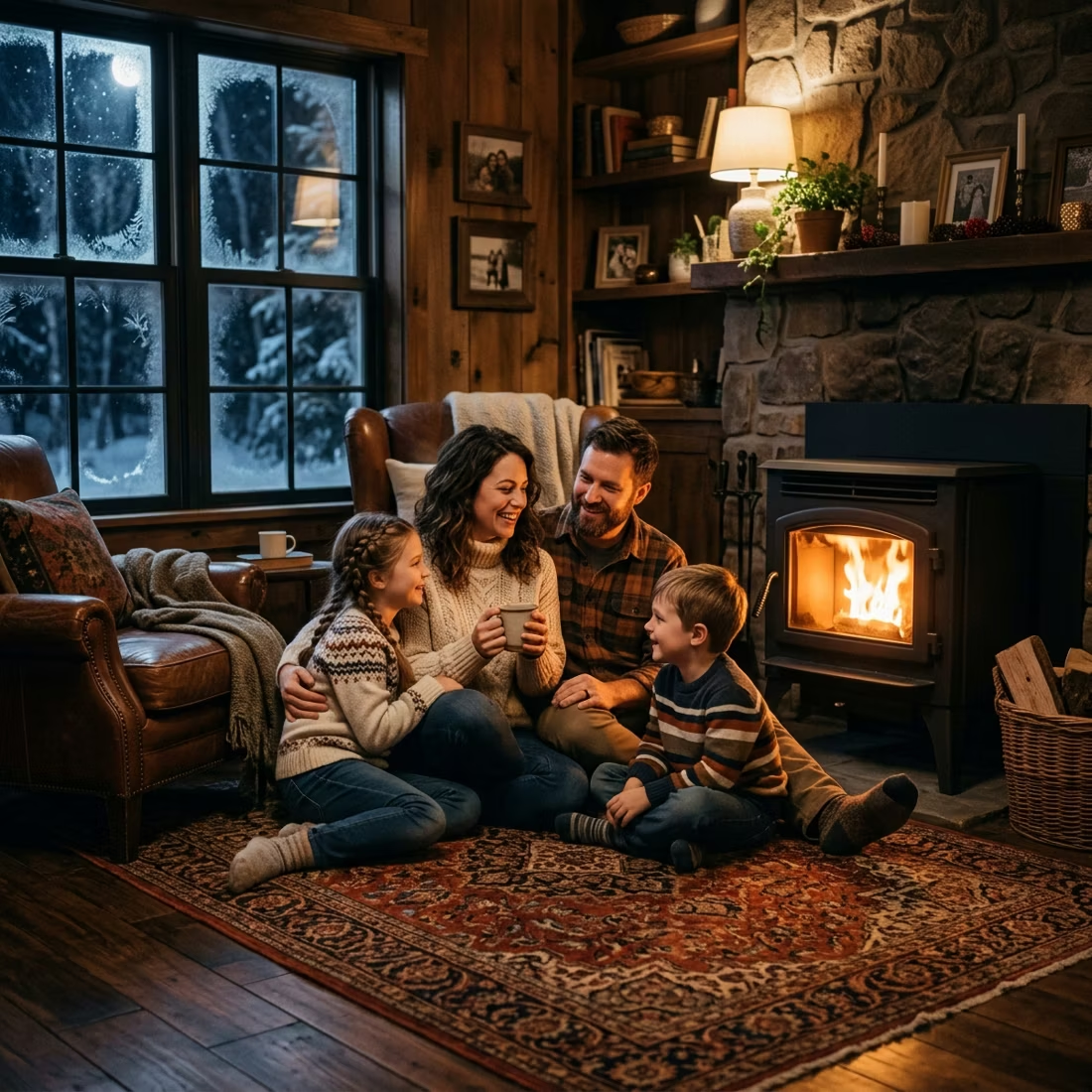
Four fuels. One honest answer for Buchanan County.
Three steps. No salesperson until you're ready.
Tell us about your project
Your zip code, your situation, and the fuel you're leaning toward—or let the answers point you to one.
See what's actually available
The brands dealers within 100 miles genuinely carry—real options, never a catalog mirage.
Get your dealer & Project Guide
A trusted local dealer, plus the free Project Guide & Parts List that names every component of the job.
Frequently Asked Questions
Which fuel works best in Buchanan County?
It depends on the home and the household. Wood is a solid choice given the county's oak, hickory, walnut, and maple supply—a mid-efficiency EPA-certified insert handles the 17°F average lows without needing an oversized firebox, since Buchanan County's winters don't demand the extreme output that colder climates require. Gas is popular in St. Joseph proper where natural gas service (Spire Missouri) reaches most neighborhoods—no wood handling, instant on/off, good for homes prioritizing convenience. Pellet splits the difference: wood-style ambiance and decent heat output without daily wood hauling, and Lignetics product is regionally available. Electric works well as a supplemental heat source or ambiance piece in bedrooms, sunrooms, and finished basements, but it isn't sized to be a primary heater through a full Buchanan County winter. Many households here end up running two fuels—wood or pellet as the workhorse, gas or electric in secondary rooms.
Do I need a permit to install a fireplace in Buchanan County?
In most cases, yes. Within St. Joseph city limits, new wood stoves, wood inserts, gas fireplaces, gas inserts, gas stoves, and pellet stoves go through the City of St. Joseph Building Codes Division, and gas installations require a separate gas-line permit pulled by a licensed installer. In unincorporated Buchanan County—DeKalb, Easton, Rushville, Agency, and the surrounding townships—permitting runs through the county's planning and zoning office. Electric fireplaces are usually exempt unless the install involves new wiring or a dedicated circuit for a built-in unit. New wood-burning appliances also need to meet EPA 2020 NSPS emissions standards to be sold and installed. Most local hearth retailers handle the permit paperwork as part of the install, so you're rarely filing it yourself.
Does wood burning face any air quality restrictions in Buchanan County?
No—Buchanan County doesn't sit in an EPA non-attainment area and doesn't experience the winter temperature inversions that trigger burn bans in some western basins. There's no seasonal curtailment program here, so you can burn on a cold January night without checking an advisory first. That said, current wood stoves and inserts sold and installed still need to meet EPA 2020 NSPS emissions standards, which cuts particulate output substantially compared to older pre-1990s stoves. If you're replacing an old smoke dragon, a new certified unit will burn noticeably cleaner and use less wood for the same heat output—a practical upgrade even without a regulatory push behind it.
What about older homes with existing masonry chimneys in St. Joseph?
St. Joseph has a lot of housing stock from the late 1800s and early 1900s—the Hall Street and Robidoux Row historic districts are full of homes with original masonry chimneys. Many of these flues were built for open fireplaces or old coal-burning appliances and need a liner inspection before a new wood or gas insert goes in—undersized or cracked flues are common in century-old masonry. A local retailer or chimney sweep will typically run a camera inspection first, then recommend a stainless steel liner sized to the new appliance. Budget for the liner as a separate line item; it's a normal part of insert installation in a house this age and usually adds a few hundred to over a thousand dollars depending on chimney height and condition.
Can one local retailer handle all four fuel types?
Several St. Joseph-area hearth retailers stock multiple fuel lines, which makes cross-shopping easier if you're not locked into one fuel yet. A dealer carrying wood, gas, and pellet units can put you in front of working displays of each and walk through the real trade-offs for your house—chimney condition, gas line access, wood supply. Pure electric fireplaces are more often sold through furniture and appliance retailers rather than dedicated hearth shops, so if electric is your fuel, it's worth checking both channels. The county + fuel pages above list which dealers carry which fuel types so you're not guessing before you call.
What's the typical cost range for fireplace installation across all fuel types in Buchanan County?
Wood stove or insert: roughly $4,000–$8,500 for a typical install, higher if a chimney liner or full masonry rebuild is needed on an older St. Joseph home. Gas fireplace, insert, or stove: about $4,000–$10,000 depending on how far the gas line has to run and whether venting already exists. Pellet stove or insert: generally $4,000–$7,000. Electric fireplace: $200–$3,000 for the unit itself, plus $300–$1,000 in labor for anything beyond a plug-and-play placement, such as a built-in wall unit. Exact numbers depend on your home's existing venting, electrical, and gas infrastructure—the county + fuel pages above break down cost drivers specific to each fuel.
Can a fireplace actually lower my heating bill?
Yes—by creating a comfort zone. A furnace heats every square foot of the house just to warm the one room you're in; a gas fireplace on low burns roughly a sixth of the gas a typical furnace does. Set the furnace around 55–60 degrees as a baseline, then heat the rooms your family actually uses. Families who heat this way commonly save $20–$60 a month.
Wood, gas, pellet, or electric—how do I choose?
Match the fuel to your life, not the other way around. Wood: lowest fuel cost and total power-outage independence, but you're hauling and stacking. Gas: press a button, set a thermostat, no maintenance to speak of. Pellet: wood economics with automatic feeding, in exchange for weekly cleaning and a need for electricity. Electric: plugs in anywhere with honest supplemental heat. Nobody regrets the fuel that fits how they actually live.
How much should I budget for a fireplace?
For an average home—covering the fireplace, the vent pipe, and basic installation—a budget between $3,900 and $5,500 gives you a lot of options across wood, gas, and pellet. By the time you add finish work, gas line, and electrical, the average complete installation lands between $5,000 and $12,000 all-in. In a remodel or new build, a good rule is to put about 2.5% of the total project cost toward the fireplace.
Should the dealer who sells my fireplace also install it?
Ideally, yes. A fireplace project involves vent pipe, gas line, electrical, and often tile or stone. Hire three or four separate trades and you own the liability and the game of telephone between them. One company selling and installing means one accountable party, start to finish—ask about factory training, on-time completion records, and what happens if an inspection fails.
Stove and Fireplace Dealers in Buchanan County
Listings include WhyFire partner dealers, dealers we have verified as authorized for the brands we recommend, and established local businesses that carry hearth products. Every listing shows which one it is. The ones marked Preferred run on WhyFire's software, so they can show you real pricing and book your appointment right here. No manufacturer pays for placement. How we verify dealers →
Buck Stove & Spa
Alternative Heat Resource
Find your fireplace in Buchanan County.
Pick your fuel below and I'll match you with a trusted local dealer and send over a free Project Guide & Parts List—the exact parts, including the vent kit, and the recommended installer for your Buchanan County home.
Find Your Fireplace →