
Fireplace Heat Built for Ozark Winters.
Wood, gas, pellet, and electric fireplace resources for every community in Benton County—from farmhouses outside Warsaw to lake cabins along Truman Lake and the Lake of the Ozarks shoreline. Get matched with a trusted local hearth retailer for your project.
Every Project Starts From One of These Five Situations
Wood heat and lake-house living in Benton County, Missouri.
Benton County sits in the Ozark foothills of west-central Missouri, wrapped around the Harry S. Truman Reservoir and the upper end of the Lake of the Ozarks. With roughly 5,800 year-round residents, the county is a mix of rural farmland, timbered acreage, and a large seasonal lake-home population that swells in summer and thins out come November. Winters here are real but not brutal—average lows around 22°F and about 4,568 heating degree days put Benton County well below the severity of places like Madison, WI or Minneapolis, but still cold enough for a consistent burn season from late fall through early spring. The hardwood mix is classic Ozark: oak, hickory, walnut, and maple, much of it cut and split right off the property.
This hub rolls up hearth retailers, service technicians, and fuel suppliers across the whole county—Warsaw, Cole Camp, Lincoln, the unincorporated lake communities, and the farm roads in between. Full-time farmhouses outside town often run wood as a primary heat source, taking advantage of abundant local hardwood. Lake cabins around Truman Lake and Lake of the Ozarks lean more toward gas, pellet, or electric units for convenience during weekend and seasonal use. Pick your fuel below to see local dealers, typical installation costs, and the resources that fit your specific property.
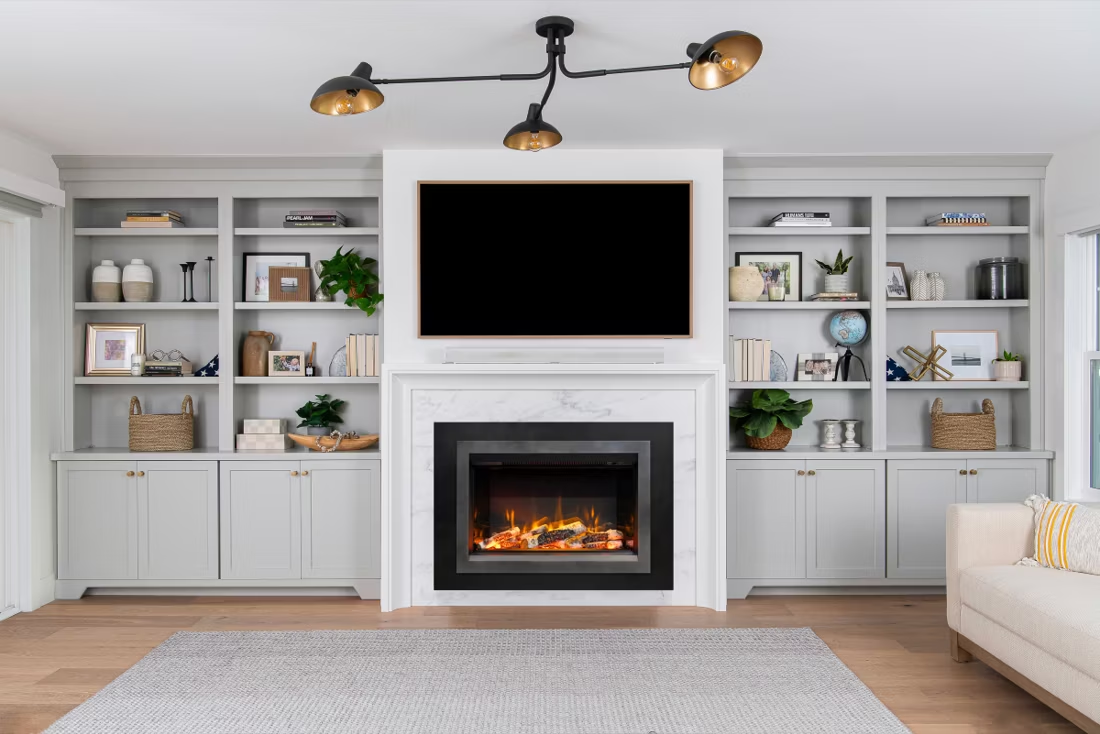
Four fuels. One honest answer for Benton County.
Three steps. No salesperson until you're ready.
Tell us about your project
Your zip code, your situation, and the fuel you're leaning toward—or let the answers point you to one.
See what's actually available
The brands dealers within 100 miles genuinely carry—real options, never a catalog mirage.
Get your dealer & Project Guide
A trusted local dealer, plus the free Project Guide & Parts List that names every component of the job.
Frequently Asked Questions
Which fuel works best in Benton County?
It depends on the property. For full-time farmhouses outside Warsaw or Cole Camp, wood remains the practical choice—oak, hickory, walnut, and maple are cut locally, firewood costs stay low compared to propane, and a good stove or insert will carry a home through the coldest stretches without relying on the grid. For lake cabins around Truman Lake or the Lake of the Ozarks, gas (propane, since natural gas service is limited across most of the county) is the popular option for weekend convenience—no wood hauling, no ash cleanup, heat on demand when you arrive Friday night. Pellet is the middle ground, with regional supply from brands like Lignetics keeping fuel accessible without a chainsaw. Electric fireplaces show up mostly as supplemental ambiance in seasonal cabins or bedrooms—not a primary heat source given winter lows around 22°F. Many county homeowners end up pairing two fuels: wood or pellet for daily heat, electric or gas for backup and convenience.
Do I need a permit to install a fireplace in Benton County?
It depends on where the property sits. Inside city limits—Warsaw or Cole Camp—a building permit is typically required for wood stoves, wood inserts, gas fireplaces, gas inserts, and pellet stoves, and any gas line work needs a licensed installer. Out in unincorporated Benton County, which covers most of the acreage around Truman Lake, permitting requirements are lighter and enforcement is inconsistent compared to incorporated towns, though code-compliant venting and clearances still matter for safety and insurance purposes even where no inspector will ever check. Most local retailers pull whatever permits are actually required as part of the installation, so it's worth asking upfront rather than assuming either way.
Are there any air quality or burning restrictions in Benton County?
No—Benton County has no non-attainment designation and no wood-burning curtailment program, unlike counties near larger metro areas or basin geography that trap winter smoke. There are no mandatory or voluntary no-burn days here. That said, an EPA-certified stove still burns roughly a third of the wood for the same heat compared to an old pre-1988 unit, and with oak and hickory running $200+ per cord delivered in some years, efficiency pays for itself even without a regulatory push behind it.
Can one local hearth retailer handle all four fuel types?
Many hearth retailers serving Benton County carry at least two or three fuel types rather than specializing in just one—wood and gas together is a common pairing, with pellet often available as a third option. Given the split between full-time farmhouse customers and seasonal lake-cabin owners, dealers in this area tend to stock a working mix rather than a single-fuel showroom. If you're deciding between fuels for a lake cabin versus a year-round home, ask a dealer to walk through both—the trade-offs (fuel access, backup power needs, weekend-only use) look different depending on which kind of property you're heating.
How does fireplace service work for lake cabins and rural properties in Benton County?
Technicians serving Benton County typically travel out from Warsaw or Sedalia to reach cabins around Truman Lake, the Lake of the Ozarks shoreline, and farm properties along the county's back roads. Because a lot of the lake housing stock sits empty through the winter, scheduling a chimney sweep or gas inspection in the fall—before the property goes quiet for the season—is easier than trying to book an emergency visit in January when a cabin owner shows up for a weekend and finds a problem. Rural travel fees are common for calls well outside Warsaw or Cole Camp, so ask about that upfront when booking.
What's the typical cost range for fireplace installation across all fuel types in Benton County?
Costs vary by fuel and by how much venting or gas-line work is involved. Wood stove or insert installation: roughly $3,800–$8,500 for a typical retrofit into an existing chimney or new class-A venting through a wall. Gas fireplace, insert, or stove: roughly $4,000–$10,000, with propane tank setup and line runs pushing costs higher for cabins without existing service. Pellet stove or insert: roughly $4,000–$7,000 installed. Electric fireplace: $200–$2,800 for the unit itself, with $300–$1,000 in labor for anything beyond a plug-and-play install. Lake-cabin projects with longer gas or electrical runs from the road tend to land at the higher end of these ranges—the county + fuel pages above break out specifics by fuel type.
Can I install a fireplace myself?
If you're putting a fire in your house on purpose, it's best to work with an expert. Unless you're genuinely experienced in framing, gas line, vent pipe, and the national code on clearances to combustibles, have a professional do it—and ideally the same company that sells you the fireplace, so warranty, service, and liability all live under one roof.
Does a fireplace add value to my home?
On average, a fireplace adds back to the home about the same amount you spent installing it. Add the monthly savings from heating the rooms you actually use instead of the whole house—often hundreds of dollars a year—and the value case is strong before you even count what a fire does for how your family uses the room.
Can a fireplace actually lower my heating bill?
Yes—by creating a comfort zone. A furnace heats every square foot of the house just to warm the one room you're in; a gas fireplace on low burns roughly a sixth of the gas a typical furnace does. Set the furnace around 55–60 degrees as a baseline, then heat the rooms your family actually uses. Families who heat this way commonly save $20–$60 a month.
What is an in-home preview and do I need one?
It's a visit where a hearth professional measures your space, confirms the model you picked actually works in your home, and walks the specs—framing, gas line, venting, finish work—before anything is ordered. Some details you just can't know until you see the house. Never make a down payment without one; it's the single most-skipped step that burns buyers.
Stove and Fireplace Dealers in Benton County
Listings include WhyFire partner dealers, dealers we have verified as authorized for the brands we recommend, and established local businesses that carry hearth products. Every listing shows which one it is. The ones marked Preferred run on WhyFire's software, so they can show you real pricing and book your appointment right here. No manufacturer pays for placement. How we verify dealers →
Dr Soot Chimney Sweep
Fox Heating & Cooling
Hmi Fireplace Shop
Find your fireplace in Benton County, Missouri.
Pick your fuel below and I'll match you with a trusted local hearth retailer, plus a free Project Guide & Parts List covering the exact parts—vent kit included—for your project.
Find Your Fireplace →