
Find the right fireplace for your Tate County home.
Wood, gas, pellet, and electric fireplace resources for every town in Tate County—from Senatobia to Coldwater to Arkabutla. Find the right unit for a mild-winter climate and connect with a trusted local hearth retailer.
Every Project Starts From One of These Five Situations
Mild winters, hardwood heritage in Tate County, Mississippi.
Tate County sits in the north Mississippi hill country just south of the Memphis, TN metro, where bottomland oak and pecan give way to pine plantations across rolling terrain. Winters here are mild by national standards—average lows sit around 31°F and the county logs a short, gentle heating season, less than a third of what a place like Minneapolis, MN sees in a typical year. That shorter, gentler heating season shapes how homes here use hearth appliances: wood and gas fireplaces are often supplemental warmth and ambiance rather than the sole source of heat, and units get sized differently than they would in a colder climate zone."
What you'll find on this hub: hearth retailers, service technicians, and fuel suppliers serving every community in the county—Senatobia (the county seat), Coldwater, Independence, Strayhorn, Arkabutla, and Tyro. Pick your fuel below to drill into specifics—local dealers, installation costs, recommended units, and the resources that match your project. Whether you're warming a farmhouse near the Coldwater River or a place off Highway 51, this is the starting point.
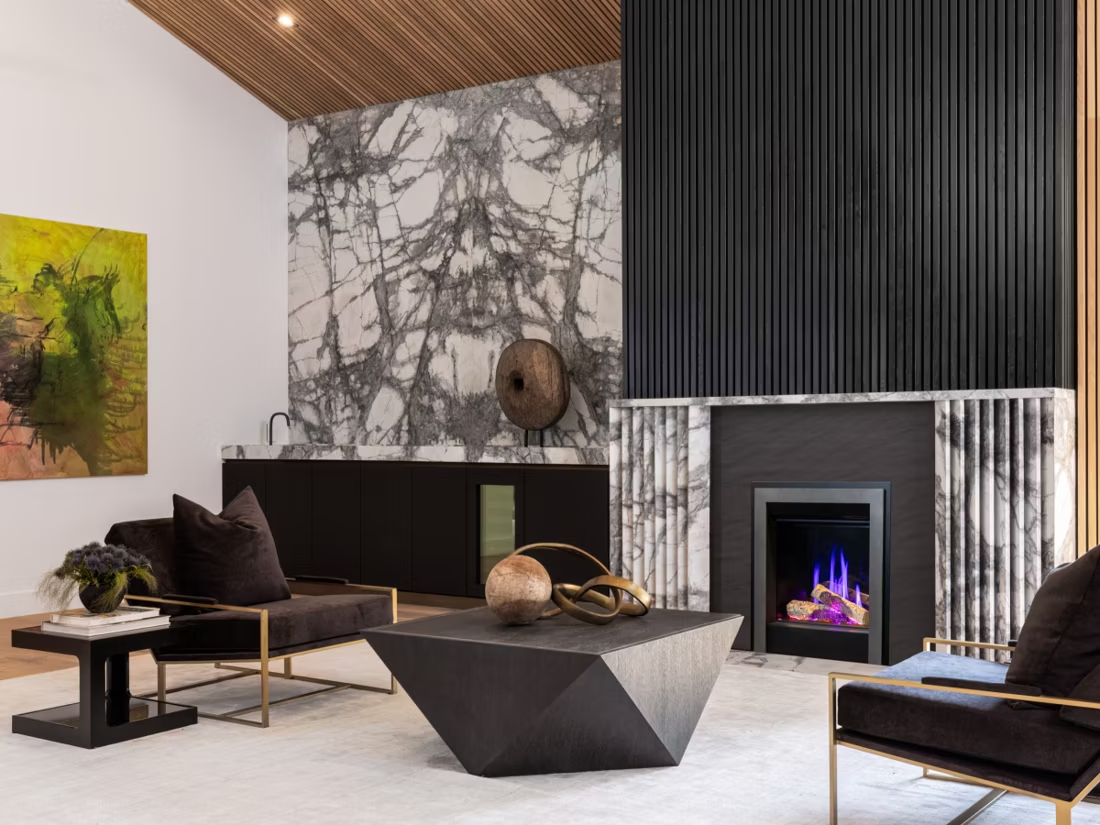
Four fuels. One honest answer for Tate County.
Three steps. No salesperson until you're ready.
Tell us about your project
Your zip code, your situation, and the fuel you're leaning toward—or let the answers point you to one.
See what's actually available
The brands dealers within 100 miles genuinely carry—real options, never a catalog mirage.
Get your dealer & Project Guide
A trusted local dealer, plus the free Project Guide & Parts List that names every component of the job.
Frequently Asked Questions
Which fuel works best in Tate County?
It depends on your home and how you plan to use it. Wood remains a natural fit given the abundance of oak, pine, and pecan across the county's hardwood bottoms and pine stands—many homeowners burn wood they've cut themselves or sourced locally, mostly for evenings and cold snaps rather than round-the-clock heat, since Tate County's mild climate zone (3A, with a short, gentle heating season) doesn't demand it. Gas is the low-maintenance choice, especially where natural gas service reaches into Senatobia; rural homes further out typically run on propane instead. Pellet stoves are a solid middle ground—less mess than a woodpile, and regional brands like Lignetics and Hamer Pellet Fuel are stocked at area suppliers. Electric fireplaces work well as supplemental, no-permit-hassle heat for a bedroom or den, though given the mild winters here they're rarely anyone's primary heat source. Most Tate County homes end up mixing fuels—a wood or gas fireplace as the centerpiece, electric in a secondary room.
Do I need a permit to install a fireplace in Tate County?
In most cases, yes, particularly for anything involving new venting, a chimney, or a gas line. Wood stoves, wood inserts, gas fireplaces, gas inserts, and pellet stoves typically require a building permit through the Tate County Building Department for unincorporated areas, or through the city if you're inside Senatobia or another incorporated town. Gas installations also call for a licensed gas-fitter and a separate gas permit for the line work. Electric fireplaces are usually exempt unless you're doing a built-in with new wiring or a dedicated circuit. Most local retailers pull the permit as part of the installation, so it's rarely something the homeowner has to handle solo—but it's worth confirming before work starts, especially on older farmhouses where existing wiring or masonry may need updates anyway.
Are there air quality restrictions on wood burning in Tate County?
No—Tate County isn't a designated non-attainment area and doesn't have the winter inversion issues that trigger burn advisories in some other parts of the country. That said, an EPA-certified stove or insert still burns cleaner and more efficiently than an older uncertified unit, uses less wood per season, and produces less visible smoke for neighbors—worth considering even without a regulatory mandate. If you're burning oak or pecan (both dense, slow-burning hardwoods common in this area), make sure it's seasoned at least six to twelve months; unseasoned wood is the main driver of smoke complaints in rural neighborhoods, not the fuel type itself.
Can one local hearth retailer handle all four fuel types?
Many full-service hearth dealers serving Tate County—whether based locally near Senatobia or reached through the Memphis metro market just across the state line—carry wood, gas, and pellet units, with electric fireplaces as an easier add-on line since they don't require venting. Smaller local shops sometimes specialize in just one or two fuels, particularly wood and gas, given how mild the winters here make pellet demand somewhat more seasonal. If you're not sure which fuel fits your home, a multi-fuel dealer can walk you through working displays and the real trade-offs for a house in this climate rather than a colder one.
How does service work in rural areas of Tate County?
With a population just over 10,000 spread across Senatobia, Coldwater, Independence, Strayhorn, and Arkabutla, most technicians serving the county travel between towns rather than operating out of a single storefront, and some homeowners are served by techs based out of the Memphis metro to the north. Expect to book chimney sweeps and gas inspections a few weeks ahead in the fall, before the first cold snap creates a rush. Because the heating season here is shorter and milder than in colder-climate zones, annual service is still worth doing every year—soot and creosote build up the same way whether you're burning ten nights a season or ninety.
What's the typical cost range for fireplace installation across all fuel types in Tate County?
Ranges vary by fuel and by how much venting or line work is involved. Wood stove or insert installation: roughly $3,500–$7,500 for a typical retrofit, more if a new chimney chase has to be built from scratch. Gas fireplace, insert, or stove: about $3,500–$8,500, with cost driven mainly by whether a gas line already reaches the install location—propane tank setups can add to that on rural properties. Pellet stove or insert: typically $3,800–$6,500 installed. Electric fireplace: $200–$2,500 for the unit itself, plus $300–$1,000 in labor for anything beyond a simple plug-and-play placement. Because Tate County's climate zone is milder than much of the country, unit sizing tends to run smaller and less expensive than in a colder region—but exact pricing still depends on your specific home and the retailer you work with.
How much should I budget for a fireplace?
For an average home—covering the fireplace, the vent pipe, and basic installation—a budget between $3,900 and $5,500 gives you a lot of options across wood, gas, and pellet. By the time you add finish work, gas line, and electrical, the average complete installation lands between $5,000 and $12,000 all-in. In a remodel or new build, a good rule is to put about 2.5% of the total project cost toward the fireplace.
Does a fireplace add value to my home?
On average, a fireplace adds back to the home about the same amount you spent installing it. Add the monthly savings from heating the rooms you actually use instead of the whole house—often hundreds of dollars a year—and the value case is strong before you even count what a fire does for how your family uses the room.
What is an in-home preview and do I need one?
It's a visit where a hearth professional measures your space, confirms the model you picked actually works in your home, and walks the specs—framing, gas line, venting, finish work—before anything is ordered. Some details you just can't know until you see the house. Never make a down payment without one; it's the single most-skipped step that burns buyers.
Can I install a fireplace myself?
If you're putting a fire in your house on purpose, it's best to work with an expert. Unless you're genuinely experienced in framing, gas line, vent pipe, and the national code on clearances to combustibles, have a professional do it—and ideally the same company that sells you the fireplace, so warranty, service, and liability all live under one roof.
Stove and Fireplace Dealers in Tate County
Listings include WhyFire partner dealers, dealers we have verified as authorized for the brands we recommend, and established local businesses that carry hearth products. Every listing shows which one it is. The ones marked Preferred run on WhyFire's software, so they can show you real pricing and book your appointment right here. No manufacturer pays for placement. How we verify dealers →
Sayle Oil Company
Southern Hearth
Quality Grills
eFireplaceStore.com
Installed Building Products Of Memphis
Thomas Lp Gas
Fireplace Shop
Wells Building Supply
Sayle Oil Company- Water Valley
The Chimney Doctor
Bishop Hearth And Home, Inc.
Get matched with a Tate County hearth dealer.
Pick your fuel below and we'll match you with a trusted local dealer and send over a free Project Guide & Parts List—a plan for your project with the exact parts, including the vent kit, and the retailer we recommend for your part of Tate County.
Find Your Fireplace →