
Find the right hearth for a mild Mississippi winter.
Wood, gas, pellet, and electric fireplace resources for Ackerman, Weir, and the rest of Choctaw County. See what a trusted local retailer can actually install near you.
Every Project Starts From One of These Five Situations
Short, moderate winters in the Mississippi hill country.
Choctaw County sits in Mississippi's north-central hill country, in climate zone 3A with an average winter low around 34°F and a mild, short heating season—a fraction of what a place like Fargo, ND or Duluth, MN sees each winter. That means the fireplace conversation here is different: most households aren't fighting single-digit overnight lows, they're looking for supplemental warmth on the coldest 10-20 nights of the year, ambiance most other evenings, and backup heat when an ice storm knocks out the grid. Oak, pine, and pecan are the wood species you'll find in local woodlots and firewood stacks, and all three burn well in a modern EPA-certified stove or insert.
There's no formal wood-burning air quality restriction in Choctaw County—no non-attainment designation, no winter burn bans—so the choice of fuel comes down to your home, your budget, and how you want to live with it day to day. This hub rounds up hearth retailers, service technicians, and fuel suppliers covering the whole county, plus city-level pages for Ackerman and the smaller unincorporated communities. Pick a fuel below to see local dealers, typical installed costs, and the resources that match your project.
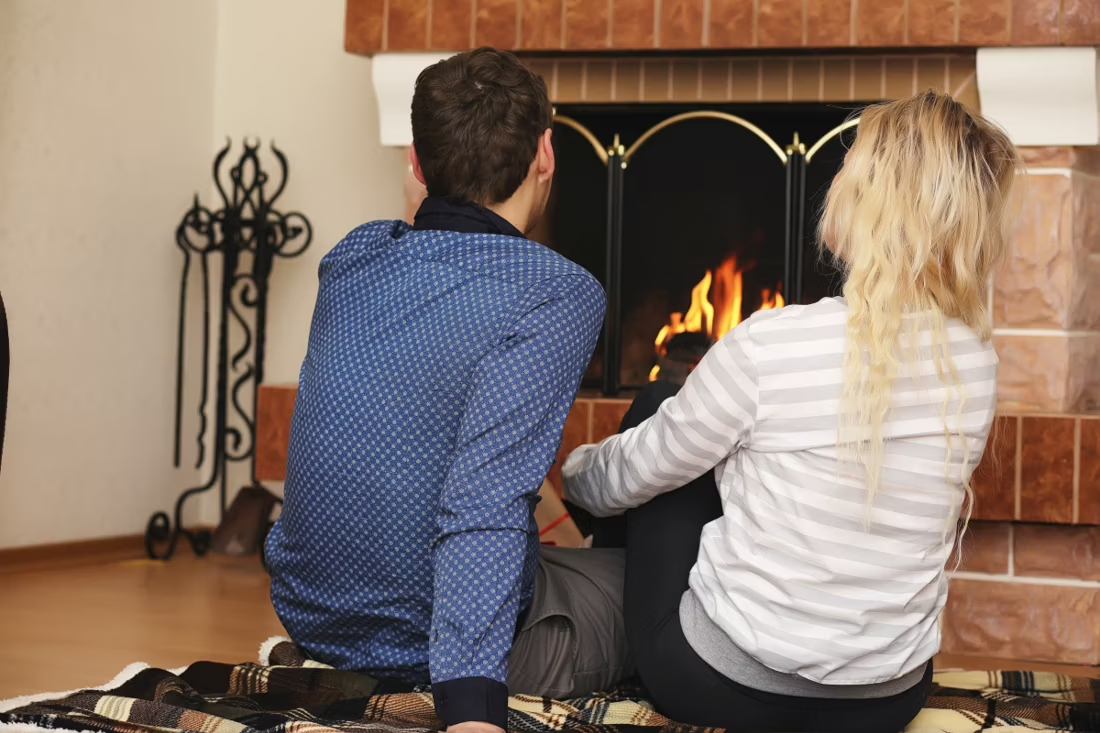
Four fuels. One honest answer for Choctaw County.
Three steps. No salesperson until you're ready.
Tell us about your project
Your zip code, your situation, and the fuel you're leaning toward—or let the answers point you to one.
See what's actually available
The brands dealers within 100 miles genuinely carry—real options, never a catalog mirage.
Get your dealer & Project Guide
A trusted local dealer, plus the free Project Guide & Parts List that names every component of the job.
Frequently Asked Questions
Which fireplace fuel makes the most sense in Choctaw County?
With such a mild, short heating season, Choctaw County doesn't need the kind of all-night, single-digit-cold heating a place like Bozeman, MT or Burlington, VT requires—so the decision leans more on lifestyle than survival. Wood remains popular given the local supply of oak, pine, and pecan and the appeal of a real fire on the handful of genuinely cold nights each winter. Gas fireplaces and inserts (propane, since natural gas service is limited in much of the county) offer instant, no-labor heat that's popular for everyday use and for backup during ice storms. Pellet stoves split the difference—real fire, less woodpile labor—and bagged fuel from Lignetics, Hamer Pellet Fuel, or Greenway Renewable Energy is available through regional farm and feed stores. Electric fireplaces work well as supplemental or ambiance-only units in bedrooms and living rooms, since the mild climate here doesn't demand a primary electric heat source. Most Choctaw County homeowners end up choosing based on how often they'll actually use it rather than heating necessity.
Do I need a permit to install a fireplace in Choctaw County?
In most cases, yes, for anything beyond a plug-in electric unit. New wood stoves, wood inserts, gas fireplaces, gas inserts, and pellet stoves typically require a building permit, and gas installations need a licensed propane technician for the line and connection work since natural gas isn't widely available in the county. Wood-burning appliances should meet current EPA emissions standards for the cleanest, most efficient burn. Electric fireplaces usually don't need a permit unless you're doing a built-in installation with new wiring. Permitting in Choctaw County runs through the county building department for unincorporated areas and through the town for installs inside Ackerman city limits. Most local retailers handle this paperwork as part of the installation, so it's rarely something homeowners have to manage themselves.
Are there any air quality or burning restrictions in Choctaw County?
No. Choctaw County has no non-attainment designation and no seasonal burn curtailment program—unlike some western basin communities that see winter inversions trap wood smoke. That said, an EPA-certified stove or insert still burns cleaner and more efficiently than an older uncertified unit, which matters for chimney creosote buildup and long-term maintenance even without a regulatory requirement pushing the decision.
Can one local retailer handle all four fuel types for my Choctaw County home?
Because Choctaw County is a smaller, more rural market, most of the hearth retailers who serve the area are based in neighboring counties and carry a broad mix—wood, gas, and pellet at minimum, with electric units as an add-on line rather than a core focus. That's typical for this part of Mississippi: dealers who cover a wide service radius tend to stock what sells across several counties rather than specializing narrowly. If you're comparing fuels, ask a retailer for a walkthrough of working displays before committing, since floor space for demo units can be limited outside the larger regional showrooms.
How does installation and service work if I live in a rural part of Choctaw County?
Most technicians serving Choctaw County are based in Winston or Oktibbeha County and drive in for both installs and annual service, so expect to schedule a bit further ahead than you would in a larger metro area—especially for pre-winter tune-ups in September and October, which book up fast. A small trip fee for rural service calls is common. Because ice storms are the more likely cause of a winter power outage here than deep cold, it's worth having at least one non-electric heat source—a wood or vented gas unit that doesn't rely on an electronic ignition or blower—as backup for the handful of communities on Choctaw County's more remote roads.
What's the typical installed cost range across fuel types in Choctaw County?
Costs run a bit lower here than in colder climates since venting and unit sizing don't need to account for extreme sustained cold. Wood stove or insert installation: roughly $3,500–$7,500 for a typical job. Gas fireplace, insert, or stove: roughly $3,500–$8,500, with propane line work factored in since most of the county isn't on natural gas service. Pellet stove or insert: roughly $3,500–$6,000. Electric fireplace: $200–$2,500 for the unit itself, plus $300–$1,000 in labor for anything beyond a simple plug-in install. Exact pricing depends on your home's existing venting, chimney condition, and the specific unit—a local retailer can give you a firm number after a home visit.
Can a fireplace actually lower my heating bill?
Yes—by creating a comfort zone. A furnace heats every square foot of the house just to warm the one room you're in; a gas fireplace on low burns roughly a sixth of the gas a typical furnace does. Set the furnace around 55–60 degrees as a baseline, then heat the rooms your family actually uses. Families who heat this way commonly save $20–$60 a month.
Wood, gas, pellet, or electric—how do I choose?
Match the fuel to your life, not the other way around. Wood: lowest fuel cost and total power-outage independence, but you're hauling and stacking. Gas: press a button, set a thermostat, no maintenance to speak of. Pellet: wood economics with automatic feeding, in exchange for weekly cleaning and a need for electricity. Electric: plugs in anywhere with honest supplemental heat. Nobody regrets the fuel that fits how they actually live.
Does a fireplace add value to my home?
On average, a fireplace adds back to the home about the same amount you spent installing it. Add the monthly savings from heating the rooms you actually use instead of the whole house—often hundreds of dollars a year—and the value case is strong before you even count what a fire does for how your family uses the room.
What is an in-home preview and do I need one?
It's a visit where a hearth professional measures your space, confirms the model you picked actually works in your home, and walks the specs—framing, gas line, venting, finish work—before anything is ordered. Some details you just can't know until you see the house. Never make a down payment without one; it's the single most-skipped step that burns buyers.
Stove and Fireplace Dealers in Choctaw County
Listings include WhyFire partner dealers, dealers we have verified as authorized for the brands we recommend, and established local businesses that carry hearth products. Every listing shows which one it is. The ones marked Preferred run on WhyFire's software, so they can show you real pricing and book your appointment right here. No manufacturer pays for placement. How we verify dealers →
Neill Gas- Louisville
Starkville Lp Gas, Inc.
Scott's Tri-County Propane
Scott Petroleum Corporation- Starkville
Get matched with a Choctaw County hearth dealer.
Tell us about your fuel and your home, and we'll match you with a trusted local dealer and send you a free Project Guide & Parts List—the exact parts, including the vent kit, and the dealer we recommend for your project.
Find Your Fireplace →