
Built for -8 degrees and beyond, Roseau County.
Wood, gas, pellet, and electric fireplace resources for every city and township in Roseau County—from Roseau to Warroad to Greenbush. Find the right unit and connect with a trusted local hearth retailer who knows what actually holds heat this far north.
Every Project Starts From One of These Five Situations
Climate Zone 7 heating along the Canadian border.
Roseau County sits at the northern edge of Minnesota, bordering Manitoba, in one of the coldest inhabited stretches of the Lower 48—Climate Zone 7, with an average winter low near -8°F and one of the longest, most demanding heating seasons in the country. That's colder than Duluth, colder than International Falls in most winters, and it means the heating season here isn't a few cold months—it's most of the year. Oak, maple, birch, and aspen are the wood species most local households burn, whether self-cut from county land or bought split from a farm supplier. At these temperatures, appliance choice isn't cosmetic—a stove or insert either holds a burn through a -30°F night or it doesn't.
What you'll find on this hub: hearth retailers, service technicians, and fuel suppliers serving the whole county—from the city of Roseau out through Warroad, Greenbush, Badger, and the townships in between. Pick your fuel below to drill into specifics—local dealers, installation costs, recommended units built for extreme cold, and the resources that match your project. Whether you're heating a farmhouse outside Badger or a lake cabin near the Roseau River, this is the starting point.
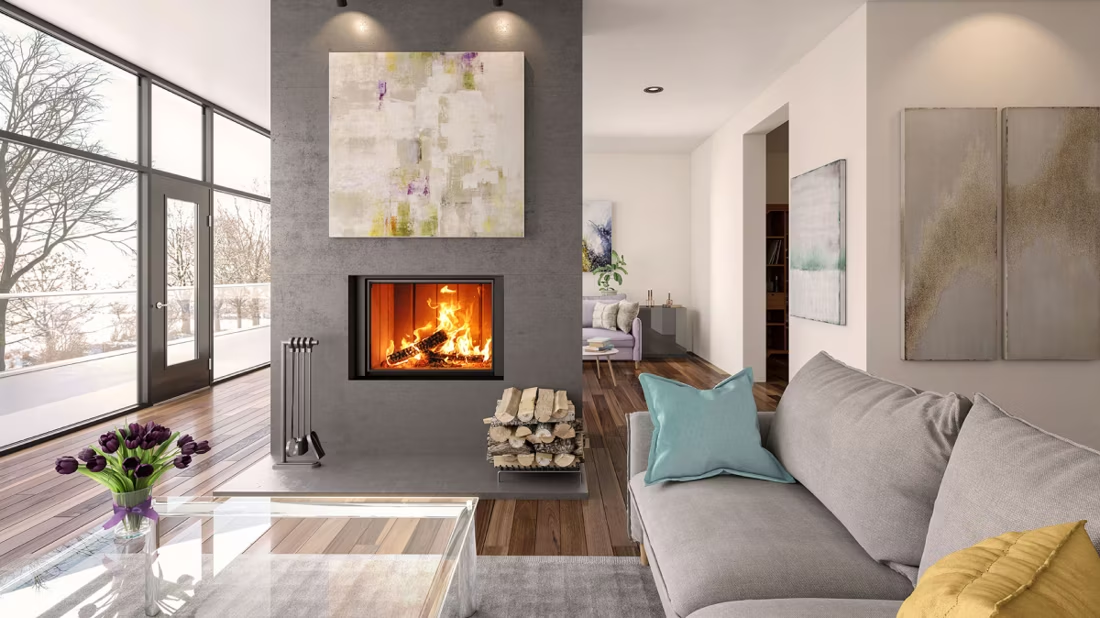
Four fuels. One honest answer for Roseau County.
Three steps. No salesperson until you're ready.
Tell us about your project
Your zip code, your situation, and the fuel you're leaning toward—or let the answers point you to one.
See what's actually available
The brands dealers within 100 miles genuinely carry—real options, never a catalog mirage.
Get your dealer & Project Guide
A trusted local dealer, plus the free Project Guide & Parts List that names every component of the job.
Frequently Asked Questions
Which fuel works best in Roseau County?
At -8°F average lows and one of the longest, most demanding heating seasons in the country, this comes down to reliability during extended cold, not preference. Wood is the traditional primary or backup heater here—a catalytic stove loaded with oak or birch can hold an overnight burn through sustained sub-zero temperatures, and it keeps working if the power goes out, which matters on a rural grid. Gas is common where propane delivery is reliable—instant heat with no wood-splitting labor, though tank runs can be strained during multi-day cold snaps. Pellet stoves are a solid middle option—Indeck Energy Services and Lignetics pellets are both available regionally, and pellet heat is cleaner-burning, but pellet stoves need electricity to run the auger and blower, so they're vulnerable during outages unless paired with a battery backup. Electric fireplaces are supplemental only—useful for a bedroom or den, but not built to carry primary heat load in a Zone 7 winter. Most Roseau County homes run a combination: wood or propane as the workhorse, pellet or electric in secondary spaces.
Do I need a permit to install a fireplace in Roseau County?
Generally yes, for anything beyond a plug-in electric unit. New wood stoves, wood inserts, gas fireplaces, gas inserts, and pellet stoves typically require a building permit through the applicable city or township building authority, or through Roseau County if you're in an unincorporated area. Gas installations also need a separate permit and licensed gas-fitter for line work and connection. Wood-burning appliances installed new should meet current EPA emissions standards. Most local hearth retailers in the city of Roseau or Warroad handle the permitting process as part of the installation quote, so it's worth asking upfront rather than pulling permits yourself.
Does Roseau County have air quality restrictions on wood burning?
No—Roseau County doesn't have the winter inversion or non-attainment issues that trigger burn advisories in some western basins. The county's open, flat terrain and low population density (just over 6,000 residents countywide) mean wood smoke doesn't concentrate the way it does in mountain valleys or urban basins. That said, installing a newer EPA-certified stove still makes sense here—not for compliance, but because a modern catalytic or non-catalytic unit burns oak and birch more efficiently, meaning longer burn times and less wood consumed per heating season, which matters when you're feeding a stove through a seven-month winter.
Can one local hearth retailer handle all four fuel types?
Most hearth retailers covering Roseau County carry two or three fuel types rather than a full lineup—the county's small population means dealers tend to specialize in what actually moves locally, typically wood and gas, with pellet as a growing third category. A retailer that carries all four fuels is less common here than in larger metro markets, but it's worth asking directly, since some dealers based in Roseau or Warroad bring in pellet and electric units on request even if they're not on the showroom floor. If you're cross-shopping fuels, ask to see working displays before committing—cold-climate performance varies a lot between models even within the same fuel type.
How does service work in rural parts of Roseau County?
Most technicians are based in the city of Roseau or Warroad and travel out to townships and rural properties across the county, including areas near the Roseau River and along the Manitoba border. Expect a modest travel fee for calls beyond a short radius, and expect scheduling to tighten fast once real cold arrives—late summer and early fall (August–October) is the window to book annual chimney sweeps and gas inspections before the heating season locks in. For rural homes especially, planning ahead matters: keep a wood backup on hand even if propane or pellet is your primary, since a multi-day outage during a -30°F stretch is not a hypothetical here.
What's the typical cost range for fireplace installation across all fuel types in Roseau County?
Costs vary by fuel and by how much venting or gas line work is involved. Wood stove or insert installation: roughly $4,000–$8,500 for a standard install, higher for new chimney construction. Gas fireplace, insert, or stove: roughly $4,000–$10,000 depending on whether propane line work is needed. Pellet stove or insert: roughly $4,000–$7,000 for a typical install. Electric fireplace: $200–$3,000 for the unit itself, plus $400–$1,200 in labor for anything beyond a simple plug-in placement. Given the extended heating season here, it's worth weighing installed cost against fuel cost per season—a higher upfront wood stove cost can pay back faster than in milder climates simply because the appliance runs so many more months a year. See the county + fuel pages above for retailer-specific pricing.
Can I install a fireplace myself?
If you're putting a fire in your house on purpose, it's best to work with an expert. Unless you're genuinely experienced in framing, gas line, vent pipe, and the national code on clearances to combustibles, have a professional do it—and ideally the same company that sells you the fireplace, so warranty, service, and liability all live under one roof.
Wood, gas, pellet, or electric—how do I choose?
Match the fuel to your life, not the other way around. Wood: lowest fuel cost and total power-outage independence, but you're hauling and stacking. Gas: press a button, set a thermostat, no maintenance to speak of. Pellet: wood economics with automatic feeding, in exchange for weekly cleaning and a need for electricity. Electric: plugs in anywhere with honest supplemental heat. Nobody regrets the fuel that fits how they actually live.
Does a fireplace add value to my home?
On average, a fireplace adds back to the home about the same amount you spent installing it. Add the monthly savings from heating the rooms you actually use instead of the whole house—often hundreds of dollars a year—and the value case is strong before you even count what a fire does for how your family uses the room.
How much should I budget for a fireplace?
For an average home—covering the fireplace, the vent pipe, and basic installation—a budget between $3,900 and $5,500 gives you a lot of options across wood, gas, and pellet. By the time you add finish work, gas line, and electrical, the average complete installation lands between $5,000 and $12,000 all-in. In a remodel or new build, a good rule is to put about 2.5% of the total project cost toward the fireplace.
Stove and Fireplace Dealers in Roseau County
Listings include WhyFire partner dealers, dealers we have verified as authorized for the brands we recommend, and established local businesses that carry hearth products. Every listing shows which one it is. The ones marked Preferred run on WhyFire's software, so they can show you real pricing and book your appointment right here. No manufacturer pays for placement. How we verify dealers →
Marvin Home Center
Geroy's Home & Appliance
Lumber One Building Supplies
McMunn & Yates Building Supply
Northern Energy
Find your fireplace in Roseau County.
Tell us your fuel and your home, and we'll match you with a trusted local dealer and send a free Project Guide & Parts List—the parts, the vent kit, and the recommended installer for your Roseau County project.
Find Your Fireplace →