
Heat that holds up through a Redwood County winter.
Wood, gas, pellet, and electric fireplace resources for every city and township in Redwood County—from Redwood Falls to Wabasso. Find the right unit and connect with a trusted local hearth retailer.
Every Project Starts From One of These Five Situations
Prairie cold, 7,960 heating degree days, and a county that burns oak, maple, and birch.
Redwood County sits in south-central Minnesota's farm country, along the Minnesota and Redwood Rivers, with winter lows averaging 4°F and a heating season that runs nearly seven months. At close to 8,000 heating degree days, this county sits in the same cold-climate tier as Fargo or Bismarck—furnaces and hearth appliances both work hard here. There's no significant tree-cover shortage locally: oak, maple, birch, and aspen are the common firewood species, and plenty of farmstead homes still burn wood as a supplemental or primary heat source alongside propane or fuel oil, since natural gas mains don't reach every township.
What you'll find on this hub: hearth retailers, service technicians, and fuel suppliers covering the whole county—Redwood Falls as the county seat and commercial center, plus Morgan, Wabasso, Lamberton, Belview, Vesta, Sanborn, Milroy, Wanda, and Delhi. Pick your fuel below to see local dealers, typical installed costs, and recommended units for this climate. Whether you're heating a farmhouse on a windswept section line or a in-town lot in Redwood Falls, this is the starting point.
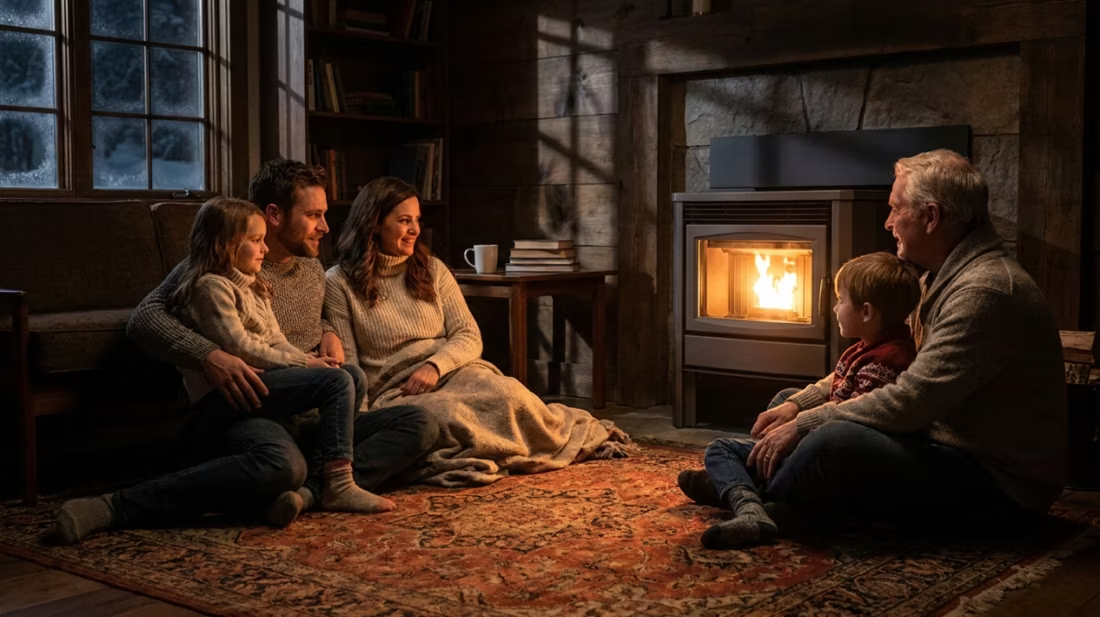
Four fuels. One honest answer for Redwood County.
Three steps. No salesperson until you're ready.
Tell us about your project
Your zip code, your situation, and the fuel you're leaning toward—or let the answers point you to one.
See what's actually available
The brands dealers within 100 miles genuinely carry—real options, never a catalog mirage.
Get your dealer & Project Guide
A trusted local dealer, plus the free Project Guide & Parts List that names every component of the job.
Frequently Asked Questions
Which fuel works best in Redwood County?
It depends on the home and how it's already set up. Wood is a long-standing backup and primary fuel on Redwood County farmsteads—oak and maple burn long and hot, and a cord stacked in the fall gets a household through the coldest stretches even if the power goes out. Gas is the convenience choice where natural gas or propane service already reaches the house; instant heat with no wood-hauling. Pellet stoves are a solid middle ground for in-town Redwood Falls or Morgan homes that want wood-style ambiance without splitting and stacking—pellets from Lignetics and Somerset Pellet Fuel are regionally available. Electric fireplaces are supplemental almost everywhere in this climate zone—good for a bedroom or den, but not a substitute for primary heat when lows average 4°F. Most homes here run two fuels: wood or propane as the workhorse, something else for secondary rooms.
Do I need a permit to install a fireplace in Redwood County?
Generally yes, for anything beyond a plug-in electric unit. New wood stoves, wood inserts, gas fireplaces, gas inserts, and pellet stoves typically require a building permit through the Redwood County Building & Zoning office if you're outside city limits, or through the applicable city (Redwood Falls, Morgan, Wabasso, etc.) if you're inside one. Gas installations also need the gas line work inspected, usually by a licensed propane or gas fitter. Most local hearth retailers pull the permit as part of the installation quote, so it's rarely something the homeowner handles solo—worth confirming up front which party is responsible.
Are there air quality restrictions on wood burning in Redwood County?
No—Redwood County doesn't have the winter inversion or non-attainment issues that trigger burn advisories in some western basin regions. There's no local air quality authority issuing curtailment days here. That said, EPA 2020 NSPS emissions standards still apply to any new wood stove or insert sold and installed, regardless of location, so a new unit will be a certified low-emission model whether or not the county tracks air quality separately.
Can one local hearth retailer handle all four fuel types?
In a county this size, most hearth retailers carry two or three fuel types rather than all four—a dealer near Redwood Falls might stock wood and gas with a pellet line as a secondary offering, while electric fireplaces are often sold as a smaller accessory category rather than a dedicated showroom section. If you're comparing fuels side by side, it's worth asking a retailer directly which lines they carry before making the drive—rural Minnesota dealers don't always list full inventory online, and the county + fuel pages above help narrow down who actually stocks what you need.
How does service work in the smaller towns and townships around Redwood County?
Technicians based in Redwood Falls typically cover the outlying towns—Morgan, Wabasso, Lamberton, Belview, Vesta, Sanborn—with a modest trip charge for farmstead calls outside town limits. Scheduling gets tight from October through December as everyone tries to get annual service done before the cold sets in, so booking a chimney sweep or gas inspection in late summer avoids the wait. For farmsteads relying on wood as a primary heat source, it's also worth keeping a backup heat plan (a propane space heater or generator) for the rare stretch where a service call can't happen immediately during a January cold snap.
What's the typical cost range for fireplace installation across all fuel types in Redwood County?
Wood stove or insert: roughly $4,000–$8,500 for a standard install, more if new chimney chase work is needed on an older farmhouse. Gas fireplace, insert, or stove: $4,000–$10,000 depending on whether propane line work or new venting is required—lower if converting an existing gas hookup. Pellet stove or insert: $4,000–$7,000 for most installs. Electric fireplace: $200–$2,800 for the unit itself, plus $300–$1,000 in labor for anything beyond a simple plug-and-play wall unit. Exact numbers depend on the dealer and the home—the county + fuel pages above break these down further by fuel type.
Can a fireplace actually lower my heating bill?
Yes—by creating a comfort zone. A furnace heats every square foot of the house just to warm the one room you're in; a gas fireplace on low burns roughly a sixth of the gas a typical furnace does. Set the furnace around 55–60 degrees as a baseline, then heat the rooms your family actually uses. Families who heat this way commonly save $20–$60 a month.
How much should I budget for a fireplace?
For an average home—covering the fireplace, the vent pipe, and basic installation—a budget between $3,900 and $5,500 gives you a lot of options across wood, gas, and pellet. By the time you add finish work, gas line, and electrical, the average complete installation lands between $5,000 and $12,000 all-in. In a remodel or new build, a good rule is to put about 2.5% of the total project cost toward the fireplace.
Should the dealer who sells my fireplace also install it?
Ideally, yes. A fireplace project involves vent pipe, gas line, electrical, and often tile or stone. Hire three or four separate trades and you own the liability and the game of telephone between them. One company selling and installing means one accountable party, start to finish—ask about factory training, on-time completion records, and what happens if an inspection fails.
What are the biggest mistakes people make buying a fireplace?
Five come up constantly: budgeting for the unit but not the full job (vent, gas line, electrical, finish work); drowning in options instead of starting from style and fuel; buying without an in-home preview; handing installation to a handyman instead of a pro; and giving up out of sheer indecision. Every one is avoidable with a clear plan—step one, step two, step three.
Stove and Fireplace Dealers in Redwood County
Listings include WhyFire partner dealers, dealers we have verified as authorized for the brands we recommend, and established local businesses that carry hearth products. Every listing shows which one it is. The ones marked Preferred run on WhyFire's software, so they can show you real pricing and book your appointment right here. No manufacturer pays for placement. How we verify dealers →
Today's Fireplace & Spa
R & M Repairs
Fireside Hearth & Home
Get matched with a Redwood County hearth dealer.
Pick your fuel below and we'll match you with a trusted local dealer and send a free Project Guide & Parts List—the exact parts, vent kit, and recommended installer for your Redwood County home.
Find Your Fireplace →