
Heating that holds up through a Minnesota prairie winter.
Wood, gas, pellet, and electric fireplace resources for Ortonville, Graceville, Clinton, and every farm and town along the Big Stone Lake corridor. Find the right unit and connect with a trusted local hearth retailer.
Every Project Starts From One of These Five Situations
Prairie cold and 8,452 heating degree days.
Big Stone County sits on Minnesota's western edge along the South Dakota border, in climate zone 6A, with an average winter low around 4°F and over 8,400 heating degree days a year—a heating load in the same range as Fargo or Bismarck to the west. Open prairie means wind-driven cold with little natural windbreak, which pushes heating loads higher than the raw temperature numbers alone would suggest. Oak, maple, birch, and aspen are all commonly burned locally, and with a population under 3,500 spread across small towns and farmsteads, a lot of households still supplement their primary heat with a wood stove or insert, especially given how exposed rural properties can be during a prolonged cold snap or ice storm.
What you'll find on this hub: hearth retailers, service technicians, and fuel suppliers serving every community in the county—from Ortonville on Big Stone Lake to Graceville, Clinton, Beardsley, and Odessa. Pick your fuel below to drill into specifics—local dealers, installation costs, recommended units, and the resources that match your project. Whether you're heating a lake home near Ortonville or a farmhouse out on the open prairie, this is the starting point.
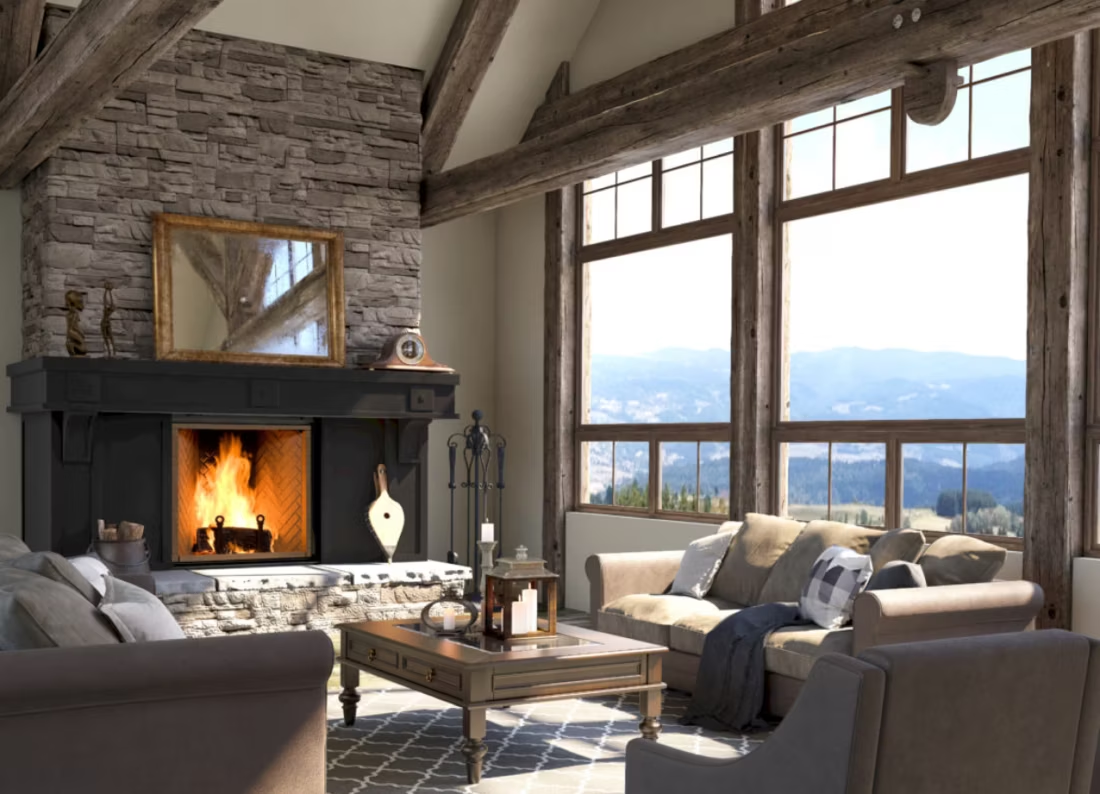
Four fuels. One honest answer for Big Stone County.
Three steps. No salesperson until you're ready.
Tell us about your project
Your zip code, your situation, and the fuel you're leaning toward—or let the answers point you to one.
See what's actually available
The brands dealers within 100 miles genuinely carry—real options, never a catalog mirage.
Get your dealer & Project Guide
A trusted local dealer, plus the free Project Guide & Parts List that names every component of the job.
Frequently Asked Questions
Which fuel works best in Big Stone County?
It depends on your home and how exposed it is to prairie wind, but all four fuels are genuinely viable here. Wood is a strong choice for rural farmsteads and lake properties around Ortonville, where oak and maple are locally abundant and a catalytic or non-catalytic stove can carry a home through days when wind chill makes the actual air temperature feel far worse than 4°F. Gas is the convenience pick for in-town homes with natural gas or propane service—no wood handling, reliable output through the coldest stretches. Pellet is a solid middle ground, especially with regional supply from Indeck Energy Services and Lignetics nearby, though rural households should plan pellet storage carefully given how long and cold the heating season runs. Electric fireplaces work well as supplemental heat in bedrooms or additions but shouldn't be relied on as a sole heat source when temperatures drop well below zero for days at a time. Many county homes pair a wood or pellet stove as primary heat with gas or electric backup in secondary rooms.
Do I need a permit to install a fireplace in Big Stone County?
In most cases, yes. New wood stoves, wood inserts, gas fireplaces, gas inserts, gas stoves, and pellet stoves typically require a building permit through the local jurisdiction—the city of Ortonville for in-town installs, or Big Stone County for rural and township properties. Gas installations also require a separate gas-line permit and licensed installer for the gas connection. Wood-burning appliances installed new should meet current EPA emissions standards. Electric fireplaces generally don't need a permit unless the installation involves hardwiring or a new dedicated circuit. Most local hearth retailers handle the permitting paperwork as part of the installation, so you typically aren't filing it yourself.
How much wood does a typical Big Stone County home burn in a winter?
With over 8,400 heating degree days—comparable to a Duluth or International Falls winter—a wood stove used as primary heat in this county can burn through 4 to 6 full cords in a season, more in an older or less-insulated farmhouse exposed to open prairie wind. Oak and maple burn longer and hotter than aspen or birch, so many households mix species: oak or maple for overnight burns, aspen or birch for quick shoulder-season fires. If you're sizing a stove for primary heat rather than supplemental warmth, a local retailer can help match stove BTU output and firebox size to your square footage and actual exposure, not just the county's average HDD figure.
Can one local hearth retailer handle all four fuel types?
Coverage varies by dealer, and in a county this size, the nearest full-line retailer may be in Ortonville itself or a short drive across the South Dakota border or over toward Montevideo. Some dealers carry wood, gas, and pellet units but keep only a limited electric fireplace selection in showroom; others focus primarily on wood and pellet given how central those fuels are to rural heating here. If you're cross-shopping fuels, ask specifically which lines a dealer stocks and installs rather than assuming a showroom carries everything—a multi-fuel dealer can walk you through working displays and the real trade-offs for a property like yours.
How does service work for rural farmsteads in Big Stone County?
Most technicians serving the county are based in or near Ortonville and travel out to Graceville, Clinton, Beardsley, Odessa, and the farmsteads in between. Expect a modest travel fee for the most remote calls, and expect scheduling to tighten up considerably once cold weather sets in—booking your annual chimney sweep or gas inspection in September or early October, before the heating season really starts, is far easier than trying to get an emergency call answered in January. Given how isolated some rural properties are, it's also worth keeping basic backup supplies on hand—spare batteries for gas ignition systems, a few days of dry seasoned wood—in case a service visit has to wait out a stretch of bad weather.
What's the typical cost range for fireplace installation across all fuel types in Big Stone County?
Ranges vary by fuel and by how much venting or gas line work is involved. Wood stove or insert installation: roughly $4,000–$8,500 for a typical install, more if new chimney construction is required for a farmhouse without existing masonry. Gas fireplace, insert, or stove: roughly $4,000–$10,000 depending on whether propane or natural gas service already reaches the home. Pellet stove or insert: roughly $4,000–$7,000 for a typical install. Electric fireplace: $200–$3,000 for the unit itself, plus $400–$1,200 in labor for anything beyond a simple plug-and-play placement. For details tied to local retailer pricing, see the county + fuel pages above.
Can I install a fireplace myself?
If you're putting a fire in your house on purpose, it's best to work with an expert. Unless you're genuinely experienced in framing, gas line, vent pipe, and the national code on clearances to combustibles, have a professional do it—and ideally the same company that sells you the fireplace, so warranty, service, and liability all live under one roof.
Should the dealer who sells my fireplace also install it?
Ideally, yes. A fireplace project involves vent pipe, gas line, electrical, and often tile or stone. Hire three or four separate trades and you own the liability and the game of telephone between them. One company selling and installing means one accountable party, start to finish—ask about factory training, on-time completion records, and what happens if an inspection fails.
I know I want a fireplace—where do I actually start?
Do two things today: snap a photo of the wall or fireplace you want to transform, and take a tape measure to the space—width, height, depth. Those two artifacts answer most of a hearth professional's first questions. Then settle fuel (wood, gas, pellet, or electric) and set a realistic budget: $3,900–$5,500 covers fireplace, vent, and basic install for most homes.
Does a fireplace add value to my home?
On average, a fireplace adds back to the home about the same amount you spent installing it. Add the monthly savings from heating the rooms you actually use instead of the whole house—often hundreds of dollars a year—and the value case is strong before you even count what a fire does for how your family uses the room.
Stove and Fireplace Dealers in Big Stone County
Listings include WhyFire partner dealers, dealers we have verified as authorized for the brands we recommend, and established local businesses that carry hearth products. Every listing shows which one it is. The ones marked Preferred run on WhyFire's software, so they can show you real pricing and book your appointment right here. No manufacturer pays for placement. How we verify dealers →
Larry's Lumber
Andor Inc.
Hometown Building Center
Find your fireplace in Big Stone County.
Pick your fuel below, and we'll match you with a trusted local dealer and send you a free Project Guide & Parts List—sized for your home and ready for installation.
Find Your Fireplace →