
Find the right fireplace for Saginaw County's six-month heating season.
Wood, gas, pellet, and electric fireplace resources for every city and township in Saginaw County—from the City of Saginaw to Frankenmuth, Chesaning, and Birch Run. Find the right unit and connect with a trusted local hearth retailer.
Every Project Starts From One of These Five Situations
Hardwood country in Michigan's Great Lakes Bay Region.
Saginaw County sits in the flat farmland of the Saginaw Valley, part of Michigan's Great Lakes Bay Region alongside Bay City and Midland. Winters here run long—a heating season stretching roughly seven months—with winter lows averaging around 16°F, puts Saginaw in the same cold-climate range as Madison, Wisconsin. The county's history is tied to hardwood: the Saginaw River once floated log drives that built the county's 19th-century lumber fortunes, and the same oak, maple, birch, and ash that filled those mills still split and burn well in local wood stoves and inserts today. There's no air-quality nonattainment designation here and no mandatory burn curtailment—wood heat is a straightforward, largely unrestricted option for county homeowners, though EPA-certified units are still the smarter long-term choice for efficiency and neighbor relations.
What you'll find on this hub: hearth retailers, service technicians, and fuel suppliers serving every community in the county—from the City of Saginaw and Saginaw Charter Township out to Frankenmuth's Bavarian district, the Birch Run outlet corridor, and rural townships around Chesaning, St. Charles, and Bridgeport. Pick your fuel below to drill into specifics—local dealers, installation costs, recommended units, and the resources that match your project. Whether you're heating a farmhouse outside Chesaning or a bungalow in Saginaw's East Side, this is the starting point.
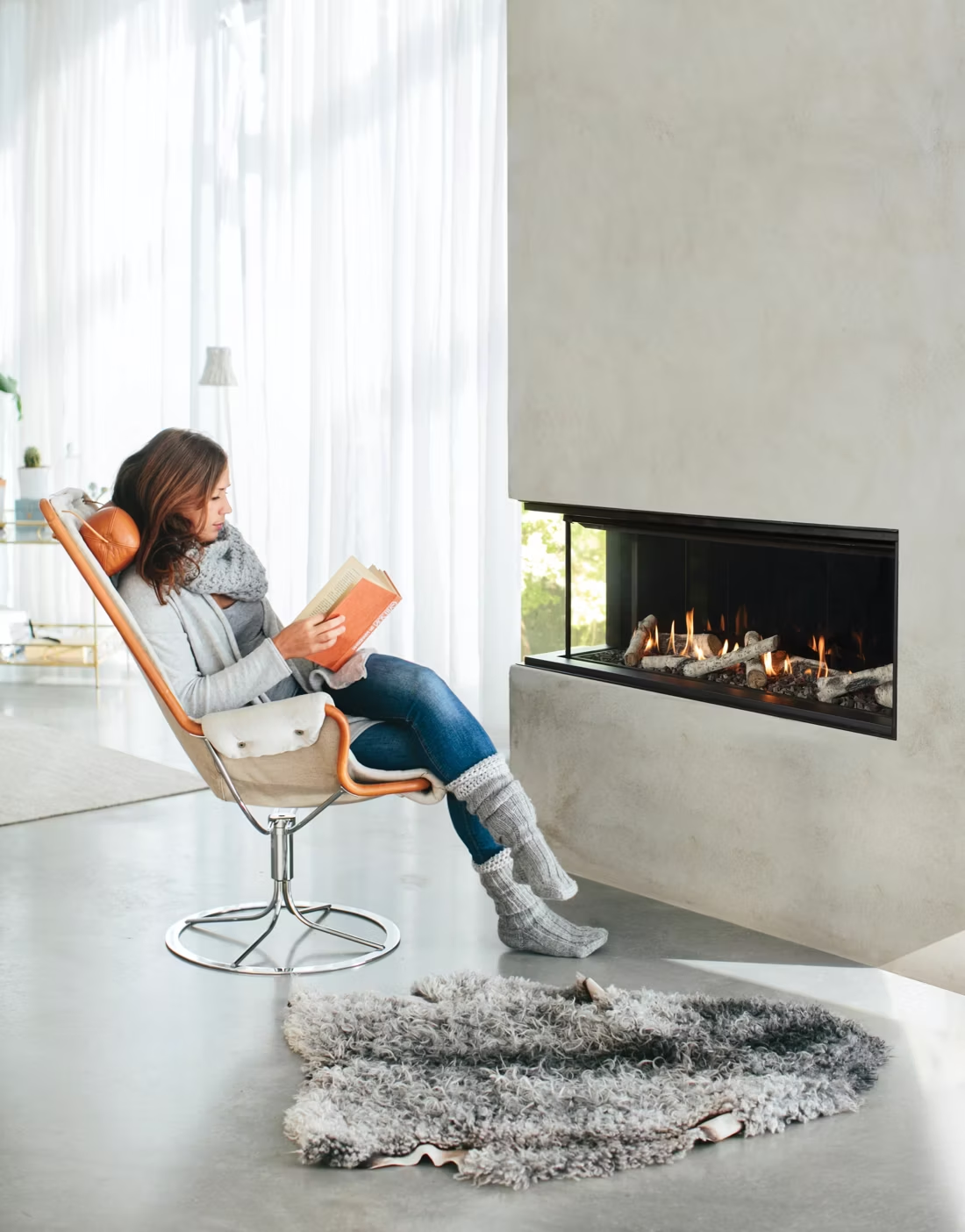
Four fuels. One honest answer for Saginaw County.
Three steps. No salesperson until you're ready.
Tell us about your project
Your zip code, your situation, and the fuel you're leaning toward—or let the answers point you to one.
See what's actually available
The brands dealers within 100 miles genuinely carry—real options, never a catalog mirage.
Get your dealer & Project Guide
A trusted local dealer, plus the free Project Guide & Parts List that names every component of the job.
Frequently Asked Questions
Which fuel works best in Saginaw County?
It depends on your home and priorities. Wood is a natural fit given the county's hardwood supply—oak, maple, birch, and ash split and season well, and a lot of rural homeowners around Chesaning and Bridgeport still heat primarily with a wood stove or insert, especially with no mandatory burn restrictions in place here. Gas is the convenience choice in areas served by Consumers Energy, including most of the City of Saginaw and Saginaw Township—instant heat, no wood handling, and a clean modern look. Pellet is the middle ground, and regional supply is solid thanks to brands like Indeck Energy Services, Lignetics, and Somerset Pellet Fuel—you get wood-style ambiance without splitting and stacking. Electric works well as a supplemental heater for bedrooms, sunrooms, or apartments, but with winter lows averaging 16°F and a long, roughly seven-month heating season, it's not a realistic primary heat source on its own. Most Saginaw County homes end up pairing a primary wood, gas, or pellet unit with electric in secondary spaces.
Do I need a permit to install a fireplace in Saginaw County?
In most cases, yes. New wood stoves, wood inserts, gas fireplaces, gas inserts, gas stoves, and pellet stoves generally require a building permit, and gas installations also need a separate gas line permit completed by a licensed gas fitter. Where you apply depends on where you live—within the City of Saginaw, permits route through the city's building department; in Saginaw Charter Township, Bridgeport Township, or other townships, they go through the township or the Saginaw County building office. Electric fireplaces usually skip the permit process unless you're doing a built-in installation that requires new wiring or a dedicated circuit. Most established local hearth retailers handle the permit paperwork as part of a full installation, so it's worth asking upfront rather than pulling one yourself.
Are there air quality restrictions on wood burning in Saginaw County?
No—Saginaw County isn't a designated nonattainment area, and there's no mandatory burn-ban program tied to winter air quality here, unlike counties in basins prone to inversions. That said, EPA-certified stoves and inserts still burn cleaner and more efficiently than older uncertified units, and that matters practically: less creosote buildup in a chimney handling dense hardwoods like oak and ash, better fuel economy, and fewer complaints in tighter subdivisions around Saginaw Township or Frankenmuth. If you're replacing an older stove, ask your retailer about current EPA 2020 NSPS-certified models—they'll perform better even without a regulatory mandate pushing the upgrade.
Can one local hearth retailer handle all four fuel types?
Many hearth retailers serving Saginaw County carry at least three of the four fuel types—typically wood, gas, and pellet, with electric as a smaller display line. If you're cross-shopping fuels and haven't settled on one yet, a multi-fuel dealer is the better starting point: you can see working displays side by side and talk through trade-offs specific to your chimney situation, whether that's an existing masonry flue in an older Saginaw East Side home or a new-construction install out in a Chesaning-area township. Some suppliers focus purely on fuel—firewood, bagged pellets, or propane delivery—rather than selling and installing appliances, so it's worth confirming whether you're talking to a retailer or a fuel supplier before you commit to a quote.
How does service work in rural areas of Saginaw County?
Most service technicians are based around the City of Saginaw and travel out to surrounding townships—Chesaning, St. Charles, Birch Run, and the more rural stretches west toward the county line. Expect a modest travel fee for these calls, generally in the $40–$90 range depending on distance from the tech's home base. Pre-season appointments, scheduled in September or October before the heating season ramps up, are noticeably easier to book than a January emergency call during a cold snap. If you're in one of the more outlying townships, it's worth scheduling your annual chimney sweep or gas inspection early and keeping a backup plan—a wood stove as a power-outage fallback, for instance, if your primary heat is pellet or electric.
What's the typical cost range for fireplace installation across all fuel types in Saginaw County?
Ranges vary by fuel. Wood stove or insert installation: roughly $4,000–$8,500 for a typical retrofit into an existing masonry flue, up to $12,000 for new construction requiring full chimney and hearth work. Gas fireplace, insert, or stove: roughly $4,000–$10,000, with cost driven mostly by gas line routing and venting—lower end applies where Consumers Energy service already reaches the install location. Pellet stove or insert: roughly $3,800–$7,000 for a standard install. Electric fireplace: $200–$3,000 for the unit itself, plus $400–$1,200 in labor for anything beyond a simple plug-and-play placement, which covers most wall-mount and insert jobs. For a firmer number, the county + fuel pages above break down pricing by fuel type with more local detail.
Wood, gas, pellet, or electric—how do I choose?
Match the fuel to your life, not the other way around. Wood: lowest fuel cost and total power-outage independence, but you're hauling and stacking. Gas: press a button, set a thermostat, no maintenance to speak of. Pellet: wood economics with automatic feeding, in exchange for weekly cleaning and a need for electricity. Electric: plugs in anywhere with honest supplemental heat. Nobody regrets the fuel that fits how they actually live.
How much should I budget for a fireplace?
For an average home—covering the fireplace, the vent pipe, and basic installation—a budget between $3,900 and $5,500 gives you a lot of options across wood, gas, and pellet. By the time you add finish work, gas line, and electrical, the average complete installation lands between $5,000 and $12,000 all-in. In a remodel or new build, a good rule is to put about 2.5% of the total project cost toward the fireplace.
Does a fireplace add value to my home?
On average, a fireplace adds back to the home about the same amount you spent installing it. Add the monthly savings from heating the rooms you actually use instead of the whole house—often hundreds of dollars a year—and the value case is strong before you even count what a fire does for how your family uses the room.
Can I install a fireplace myself?
If you're putting a fire in your house on purpose, it's best to work with an expert. Unless you're genuinely experienced in framing, gas line, vent pipe, and the national code on clearances to combustibles, have a professional do it—and ideally the same company that sells you the fireplace, so warranty, service, and liability all live under one roof.
Stove and Fireplace Dealers in Saginaw County
Listings include WhyFire partner dealers, dealers we have verified as authorized for the brands we recommend, and established local businesses that carry hearth products. Every listing shows which one it is. The ones marked Preferred run on WhyFire's software, so they can show you real pricing and book your appointment right here. No manufacturer pays for placement. How we verify dealers →
Northeastern Paint Supply
Macksood's Saginaw
McCoy Heating & Cooling Company
Macksood's
Macsood’s Pool & Patio
Get matched with a Saginaw County hearth dealer.
Tell us about your home and fuel preference, and we'll match you with a trusted local dealer plus a free Project Guide & Parts List—the exact parts, vent kit included, and the dealer we recommend for your Saginaw County installation.
Find Your Fireplace →