
Find the right hearth for rural Missaukee County winters.
Wood, gas, pellet, and electric fireplace resources for Lake City, McBain, Falmouth, Merritt, and the farm townships across Missaukee County—where oak and maple cordwood still compete with propane tanks for space in the pole barn.
Every Project Starts From One of These Five Situations
Hardwood heat is a way of life in Missaukee County, Michigan.
Missaukee County sits in Michigan's northern Lower Peninsula, a stretch of rolling hardwood forest and farm townships south of Cadillac. At climate zone 6A, heating seasons here run from October into April, with stretches of below-zero nights that rival what Duluth, Minnesota sees most winters. The county's oak, maple, birch, and ash forests have supplied firewood for generations, and Missaukee's sizable Amish and rural farm communities around Lake City and McBain still lean on wood stoves as a primary heat source, not a backup. With roughly 1,900 residents spread across a mostly unincorporated county, there's no single population center large enough to support a big hearth showroom—most homeowners here work with dealers who travel in from Cadillac, Houghton Lake, or further out.
This hub rolls up hearth retailers, service technicians, and fuel suppliers covering every township in Missaukee County—Lake City, McBain, Falmouth, Merritt, and the farm roads in between. Pick a fuel below to see local dealers, typical installation costs, and the units that make sense for a county where cordwood, propane, and bagged pellets all get delivered down the same gravel driveways.
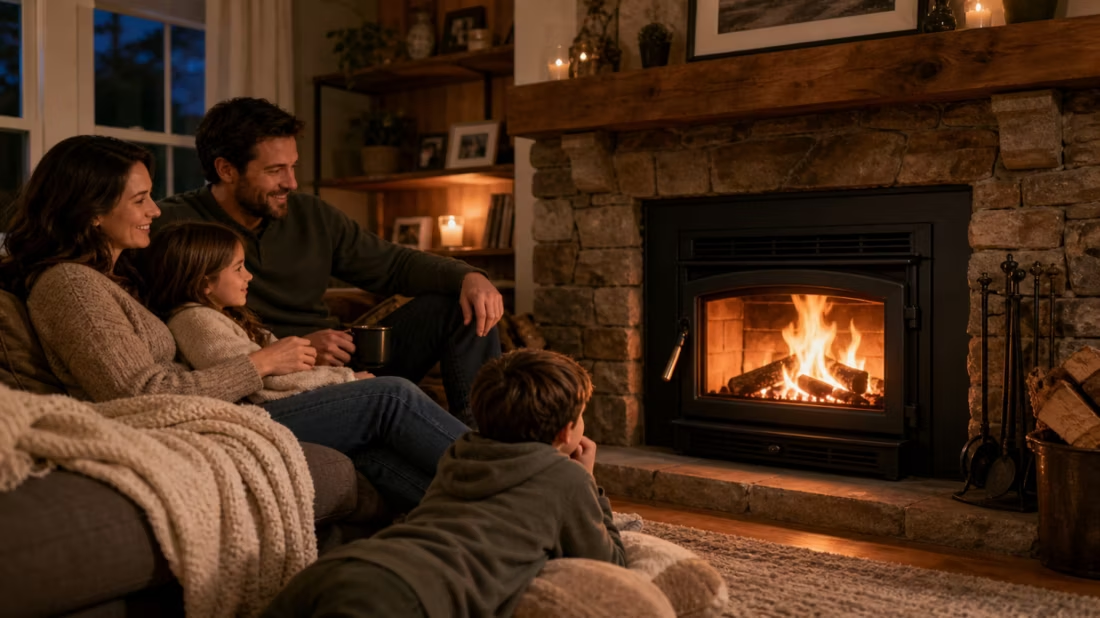
Four fuels. One honest answer for Missaukee County.
Three steps. No salesperson until you're ready.
Tell us about your project
Your zip code, your situation, and the fuel you're leaning toward—or let the answers point you to one.
See what's actually available
The brands dealers within 100 miles genuinely carry—real options, never a catalog mirage.
Get your dealer & Project Guide
A trusted local dealer, plus the free Project Guide & Parts List that names every component of the job.
Frequently Asked Questions
Which fireplace fuel makes the most sense in Missaukee County?
It depends on the household. Wood remains the backbone fuel here—oak, maple, birch, and ash are abundant locally, and Missaukee's Amish and farm families around Lake City and McBain often run wood stoves as primary heat rather than a supplement, especially where self-cut or locally sourced cordwood keeps fuel costs low. Propane is the practical choice for gas fireplaces in most of the county, since natural gas lines are limited mostly to the village cores; it's the go-to for homeowners who want instant heat without tending a stove. Pellet stoves are a solid middle ground—Indeck Energy Services, Lignetics, and Somerset Pellet Fuel all supply the area, and pellet heat handles the long 6A heating season without the daily wood-splitting. Electric units are supplemental here—good for a den, a bedroom, or an outbuilding, but not enough on their own given how cold and long Missaukee winters run.
Do I need a permit to install a fireplace in Missaukee County?
Generally yes. New wood stove and insert installations go through the Missaukee County Building Department and must use current EPA-certified units—this matters most for the Amish and off-grid households in the county who are installing wood as primary heat, since certified stoves burn more efficiently and use less wood per season. Propane fireplace and insert installs require a permit plus a licensed propane installer to handle the tank connection and gas line work; there's no municipal natural gas utility to coordinate with in most of the county. Pellet stove installs typically need a permit as well, covering the vent-through-wall or vertical venting. Electric units are usually permit-free unless you're hardwiring a built-in, which triggers an electrical permit. Most local dealers who travel into the county handle the paperwork as part of the installation.
Are there air quality restrictions on wood burning in Missaukee County?
No—Missaukee County has no air quality non-attainment designation and no winter burn curtailment days, unlike some western basins that deal with temperature inversions. Low population density, open farmland, and steady wind mean wood smoke doesn't build up the way it can in tighter valley towns. That said, an EPA-certified wood stove still burns cleaner and uses noticeably less cordwood per winter than an old uncertified box stove, which matters in a county where a lot of households are cutting and splitting their own oak and maple rather than buying it by the cord.
Can one local hearth retailer handle all four fuel types in Missaukee County?
Given the county's population of under 2,000, there's no hearth retailer with a permanent storefront inside Missaukee County—most homeowners in Lake City, McBain, or Falmouth end up working with a multi-fuel dealer based in Cadillac or Houghton Lake who travels out for consultations and installs. Several of those dealers do carry wood, gas, pellet, and electric under one roof, which is useful if you're comparing a wood insert against a pellet stove before deciding. If you want a fireplace showroom to walk through in person, expect a short drive outside the county; if you're comfortable with an in-home consultation, that's typically how installs here get scheduled anyway.
How does fireplace service work in a rural county like Missaukee?
Most chimney sweeps and gas techs serving Missaukee County are based out of Cadillac, Houghton Lake, or the broader Wexford County area and drive out to Lake City, McBain, Falmouth, and the surrounding townships. Expect a modest travel fee for service calls the farther you are from those hub towns, and expect winter farm-road access—snow-covered gravel roads—to occasionally push back a scheduled visit. Booking annual sweeps or propane system checks in September or October, before the heating season starts, is far easier than trying to get a technician out during a January cold snap when everyone in the county is calling at once.
What's the typical cost range for fireplace installation across fuel types in Missaukee County?
Wood stove or insert installation: roughly $4,000–$8,500 for a typical install, higher if new chimney chase work is needed for a farmhouse without an existing flue. Propane fireplace, insert, or stove: roughly $4,000–$10,000 depending on whether a new propane line and tank setup is required versus tying into an existing system. Pellet stove or insert: roughly $4,000–$7,000 for most installs, with venting straightforward in single-story farmhouses. Electric fireplace: $200–$3,000 for the unit itself, plus $400–$1,200 in labor for anything beyond a plug-in unit. Rural travel time from Cadillac or Houghton Lake-based dealers can add modestly to labor costs compared to installs closer to a metro area.
Does a fireplace add value to my home?
On average, a fireplace adds back to the home about the same amount you spent installing it. Add the monthly savings from heating the rooms you actually use instead of the whole house—often hundreds of dollars a year—and the value case is strong before you even count what a fire does for how your family uses the room.
Can I install a fireplace myself?
If you're putting a fire in your house on purpose, it's best to work with an expert. Unless you're genuinely experienced in framing, gas line, vent pipe, and the national code on clearances to combustibles, have a professional do it—and ideally the same company that sells you the fireplace, so warranty, service, and liability all live under one roof.
How much should I budget for a fireplace?
For an average home—covering the fireplace, the vent pipe, and basic installation—a budget between $3,900 and $5,500 gives you a lot of options across wood, gas, and pellet. By the time you add finish work, gas line, and electrical, the average complete installation lands between $5,000 and $12,000 all-in. In a remodel or new build, a good rule is to put about 2.5% of the total project cost toward the fireplace.
Wood, gas, pellet, or electric—how do I choose?
Match the fuel to your life, not the other way around. Wood: lowest fuel cost and total power-outage independence, but you're hauling and stacking. Gas: press a button, set a thermostat, no maintenance to speak of. Pellet: wood economics with automatic feeding, in exchange for weekly cleaning and a need for electricity. Electric: plugs in anywhere with honest supplemental heat. Nobody regrets the fuel that fits how they actually live.
Stove and Fireplace Dealers in Missaukee County
Listings include WhyFire partner dealers, dealers we have verified as authorized for the brands we recommend, and established local businesses that carry hearth products. Every listing shows which one it is. The ones marked Preferred run on WhyFire's software, so they can show you real pricing and book your appointment right here. No manufacturer pays for placement. How we verify dealers →
Positive Hearth Of The Home
Fireside Service & Installation
Ferguson's Fireplace
Traverse Home & Hearth
Phillip's Energy
Find your fireplace in Missaukee County.
Tell us about your home and we'll match you with a trusted local dealer serving Missaukee County and put together a free Project Guide & Parts List—the exact parts, including the vent kit, for your project.
Find Your Fireplace →