
Heat That Holds Up on the Keweenaw Peninsula.
Wood, gas, pellet, and electric fireplace resources for the 755 year-round residents and seasonal cabin owners scattered from Copper Harbor to Mohawk. Find the right unit for a Lake Superior snowbelt winter and connect with a trusted local hearth dealer.
Every Project Starts From One of These Five Situations
Zone 7 winters at the tip of the Keweenaw Peninsula.
Keweenaw County is Michigan's least populated county—about 755 people spread across the northern tip of the Keweenaw Peninsula, jutting into Lake Superior. This is Climate Zone 7, some of the harshest heating conditions in the Lower 48, with snowfall totals that regularly rival International Falls, Minnesota, and Caribou, Maine, thanks to lake-effect snow off Superior. The old copper-mining towns—Copper Harbor, Eagle Harbor, Eagle River, Allouez, Mohawk—sit inside hardwood stands of oak, maple, birch, and ash, and wood heat has been the backbone fuel here since the mining era. Heavy snow loads and ice can take down power lines for days at a time, which is part of why so many homes and cabins keep a wood stove as a hedge against outages, not just ambiance.
Because the county's year-round population is so small, most hearth retailers and service technicians serving Keweenaw County are actually based 30 to 45 minutes south in the Houghton-Hancock area and travel up the peninsula for consultations, installs, and service calls. This hub rolls up what's available across all four fuel types—wood, gas, pellet, and electric—for every community on the peninsula, whether you're heating a year-round home in Copper Harbor or closing up a seasonal cabin near Eagle River before the snow arrives. Pick your fuel below for local dealers, cost ranges, and recommended units.
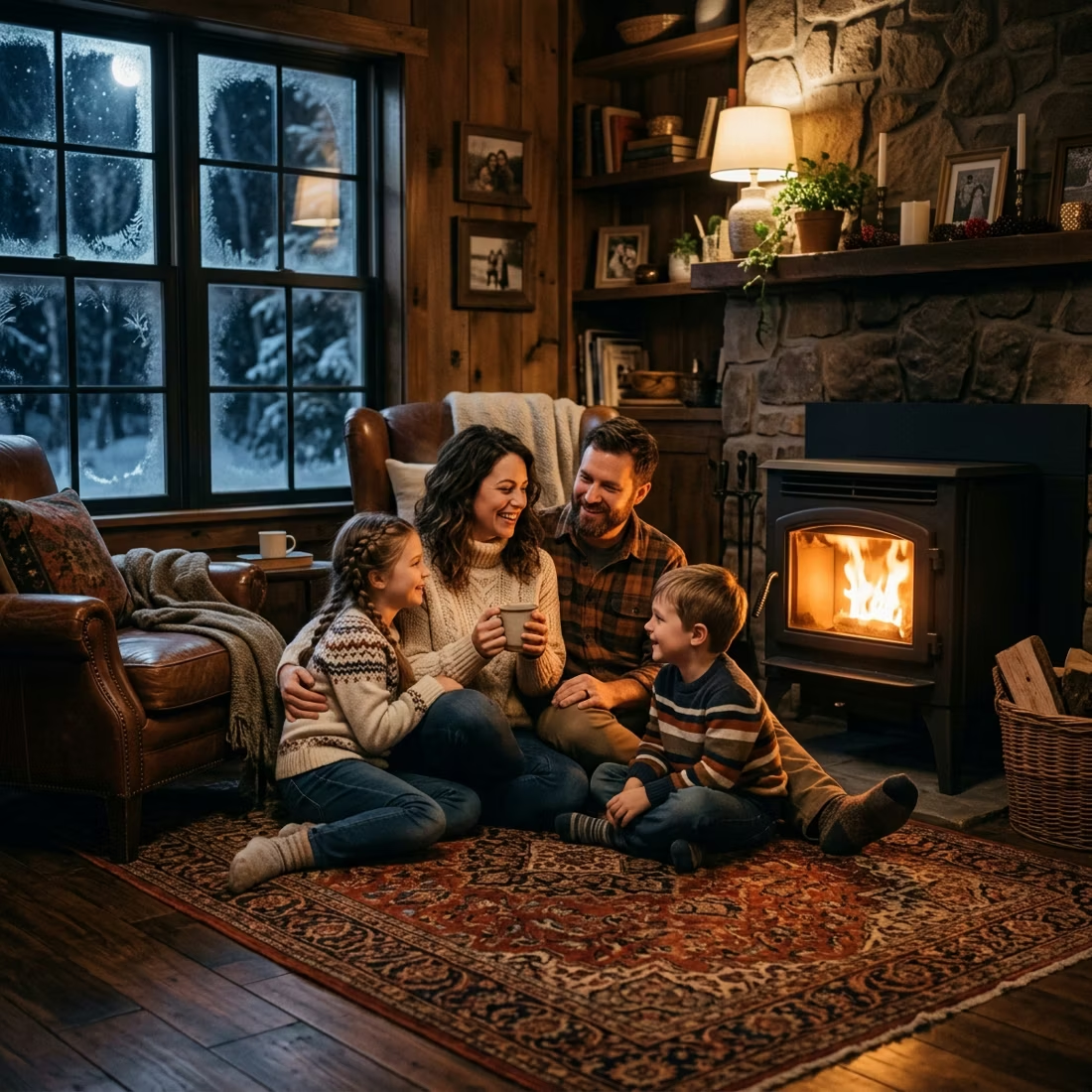
Four fuels. One honest answer for Keweenaw County.
Three steps. No salesperson until you're ready.
Tell us about your project
Your zip code, your situation, and the fuel you're leaning toward—or let the answers point you to one.
See what's actually available
The brands dealers within 100 miles genuinely carry—real options, never a catalog mirage.
Get your dealer & Project Guide
A trusted local dealer, plus the free Project Guide & Parts List that names every component of the job.
Frequently Asked Questions
Which fuel works best in Keweenaw County?
Wood remains the backbone fuel for most year-round homes here. The peninsula's oak, maple, birch, and ash forests keep firewood accessible and affordable, and a wood stove or insert doesn't depend on the power grid—a real advantage when heavy ice and snow loads take down lines for days, which happens most winters somewhere on the peninsula. Gas is available too, but almost always as propane rather than natural gas, since utility mains don't reach this far up the Keweenaw. Pellet is a reasonable middle option for homes that want wood-style heat with less daily labor, supplied regionally by brands like Indeck Energy Services and Lignetics, though homeowners should keep a season's supply on hand in case winter roads delay deliveries. Electric fireplaces work fine for supplemental warmth in a bedroom or seasonal cabin, but given Zone 7 winters, nobody up here is relying on electric as a primary heat source.
Do I need a permit to install a fireplace in Keweenaw County?
In most cases, yes—new wood stoves, wood inserts, gas fireplaces, gas inserts, gas stoves, and pellet stoves typically require a building permit through the county, and any propane line work should involve a licensed installer. Electric units usually don't need a permit unless you're hardwiring a built-in with a new circuit. Because so few contractors work this remote corner of the Upper Peninsula full-time, it's worth confirming permit requirements directly with whichever dealer or installer you hire—most of the retailers serving Keweenaw County from Houghton or Hancock handle this paperwork as a standard part of installation, since they're used to coordinating it from off-site.
Are there air quality restrictions on wood burning in Keweenaw County?
No—Keweenaw County doesn't have local air-quality nonattainment issues or wood-burning advisory days the way some western basin communities do. The peninsula's low population density and constant wind off Lake Superior mean smoke doesn't accumulate the way it can in a valley or bowl. That said, an EPA-certified stove still burns more efficiently and uses less wood per BTU, which matters more here than air quality does—in a Zone 7 winter, efficiency is really about stretching your woodpile and keeping the house warm during a multi-day outage.
Can one local hearth retailer handle all four fuel types?
Many of the general hearth and hardware dealers serving the Keweenaw Peninsula from Houghton and Hancock carry wood, gas (propane), and pellet as their core lineup, since those are what most peninsula households actually buy. Electric fireplaces are usually available too, though often as special order rather than a floor display, since local demand skews heavily toward the fuels that double as backup heat during outages. If you're cross-shopping, ask a dealer directly what they stock on-site versus what they can order in—for a county this remote, that distinction matters for your installation timeline.
How does service work for seasonal cabins and remote communities on the peninsula?
A lot of Keweenaw County's housing stock is seasonal—cabins around Copper Harbor and Eagle Harbor that get closed up for winter or used only a few months a year. Technicians serving the peninsula typically book their fall sweep and service season heavily, since owners want chimneys cleaned and gas or pellet units checked before the peninsula's roads get difficult to travel. If you own a seasonal place, scheduling your annual service in September or early October—well ahead of the first heavy snow—is far easier than trying to get someone out mid-winter. Expect a modest travel charge for the drive up from Houghton or Hancock, especially for the northernmost communities like Copper Harbor.
What's the typical cost range for fireplace installation across all fuel types in Keweenaw County?
Costs run similar to other remote Upper Michigan communities, with a travel premium built in for the peninsula's northernmost towns. Wood stove or insert installation: roughly $4,500–$9,500 for a typical install, more if new chimney work is needed. Gas fireplace, insert, or stove (propane): roughly $4,500–$10,500 depending on propane line work and venting. Pellet stove or insert: roughly $4,500–$7,500. Electric fireplace: $200–$3,000 for the unit itself, plus $400–$1,200 in labor for anything beyond a plug-and-play install. Homes in Copper Harbor or Eagle Harbor should budget a bit more for technician travel time compared to communities closer to the Houghton-Hancock corridor.
Can I install a fireplace myself?
If you're putting a fire in your house on purpose, it's best to work with an expert. Unless you're genuinely experienced in framing, gas line, vent pipe, and the national code on clearances to combustibles, have a professional do it—and ideally the same company that sells you the fireplace, so warranty, service, and liability all live under one roof.
How much should I budget for a fireplace?
For an average home—covering the fireplace, the vent pipe, and basic installation—a budget between $3,900 and $5,500 gives you a lot of options across wood, gas, and pellet. By the time you add finish work, gas line, and electrical, the average complete installation lands between $5,000 and $12,000 all-in. In a remodel or new build, a good rule is to put about 2.5% of the total project cost toward the fireplace.
What is an in-home preview and do I need one?
It's a visit where a hearth professional measures your space, confirms the model you picked actually works in your home, and walks the specs—framing, gas line, venting, finish work—before anything is ordered. Some details you just can't know until you see the house. Never make a down payment without one; it's the single most-skipped step that burns buyers.
Wood, gas, pellet, or electric—how do I choose?
Match the fuel to your life, not the other way around. Wood: lowest fuel cost and total power-outage independence, but you're hauling and stacking. Gas: press a button, set a thermostat, no maintenance to speak of. Pellet: wood economics with automatic feeding, in exchange for weekly cleaning and a need for electricity. Electric: plugs in anywhere with honest supplemental heat. Nobody regrets the fuel that fits how they actually live.
Stove and Fireplace Dealers in Keweenaw County
Listings include WhyFire partner dealers, dealers we have verified as authorized for the brands we recommend, and established local businesses that carry hearth products. Every listing shows which one it is. The ones marked Preferred run on WhyFire's software, so they can show you real pricing and book your appointment right here. No manufacturer pays for placement. How we verify dealers →
Superior Block
Rg Design Company
Blaze Fireplace And Stone
Prestige Home Comfort
D & J Sales & Service, LLC
Find your fireplace on the Keweenaw Peninsula.
Pick your fuel below to see installation costs, recommended units for Zone 7 winters, and get matched with a trusted local hearth dealer who'll build you a free Project Guide & Parts List for your home.
Find Your Fireplace →