
Built for Some of Michigan's Coldest, Longest Winters.
Wood, gas, pellet, and electric fireplace resources for Iron River, Crystal Falls, Stambaugh, and every community across Iron County. Find the right unit for a Zone 7 climate and connect with a trusted local hearth retailer.
Every Project Starts From One of These Five Situations
Zone 7 cold, dense hardwood forest, and a heating season that runs eight months a year.
Iron County sits in Michigan's Upper Peninsula, bordering Wisconsin, and it's classified Climate Zone 7—one of the most demanding heating climates in the contiguous United States, on par with International Falls, Minnesota. With an average winter low near 0°F and a long, brutal heating season that stretches across roughly eight months of the year, the furnace or stove here isn't seasonal decor—it's load-bearing infrastructure. The county's roughly 6,100 residents are spread across a heavily forested landscape thick with oak, maple, birch, and ash, all high-BTU hardwoods that split, season, and burn well in the kind of firebox that has to hold heat through a January night.
What you'll find on this hub: hearth retailers, service technicians, and fuel suppliers serving Iron River, Crystal Falls, Caspian, Stambaugh, and the smaller unincorporated communities scattered through the county's forests and lake country. Pick your fuel below to get into specifics—local dealers, realistic installation costs for a Zone 7 build, and the resources that actually apply to your project. Whether you're heating a year-round home outside Crystal Falls or a hunting camp near the Wisconsin line, this is the starting point.
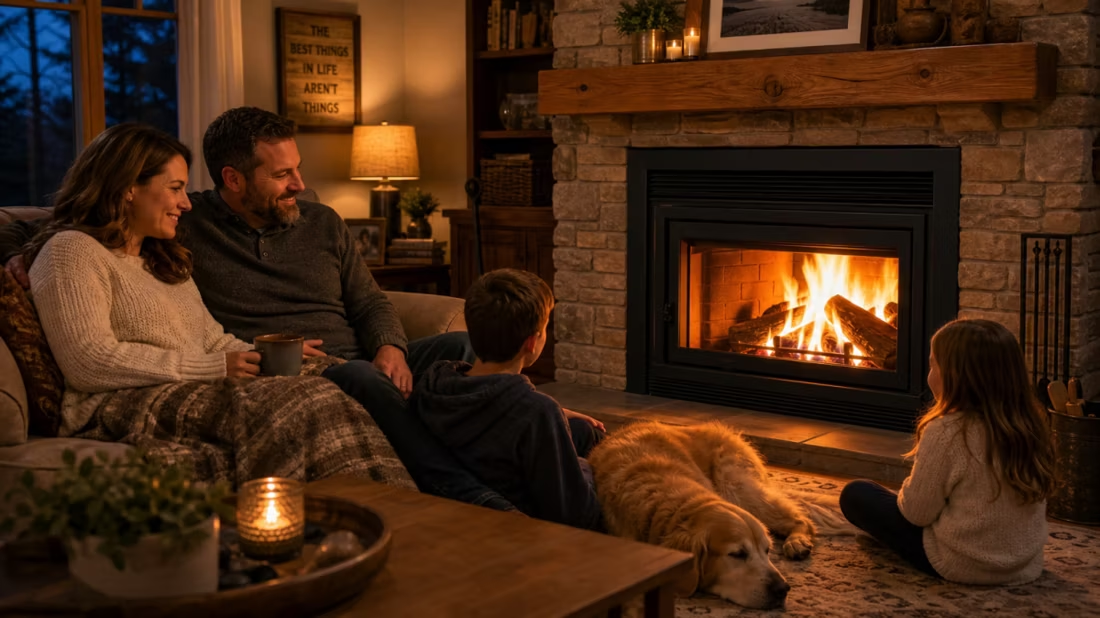
Four fuels. One honest answer for Iron County.
Three steps. No salesperson until you're ready.
Tell us about your project
Your zip code, your situation, and the fuel you're leaning toward—or let the answers point you to one.
See what's actually available
The brands dealers within 100 miles genuinely carry—real options, never a catalog mirage.
Get your dealer & Project Guide
A trusted local dealer, plus the free Project Guide & Parts List that names every component of the job.
Frequently Asked Questions
Which fuel works best in Iron County?
Given a heating season that stretches across roughly eight months of the year and winter lows that regularly sit at or below 0°F, wood is still the backbone fuel for a lot of Iron County homes—a catalytic or non-catalytic EPA-certified stove burning local oak or maple can hold a steady overnight fire through the coldest stretches, and the surrounding hardwood forest keeps fuel affordable if you're cutting your own. Propane fills the role natural gas plays in more urban counties, since piped gas service is limited this far into the Upper Peninsula—a propane fireplace or insert gives instant heat without woodpile labor. Pellet stoves are a solid middle ground, and regional brands like Indeck Energy Services, Lignetics, and Somerset Pellet Fuel are readily stocked at UP retailers. Electric fireplaces work well as supplemental heat in a bedroom or den, but in a climate this demanding they're not a realistic primary heat source. Most year-round Iron County homes end up running two fuels—wood or pellet for the bulk of the season, propane or electric to cover the gaps.
Do I need a permit to install a fireplace in Iron County?
In most cases, yes. New wood stoves, wood inserts, gas or propane fireplaces, gas stoves, and pellet stoves typically require a building permit through your local township or Iron County's building department, and any new gas or propane line work needs a licensed installer. New wood-burning appliances also need to meet current EPA emissions standards—this matters more here than in a lot of counties, given how many hours a season the average Iron County wood stove actually runs. Electric fireplaces generally don't need a permit unless you're hardwiring a built-in unit into a new circuit. Most local hearth retailers pull the permit as part of the installation, so it's rarely something the homeowner has to manage directly.
Are there air quality restrictions on wood burning in Iron County?
No—Iron County doesn't have the winter inversion or non-attainment issues that trigger burn advisories in tighter basin geographies. With roughly 6,100 residents spread across a heavily forested county, wood smoke doesn't concentrate the way it can in a denser valley town. That said, new wood-burning appliances still need to meet current EPA emissions standards, and a well-seasoned load of local oak or maple in a certified stove burns cleaner and more efficiently than green wood in an older unit—worth keeping in mind given how many months a year that stove is actually working here.
Can one local hearth retailer handle all four fuel types?
In a county this size, most retailers try to. Because Iron County's population is small and spread out, the dealers who do stay in business here tend to carry wood, gas/propane, and pellet at minimum, with electric as a smaller line—it's more efficient for a rural retailer to be a one-stop shop than to specialize narrowly. If you're cross-shopping fuels for a new build or a full heating overhaul, a multi-fuel dealer can walk you through working displays and talk through what actually holds up through an Iron County winter versus what's marketed for milder climates.
How does service work in the more remote parts of Iron County?
Most technicians serving Iron County are based in or near Iron River or Crystal Falls and drive out to the smaller communities and lake properties around the county—expect a modest travel fee for calls farther from those two hubs, and expect winter road conditions to occasionally push a service appointment. Pre-season scheduling, ideally September before the first hard cold hits, is far easier to book than a mid-January emergency call when every wood stove in the county is running flat out. If you're heating a remote or seasonal property, it's worth keeping a backup heat source on hand for the stretches when a tech simply can't get out fast.
What's the typical cost range for fireplace installation across all fuel types in Iron County?
Costs run a bit higher here than in milder climates because Zone 7 installs often call for larger-capacity units and more robust venting. Wood stove or insert: roughly $4,500–$9,500 for a typical install, more for new construction with full chimney work built to handle sustained high-volume burning. Propane fireplace, insert, or stove: roughly $4,000–$10,000 depending on tank setup and venting, since most of the county isn't on piped natural gas. Pellet stove or insert: roughly $4,500–$7,500 for a typical install. Electric fireplace: $200–$3,000 for the unit itself, plus $400–$1,200 in labor for anything beyond a simple plug-and-play placement. See the county + fuel pages above for retailer-specific pricing.
Wood, gas, pellet, or electric—how do I choose?
Match the fuel to your life, not the other way around. Wood: lowest fuel cost and total power-outage independence, but you're hauling and stacking. Gas: press a button, set a thermostat, no maintenance to speak of. Pellet: wood economics with automatic feeding, in exchange for weekly cleaning and a need for electricity. Electric: plugs in anywhere with honest supplemental heat. Nobody regrets the fuel that fits how they actually live.
Can a fireplace actually lower my heating bill?
Yes—by creating a comfort zone. A furnace heats every square foot of the house just to warm the one room you're in; a gas fireplace on low burns roughly a sixth of the gas a typical furnace does. Set the furnace around 55–60 degrees as a baseline, then heat the rooms your family actually uses. Families who heat this way commonly save $20–$60 a month.
How much should I budget for a fireplace?
For an average home—covering the fireplace, the vent pipe, and basic installation—a budget between $3,900 and $5,500 gives you a lot of options across wood, gas, and pellet. By the time you add finish work, gas line, and electrical, the average complete installation lands between $5,000 and $12,000 all-in. In a remodel or new build, a good rule is to put about 2.5% of the total project cost toward the fireplace.
Should the dealer who sells my fireplace also install it?
Ideally, yes. A fireplace project involves vent pipe, gas line, electrical, and often tile or stone. Hire three or four separate trades and you own the liability and the game of telephone between them. One company selling and installing means one accountable party, start to finish—ask about factory training, on-time completion records, and what happens if an inspection fails.
Stove and Fireplace Dealers in Iron County
Listings include WhyFire partner dealers, dealers we have verified as authorized for the brands we recommend, and established local businesses that carry hearth products. Every listing shows which one it is. The ones marked Preferred run on WhyFire's software, so they can show you real pricing and book your appointment right here. No manufacturer pays for placement. How we verify dealers →
Universal Plumbing Heating & Ac
Trappers Fireplace Gallery
Find your fireplace in Iron County.
Tell us about your home and we'll match you with a trusted local Iron County dealer and put together a free Project Guide & Parts List—the exact parts, including the vent kit, for a project built to handle a Zone 7 winter.
Find Your Fireplace →