
Stay Warm in Michigan's Snowiest County.
Wood, gas, pellet, and electric fireplace resources for every community in Gogebic County—from Ironwood to Marenisco—matched with a trusted local dealer who knows what it takes to heat through a Big Snow Country winter.
Every Project Starts From One of These Five Situations
Deep-snow heating in Michigan's western Upper Peninsula.
Gogebic County sits in IECC climate zone 7—the coldest zone found in the contiguous United States—with average winter lows around 2°F and roughly 9,136 heating degree days a year, a season comparable to Duluth, Minnesota, just across Lake Superior. Ironwood, the county's largest city, is known locally as part of 'Big Snow Country,' where lake-effect snow off Superior can pile up several feet in a single week. With just over 9,100 residents spread across a county roughly the size of Rhode Island, most homes here rely on some combination of wood, propane, and pellet heat to get through a season that often runs from October into May. Oak, maple, birch, and ash stands are abundant, and firewood permits through the Ottawa National Forest and the Chequamegon-Nicolet National Forest keep self-cut wood an affordable option for many households.
This hub rounds up hearth retailers, service technicians, and fuel suppliers across the whole county—from Ironwood and Bessemer along US-2, south to Wakefield and Marenisco, and east toward Watersmeet near the Wisconsin border. Pick your fuel below to see local dealers, typical installation costs, and the units that hold up best against a Gogebic County winter. Whether you're heating a lakeside cabin near the Porcupine Mountains or a year-round home in Ironwood, this is the starting point—I'll match you with a trusted local dealer who knows exactly what this climate demands.
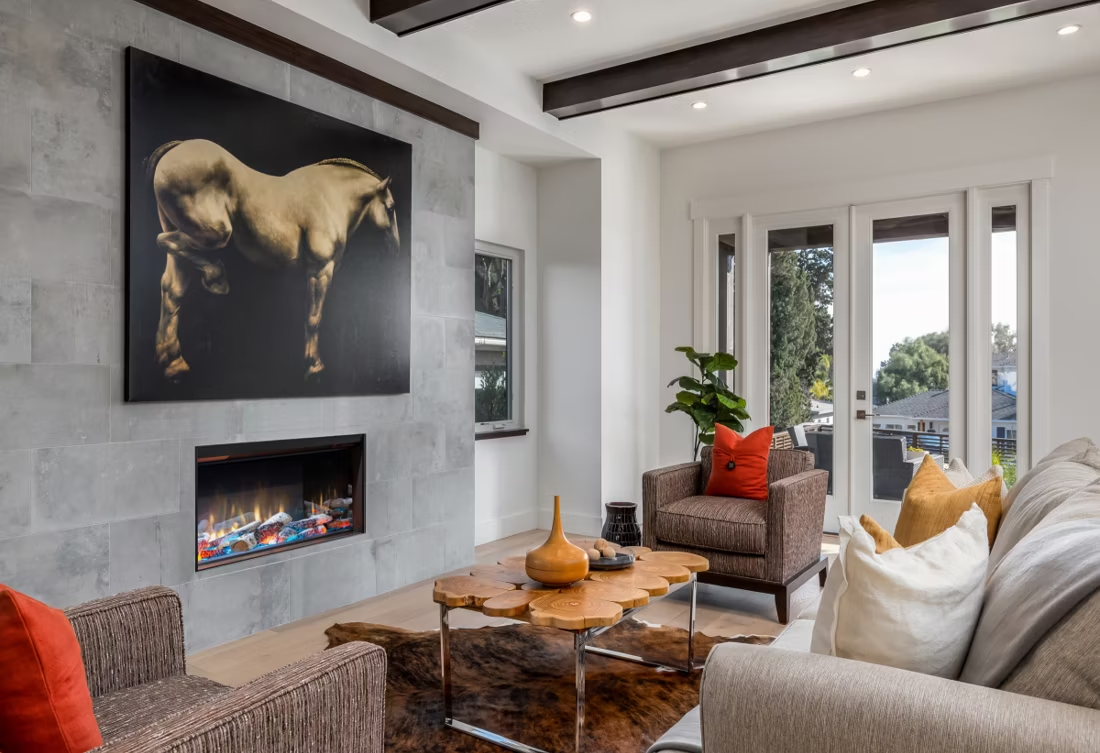
Four fuels. One honest answer for Gogebic County.
Three steps. No salesperson until you're ready.
Tell us about your project
Your zip code, your situation, and the fuel you're leaning toward—or let the answers point you to one.
See what's actually available
The brands dealers within 100 miles genuinely carry—real options, never a catalog mirage.
Get your dealer & Project Guide
A trusted local dealer, plus the free Project Guide & Parts List that names every component of the job.
Frequently Asked Questions
Which fuel works best in Gogebic County?
In a county where the heating season stretches from October to May and overnight lows regularly drop into the negative single digits—comparable to a hard winter in Duluth—wood remains the backbone fuel for most Gogebic County homes. Abundant oak, maple, birch, and ash stands make firewood affordable, especially with cutting permits available through the Ottawa National Forest and Chequamegon-Nicolet National Forest ranger districts. Catalytic wood stoves can hold an overnight burn through the coldest nights near Ironwood and Bessemer. Gas is the convenience fuel here—most rural Gogebic County homes run on bulk propane rather than piped natural gas, since municipal gas mains don't reach far outside Ironwood's core. Pellet stoves are a strong middle option: regional supply from Lignetics and Indeck Energy Services keeps fuel available even when winter roads make firewood delivery tough. Electric fireplaces work well as supplemental heat in bedrooms or additions, but with heating degree days near 9,100 a year, they're not a realistic primary heat source on their own. Most households here pair a wood or pellet stove as primary heat with a propane furnace or electric zone heat as backup.
Do I need a permit to install a fireplace in Gogebic County?
Yes, in most cases. New wood stoves, inserts, gas fireplaces, gas inserts, gas stoves, and pellet stoves typically require a building permit through your local township or the county building department, along with an inspection to confirm proper clearances and venting for the region's snow-load and freeze-thaw conditions. Gas installations also need a separate line permit and a licensed propane or gas fitter, since most of the county runs on bulk propane rather than a piped utility. All new wood-burning appliances sold today must meet federal EPA 2020 NSPS emissions standards regardless of local air quality rules—and Gogebic County currently has no local wood-burning restrictions, unlike some western counties that deal with winter inversions. Electric fireplaces generally don't need a permit unless they involve new wiring or a built-in installation. Most local hearth retailers in Ironwood or Bessemer handle the permitting paperwork as part of a full installation.
Can I cut my own firewood for a wood stove in Gogebic County?
Yes. Gogebic County sits at the edge of two national forests—Ottawa National Forest to the north and west, and Chequamegon-Nicolet National Forest just south in Wisconsin—both of which sell personal-use firewood cutting permits, usually a few dollars per cord with an annual limit per household. Given the county's oak, maple, birch, and ash stands, a single permit season can supply a wood stove household for most of the winter. Permits are typically available starting in spring, and cutting areas are marked to keep visitors on already-designated units. If you're new to burning wood at this latitude, plan on seasoning hardwood a full year—green wood won't deliver the BTU output you need when temperatures drop toward zero.
Can one local hearth retailer handle all four fuel types?
With a county population under 10,000, dealer options are limited and concentrated in Ironwood, the county's commercial center. Many Gogebic County homeowners end up cross-shopping with dealers just across the state line in Hurley, Wisconsin, or further south toward Ashland County, since the local customer base doesn't support multiple large multi-fuel showrooms. A dealer that stocks wood, gas, pellet, and electric units side by side is especially valuable here because it saves a long drive to compare fuels—ask any local retailer directly which of the four they install and service, since inventory can shift season to season in a market this small.
How does the extreme cold in Gogebic County affect fireplace sizing?
At roughly 9,136 heating degree days and average winter lows near 2°F—a season on par with Duluth, Minnesota, just across Lake Superior—undersizing a stove is the most common mistake. A stove sized for a milder downstate Michigan winter will run flat-out and still fall short during a January cold snap in Bessemer or Wakefield. Local dealers typically size wood and pellet stoves toward the higher end of the manufacturer's square-footage rating for this reason, and often recommend catalytic wood stoves for their extended overnight burn times. Because lake-effect snow off Lake Superior can knock out power for days at a time, a wood or pellet stove that can run without electricity (or with a small battery backup for the pellet auger) is worth prioritizing over a fully electric-dependent gas insert.
What's the typical cost range for fireplace installation across all fuel types in Gogebic County?
Costs run a bit higher here than in milder parts of the Midwest, since installers plan for heavier venting, snow-load roof penetrations, and often longer travel distances to rural properties near Marenisco or Watersmeet. Wood stove or insert installation: roughly $4,500–$9,500 for a typical job, more for new chimney construction. Gas fireplace, insert, or stove: $4,500–$10,000, with propane tank and line work adding to the low end of that range for homes without existing service. Pellet stove or insert: $4,000–$7,500. Electric fireplace: $200–$3,000 for the unit itself, plus $400–$1,200 in labor for anything beyond a plug-and-play install. Ask your matched dealer for an itemized quote—travel charges for rural service calls are common in a county this spread out.
Can a fireplace actually lower my heating bill?
Yes—by creating a comfort zone. A furnace heats every square foot of the house just to warm the one room you're in; a gas fireplace on low burns roughly a sixth of the gas a typical furnace does. Set the furnace around 55–60 degrees as a baseline, then heat the rooms your family actually uses. Families who heat this way commonly save $20–$60 a month.
How much should I budget for a fireplace?
For an average home—covering the fireplace, the vent pipe, and basic installation—a budget between $3,900 and $5,500 gives you a lot of options across wood, gas, and pellet. By the time you add finish work, gas line, and electrical, the average complete installation lands between $5,000 and $12,000 all-in. In a remodel or new build, a good rule is to put about 2.5% of the total project cost toward the fireplace.
Does a fireplace add value to my home?
On average, a fireplace adds back to the home about the same amount you spent installing it. Add the monthly savings from heating the rooms you actually use instead of the whole house—often hundreds of dollars a year—and the value case is strong before you even count what a fire does for how your family uses the room.
Wood, gas, pellet, or electric—how do I choose?
Match the fuel to your life, not the other way around. Wood: lowest fuel cost and total power-outage independence, but you're hauling and stacking. Gas: press a button, set a thermostat, no maintenance to speak of. Pellet: wood economics with automatic feeding, in exchange for weekly cleaning and a need for electricity. Electric: plugs in anywhere with honest supplemental heat. Nobody regrets the fuel that fits how they actually live.
Stove and Fireplace Dealers in Gogebic County
Listings include WhyFire partner dealers, dealers we have verified as authorized for the brands we recommend, and established local businesses that carry hearth products. Every listing shows which one it is. The ones marked Preferred run on WhyFire's software, so they can show you real pricing and book your appointment right here. No manufacturer pays for placement. How we verify dealers →
Earth Sense Energy Systems - Sayner
Stove & Fireplace Works
Fireside Hearth & Home Minocqua Dnm
Hearth Xpressions
Trappers Fireplace Gallery
Find the right fireplace for Gogebic County.
Pick your fuel below and I'll match you with a trusted local dealer, plus a free Project Guide & Parts List sized for a Gogebic County winter.
Find Your Fireplace →