
Heat that holds through a Gladwin County winter.
Wood, gas, pellet, and electric fireplace resources for every city and township in Gladwin County—from the city of Gladwin to Beaverton and the lake cottages around Wixom and Sanford Lakes. Find the right unit and connect with a trusted local hearth retailer.
Every Project Starts From One of These Five Situations
Cold, wooded, lake-country heating in Gladwin County, Michigan.
Gladwin County sits in Michigan's north-central lower peninsula, bordered on much of its northern edge by the Huron-Manistee National Forests. With 7,425 heating degree days and an average winter low near 13°F, the county runs colder than Madison, Wisconsin most winters, and the heating season here typically stretches from early October through April. Hardwood is abundant—oak, maple, birch, and ash cover the county's forests and township roads, and many residents cut their own firewood under a personal-use fuelwood permit from the Huron-Manistee National Forests rather than buying it delivered. Wood heat has deep roots here, but propane (natural gas mains don't reach most of the county) and pellet stoves are just as common in year-round homes and seasonal camps alike.
What you'll find on this hub: hearth retailers, service technicians, and fuel suppliers serving every community in Gladwin County—from the city of Gladwin down through Beaverton, out to the smaller unincorporated communities like Rhodes and Hay, and around the shorelines of Wixom Lake, Sanford Lake, and Long Lake. Pick your fuel below to drill into specifics—local dealers, installation costs, recommended units, and the resources that match your project. Whether you're heating a year-round farmhouse or a seasonal cabin on Wixom Lake, this is the starting point.
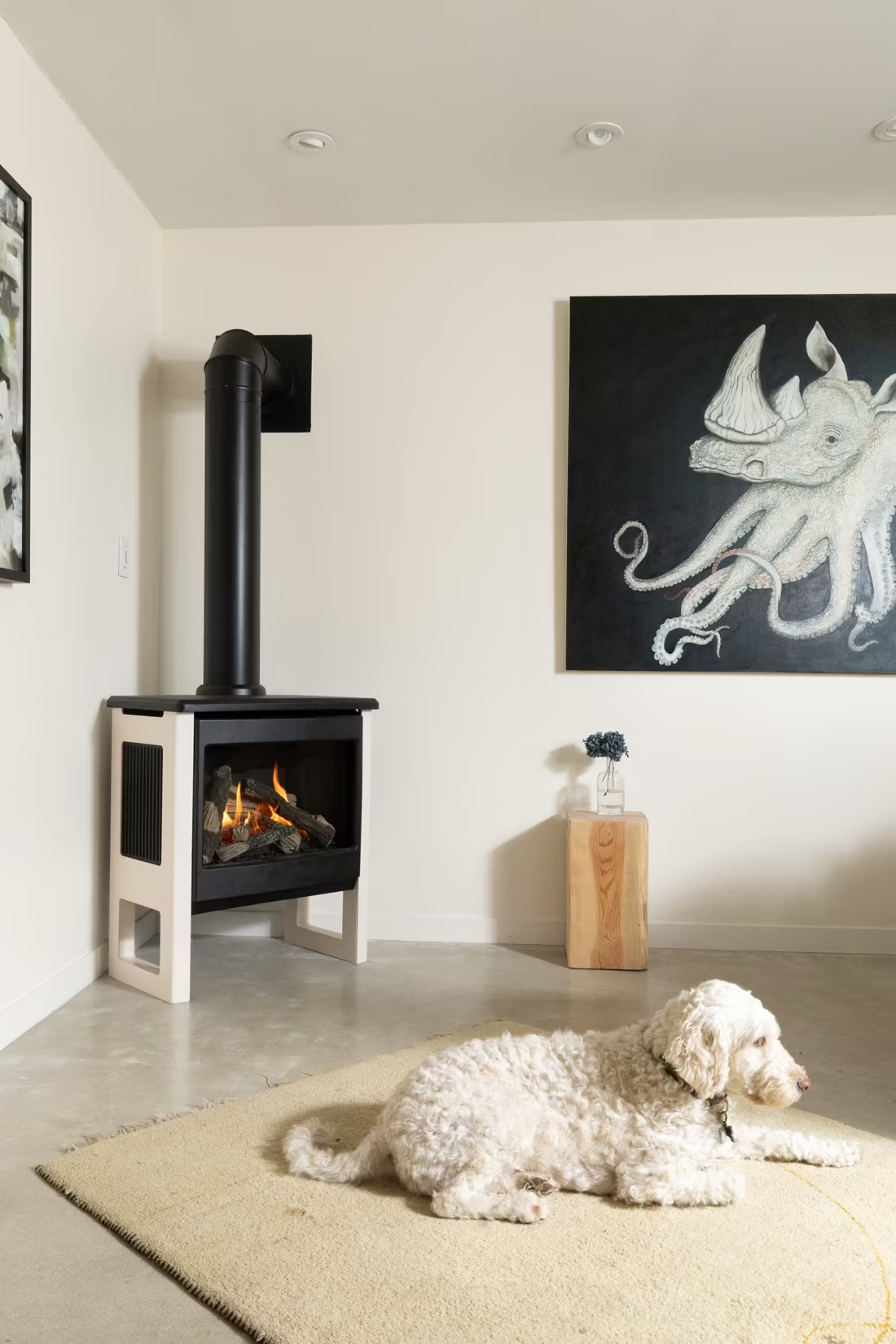
Four fuels. One honest answer for Gladwin County.
Three steps. No salesperson until you're ready.
Tell us about your project
Your zip code, your situation, and the fuel you're leaning toward—or let the answers point you to one.
See what's actually available
The brands dealers within 100 miles genuinely carry—real options, never a catalog mirage.
Get your dealer & Project Guide
A trusted local dealer, plus the free Project Guide & Parts List that names every component of the job.
Frequently Asked Questions
Which fuel works best in Gladwin County?
It depends on the home and how it's used. With 7,425 heating degree days and winter lows averaging 13°F—colder than Minneapolis in a typical year—wood remains a strong choice, especially since oak, maple, birch, and ash are all cut locally, including under personal-use permits from the Huron-Manistee National Forests. A catalytic wood stove can hold a fire through a long single-digit night. Propane is the common convenience fuel here since natural gas mains don't reach most of the county—it's the default for year-round homes wanting instant heat without a woodpile. Pellet stoves are a solid middle ground, and the region is well supplied by Indeck Energy Services, Lignetics, and Somerset Pellet Fuel. Electric fireplaces work well as supplemental heat or ambiance in lake cabins around Wixom and Sanford Lakes that aren't occupied full time in winter. Many full-time Gladwin County homes end up running two fuels—wood or pellet as primary heat, propane or electric as backup.
Do I need a permit to install a fireplace in Gladwin County?
In most cases, yes. Within the city of Gladwin or the city of Beaverton, building permits for wood stoves, inserts, gas appliances, and pellet stoves are issued through the respective city office. In the unincorporated townships that make up most of the county—Sherman, Butman, Sage, Grout, Secord, and others—permits go through the Gladwin County Building Department. New wood-burning appliances need to meet EPA 2020 NSPS emissions standards, and propane installations require a licensed gas-fitter to handle the line work and tank connection. Electric fireplaces usually skip the permit process unless they're hardwired built-ins on a new circuit. Most local hearth retailers pull the permit as part of the installation, so it typically isn't something you handle yourself.
Can I cut my own firewood for a wood stove in Gladwin County?
Yes, and a lot of residents do. Gladwin County borders the Huron-Manistee National Forests, and a personal-use fuelwood permit lets you cut standing dead or downed hardwood—oak, maple, birch, and ash are the common species—in designated areas for a modest fee. Keep in mind that freshly cut hardwood in this climate typically needs 18-24 months of seasoning before it burns clean and efficiently, so most self-cutters keep at least a season ahead in the woodshed. If you'd rather not season your own, several local firewood suppliers sell pre-seasoned cordwood delivered by the county's rural roads.
Can one local hearth retailer handle all four fuel types?
Given Gladwin County's population, coverage is thinner than in a metro area, so it pays to ask before you buy. Some Beaverton-area stove shops focus mainly on wood and pellet, while multi-fuel retailers based in Midland or Clare often carry wood, propane, pellet, and electric under one roof—useful if you want to see working displays and compare fuels side by side before deciding. If you already know your fuel, a specialist can sometimes offer deeper product knowledge and faster scheduling than a generalist.
How does service work for lake cabins and rural parts of Gladwin County?
Most chimney sweeps and gas technicians serving Gladwin County are based in Midland, Clare, or Houghton Lake and travel in for appointments, so expect a modest travel fee—typically $40-$90—for outlying townships like Hay, Grim, or Bourret. Seasonal cabins around Wixom Lake, Sanford Lake, and Long Lake often schedule a chimney sweep or pellet stove cleaning right before ice-fishing season starts or before closing up for summer, since access can be tighter mid-winter. Booking early in fall, before the first hard freeze, is the easiest way to avoid a multi-week wait for an emergency call.
What's the typical cost range for fireplace installation across all fuel types in Gladwin County?
Costs vary by fuel. Wood stove or insert installation: roughly $4,000-$8,500 for a typical install, more if new chimney work is needed for a home without an existing flue. Propane fireplace, insert, or stove: roughly $4,000-$10,000, with tank setup and line runs adding cost for homes without existing propane service. Pellet stove or insert: roughly $4,000-$7,000 for most installs. Electric fireplace: $200-$3,000 for the unit itself, plus $300-$1,000 in labor for anything beyond a plug-and-play wall unit. For details tied to a specific fuel, see the county + fuel pages above.
Does a fireplace add value to my home?
On average, a fireplace adds back to the home about the same amount you spent installing it. Add the monthly savings from heating the rooms you actually use instead of the whole house—often hundreds of dollars a year—and the value case is strong before you even count what a fire does for how your family uses the room.
How much should I budget for a fireplace?
For an average home—covering the fireplace, the vent pipe, and basic installation—a budget between $3,900 and $5,500 gives you a lot of options across wood, gas, and pellet. By the time you add finish work, gas line, and electrical, the average complete installation lands between $5,000 and $12,000 all-in. In a remodel or new build, a good rule is to put about 2.5% of the total project cost toward the fireplace.
What is an in-home preview and do I need one?
It's a visit where a hearth professional measures your space, confirms the model you picked actually works in your home, and walks the specs—framing, gas line, venting, finish work—before anything is ordered. Some details you just can't know until you see the house. Never make a down payment without one; it's the single most-skipped step that burns buyers.
Can a fireplace actually lower my heating bill?
Yes—by creating a comfort zone. A furnace heats every square foot of the house just to warm the one room you're in; a gas fireplace on low burns roughly a sixth of the gas a typical furnace does. Set the furnace around 55–60 degrees as a baseline, then heat the rooms your family actually uses. Families who heat this way commonly save $20–$60 a month.
Stove and Fireplace Dealers in Gladwin County
Listings include WhyFire partner dealers, dealers we have verified as authorized for the brands we recommend, and established local businesses that carry hearth products. Every listing shows which one it is. The ones marked Preferred run on WhyFire's software, so they can show you real pricing and book your appointment right here. No manufacturer pays for placement. How we verify dealers →
Positive Hearth Of The Home
Find your fireplace in Gladwin County.
Pick your fuel below and I'll match you with a trusted local dealer and send a free Project Guide & Parts List—the exact parts, including the vent kit, and the local pro I recommend for your Gladwin County project.
Find Your Fireplace →