
Warm Your Home Through Northern Michigan's Long Winters.
Wood, gas, pellet, and electric fireplace resources for every town in Benzie County—from Frankfort on the Lake Michigan shore to Thompsonville near Crystal Mountain. Find the right unit and connect with a trusted local hearth dealer.
Every Project Starts From One of These Five Situations
Lake-effect winters shape how Benzie County heats its homes.
Benzie County sits on Michigan's northwest coast, wrapped around Crystal Lake and the Platte River and bordered by Lake Michigan's open water on one side and Sleeping Bear Dunes National Lakeshore on the other. That lake exposure means heavy, wet lake-effect snow on top of an already cold Zone 6A winter—total snowfall here can rival Duluth, Minnesota in a heavy year, and the heating season commonly stretches from October into April. The county's hardwood forests—oak, maple, birch, and ash—have supported a long-standing local firewood trade, and plenty of homes here still burn wood as a primary or backup heat source, especially on properties without natural gas service.
With a county population under 5,000, Benzie doesn't have a large retail base of its own—many hearth dealers serving Frankfort, Benzonia, Beulah, and Honor are actually based just south in Traverse City and travel into the county for consultations and installs, alongside a handful of local shops. This hub rolls up retailers, service technicians, and fuel suppliers covering the whole county, plus Thompsonville near Crystal Mountain Resort, where seasonal and vacation-home heating needs are common. Pick your fuel below for local dealers, cost ranges, and recommended units for a lakeshore Michigan winter.
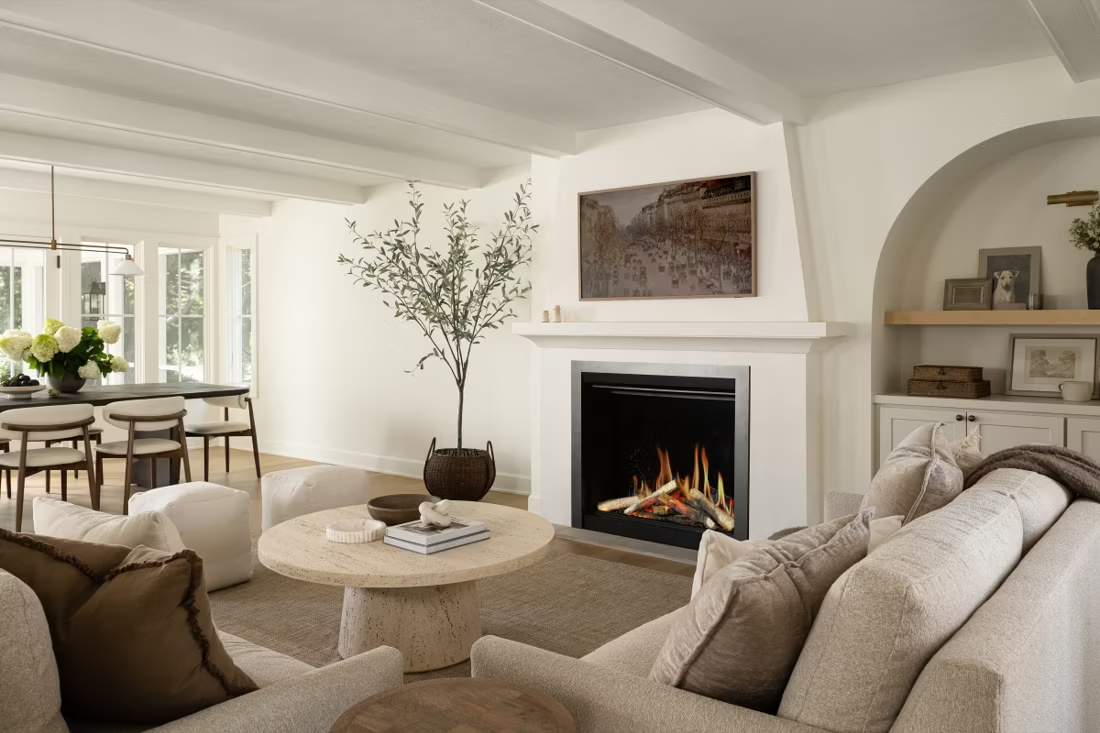
Four fuels. One honest answer for Benzie County.
Three steps. No salesperson until you're ready.
Tell us about your project
Your zip code, your situation, and the fuel you're leaning toward—or let the answers point you to one.
See what's actually available
The brands dealers within 100 miles genuinely carry—real options, never a catalog mirage.
Get your dealer & Project Guide
A trusted local dealer, plus the free Project Guide & Parts List that names every component of the job.
Frequently Asked Questions
Which fuel works best in Benzie County?
It depends on the home and how it's used. Wood is a strong fit here—oak, maple, birch, and ash are all locally abundant, and a well-run catalytic or non-catalytic wood stove holds heat through a lake-effect cold snap when Lake Michigan wind is driving wet snow sideways. Gas is popular for year-round homes near Frankfort and Benzonia with natural gas access, and propane fills the gap for the many rural properties without it—either way, gas offers instant heat and no wood-hauling. Pellet is a solid middle ground for homeowners who want wood-style ambiance without splitting and stacking; Indeck Energy Services, Lignetics, and Somerset Pellet Fuel are all available through regional dealers. Electric fits well in seasonal cottages around Crystal Lake and Crystal Mountain, where owners want supplemental warmth or ambiance without committing to a chimney or gas line for a property used only part of the year.
Do I need a permit to install a fireplace in Benzie County?
Generally yes. New wood stoves, wood inserts, gas fireplaces, gas inserts, gas stoves, and pellet stoves typically require a building permit through the Benzie County Building Department, and gas installations also need a licensed gas-fitter for line work and connection. Wood-burning appliances sold and installed today must meet EPA 2020 NSPS emissions standards regardless of local air quality status. Electric fireplaces usually skip the permit process unless a built-in installation involves new wiring or a dedicated circuit. Most local hearth retailers and installers pull the permit as part of the job, which is especially useful if you're managing the project remotely for a Crystal Lake cottage.
Are there wood-burning restrictions or air quality rules in Benzie County?
No—Benzie County isn't a designated non-attainment area and doesn't have the winter inversion problems that trigger burn advisories in some western basin communities. There are no seasonal burn-ban days here. That said, federal EPA 2020 NSPS emissions standards still apply to any new wood stove or insert sold and installed, regardless of local air quality status, so older uncertified stoves generally can't be installed as new units. The bigger practical concern in Benzie is moisture, not smoke—lake-effect humidity means firewood needs a full season of covered, well-ventilated seasoning (oak in particular needs a year or more) to burn clean and avoid excess creosote buildup.
How does heating work for seasonal cottages near Crystal Lake or Crystal Mountain?
Benzie County has a substantial base of seasonal and vacation homes around Crystal Lake, Lake Michigan, and the Crystal Mountain ski area in Thompsonville, and heating decisions there differ from a year-round home. Many owners choose gas or propane fireplaces with a standing pilot or battery-backed ignition so the unit can maintain a freeze-protection temperature while the property sits empty for weeks at a time—relying on grid power alone is riskier if a winter storm knocks out electricity. Wood stoves work well for owners who visit regularly and want to build a fire on arrival, but they're less practical for freeze protection when no one's on-site. Electric fireplaces are common as a low-maintenance ambiance add-on for weekend visits rather than a primary heat source.
What's the typical cost range for fireplace installation across fuel types in Benzie County?
Wood stove or insert installation: roughly $4,000–$8,500 for a typical install, more if new chimney chase work is needed for a lakeshore home. Gas fireplace, insert, or stove: about $4,500–$10,500, with propane tank setup or line extension adding to the cost for rural properties without natural gas. Pellet stove or insert: typically $4,000–$7,000. Electric fireplace: $200–$2,800 for the unit itself, plus $400–$1,200 in labor for anything beyond a simple plug-and-play placement. Costs run somewhat lower here than in denser Michigan markets, but travel time for dealers coming in from Traverse City can be a factor on more remote Benzie County properties.
How far ahead should I plan a wood stove install or firewood order before winter?
Earlier than most homeowners expect. Because oak—one of the most common local species—needs 12 months or more of covered seasoning to burn efficiently, firewood ordered in late fall won't be ready to burn well until the following winter; maple, birch, and ash season faster but still benefit from a summer of drying. On the installation side, local retailers and installers see their heaviest demand in September and October as second-home owners close up for the season and year-round residents get ready for the first lake-effect snow, so booking a wood stove, insert, or gas fireplace install by late summer avoids the pre-winter backlog.
Can a fireplace actually lower my heating bill?
Yes—by creating a comfort zone. A furnace heats every square foot of the house just to warm the one room you're in; a gas fireplace on low burns roughly a sixth of the gas a typical furnace does. Set the furnace around 55–60 degrees as a baseline, then heat the rooms your family actually uses. Families who heat this way commonly save $20–$60 a month.
Can I install a fireplace myself?
If you're putting a fire in your house on purpose, it's best to work with an expert. Unless you're genuinely experienced in framing, gas line, vent pipe, and the national code on clearances to combustibles, have a professional do it—and ideally the same company that sells you the fireplace, so warranty, service, and liability all live under one roof.
What is an in-home preview and do I need one?
It's a visit where a hearth professional measures your space, confirms the model you picked actually works in your home, and walks the specs—framing, gas line, venting, finish work—before anything is ordered. Some details you just can't know until you see the house. Never make a down payment without one; it's the single most-skipped step that burns buyers.
How much should I budget for a fireplace?
For an average home—covering the fireplace, the vent pipe, and basic installation—a budget between $3,900 and $5,500 gives you a lot of options across wood, gas, and pellet. By the time you add finish work, gas line, and electrical, the average complete installation lands between $5,000 and $12,000 all-in. In a remodel or new build, a good rule is to put about 2.5% of the total project cost toward the fireplace.
Stove and Fireplace Dealers in Benzie County
Listings include WhyFire partner dealers, dealers we have verified as authorized for the brands we recommend, and established local businesses that carry hearth products. Every listing shows which one it is. The ones marked Preferred run on WhyFire's software, so they can show you real pricing and book your appointment right here. No manufacturer pays for placement. How we verify dealers →
Phillip's Energy
Traverse Home & Hearth
Ferguson's Fireplace
Fireside Service & Installation
Get matched with a Benzie County hearth dealer.
Pick your fuel below to see local dealers, installation costs, and get a free Project Guide & Parts List built for your home in Benzie County.
Find Your Fireplace →