
Built for Baraga County's Toughest Winters.
Nearly 8,950 heating degree days and winter lows averaging 7°F make Baraga County one of the coldest inhabited places in the Midwest. Wood, gas, pellet, and electric fireplace resources for L'Anse, Baraga, Pelkie, Covington, Skanee, and every community along Keweenaw Bay.
Every Project Starts From One of These Five Situations
Heating a Keweenaw Bay county with nearly 9,000 heating degree days.
Baraga County sits on Keweenaw Bay in Michigan's Upper Peninsula, in climate zone 7—a designation shared with places like International Falls, Minnesota. With roughly 8,950 heating degree days a year and winter lows averaging 7°F, the heating season here often stretches from October into May, and lake-effect snow off Lake Superior can pile up fast. Oak, maple, birch, and ash grow throughout the county's hardwood stands, and much of the local land, including parts of the Ottawa National Forest, has long supplied firewood for the woodstoves that keep farmhouses and hunting camps warm through the coldest stretches of the year.
With a population under 5,000 spread across a county roughly the size of Rhode Island, hearth businesses here tend to cover long distances rather than cluster in one downtown. This hub rolls up retailers, service technicians, and fuel suppliers serving every community in the county—from L'Anse and Baraga along the bay, to Pelkie and Covington inland, out to Skanee and the Zeba/Keweenaw Bay Indian Community area. Pick your fuel below for local dealers, installation costs, and unit recommendations suited to a county this cold.
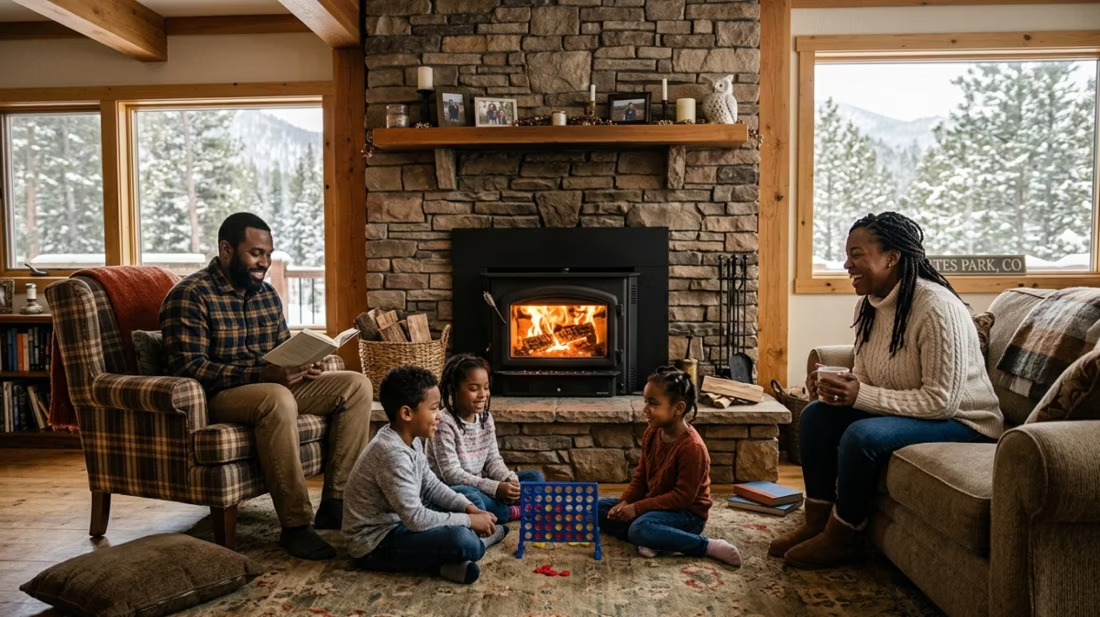
Four fuels. One honest answer for Baraga County.
Three steps. No salesperson until you're ready.
Tell us about your project
Your zip code, your situation, and the fuel you're leaning toward—or let the answers point you to one.
See what's actually available
The brands dealers within 100 miles genuinely carry—real options, never a catalog mirage.
Get your dealer & Project Guide
A trusted local dealer, plus the free Project Guide & Parts List that names every component of the job.
Frequently Asked Questions
Which fuel works best in Baraga County?
Wood remains the backbone fuel here, and for good reason—oak, maple, birch, and ash are all abundant locally, and a catalytic or hybrid wood stove can hold a fire through an overnight low in the single digits without constant reloading. Pellet stoves are a strong second option; Indeck Energy Services, Lignetics, and Somerset Pellet Fuel all supply the region, and a pellet stove gives you wood-style heat without cutting and stacking cordwood. Gas in Baraga County usually means propane rather than piped natural gas, given how rural the county is—propane fireplaces and inserts offer instant, thermostat-controlled heat and work well as a primary or backup source. Electric fireplaces are supplemental almost everywhere in a climate this cold—useful for a bedroom or den, but not something you'd rely on alone through a January cold snap with HDD pushing toward 8,950 for the season.
Do I need a permit to install a fireplace in Baraga County?
In most cases, yes. New wood stoves, wood inserts, gas stoves, gas inserts, and pellet stoves typically require a building permit through the Baraga County Building & Zoning Department, and wood-burning appliances need to meet current EPA emissions standards to be installed. Propane installations also require a separate gas-line hookup, usually handled by a licensed propane installer or gas-fitter working alongside your hearth retailer. Electric fireplaces are generally permit-free unless the installation involves new wiring or a hardwired built-in unit. Most local retailers in the L'Anse and Baraga area will pull the permit as part of the installation quote, so you're not usually filing paperwork yourself.
Are there air quality restrictions on wood burning in Baraga County?
No—Baraga County doesn't have the winter inversion or non-attainment issues that trigger burn advisories in some western counties. That said, a properly certified EPA stove still matters here, not for regulatory reasons but for practical ones: with a heating season this long, an efficient stove burns less wood per BTU delivered, which adds up fast when you're cutting or buying cordwood every fall. If you're sourcing firewood from nearby public land, including sections of the Ottawa National Forest, check current cutting-permit rules before you head out with a chainsaw.
Can one local hearth retailer handle all four fuel types?
Given how small and spread out Baraga County's population is, dealers here tend to specialize rather than stock everything. A retailer based in or near L'Anse might carry wood and pellet units well but send you toward a Houghton or Marquette County dealer, or a propane supplier, for gas equipment. It's worth asking directly what's in stock and what's special-order before assuming a single showroom covers wood, gas, pellet, and electric equally—in a county this rural, the nearest dealer with the fuel you want may be 30-45 minutes away.
How does service work in the more remote parts of Baraga County?
Most technicians who service Baraga County travel in from L'Anse, Baraga, or occasionally Houghton, covering outlying areas like Covington, Skanee, and Pelkie. Expect a modest travel charge for calls farther from the bay corridor. Because the heating season here runs long—often October through May—booking your annual chimney sweep or gas inspection in September, before the first hard freeze, is far easier than trying to get someone out during a January storm. If you're in one of the more remote pockets of the county, keeping a backup heat source on hand (a wood stove as backup to pellet, or vice versa) is common practice given how far help can be from home.
What's the typical cost range for fireplace installation across all fuel types in Baraga County?
Costs run higher than milder climates because units and venting are often sized for sustained sub-zero performance rather than occasional use. Wood stove or insert: roughly $4,500-$10,000 depending on chimney work and whether you're retrofitting an older masonry flue. Propane fireplace, insert, or stove: $4,500-$11,000, with the gas-line hookup a significant swing factor if there's no existing propane service to the house. Pellet stove or insert: $4,500-$8,000 for a typical install, sized to handle the extended burn times a Baraga County winter demands. Electric fireplace: $200-$3,000 for the unit itself, plus $400-$1,200 in labor if it's more than a plug-and-play wall unit. Ask any dealer you're considering for a written breakdown before committing—venting and chimney work is usually the biggest cost variable in this climate.
Can a fireplace actually lower my heating bill?
Yes—by creating a comfort zone. A furnace heats every square foot of the house just to warm the one room you're in; a gas fireplace on low burns roughly a sixth of the gas a typical furnace does. Set the furnace around 55–60 degrees as a baseline, then heat the rooms your family actually uses. Families who heat this way commonly save $20–$60 a month.
How much should I budget for a fireplace?
For an average home—covering the fireplace, the vent pipe, and basic installation—a budget between $3,900 and $5,500 gives you a lot of options across wood, gas, and pellet. By the time you add finish work, gas line, and electrical, the average complete installation lands between $5,000 and $12,000 all-in. In a remodel or new build, a good rule is to put about 2.5% of the total project cost toward the fireplace.
Can I install a fireplace myself?
If you're putting a fire in your house on purpose, it's best to work with an expert. Unless you're genuinely experienced in framing, gas line, vent pipe, and the national code on clearances to combustibles, have a professional do it—and ideally the same company that sells you the fireplace, so warranty, service, and liability all live under one roof.
What is an in-home preview and do I need one?
It's a visit where a hearth professional measures your space, confirms the model you picked actually works in your home, and walks the specs—framing, gas line, venting, finish work—before anything is ordered. Some details you just can't know until you see the house. Never make a down payment without one; it's the single most-skipped step that burns buyers.
Stove and Fireplace Dealers in Baraga County
Listings include WhyFire partner dealers, dealers we have verified as authorized for the brands we recommend, and established local businesses that carry hearth products. Every listing shows which one it is. The ones marked Preferred run on WhyFire's software, so they can show you real pricing and book your appointment right here. No manufacturer pays for placement. How we verify dealers →
Superior Block
Rg Design Company
Get matched with a local dealer in Baraga County.
Tell us about your home and fuel preference, and we'll match you with a trusted local dealer and send a free Project Guide & Parts List—the exact parts, vent kit, and recommended installer for your Baraga County project.
Find Your Fireplace →