
Wood, gas, pellet, or electric—find your fireplace fit in Worcester County, Maryland.
From the boardwalk condos of Ocean City to the farmhouses along the Pocomoke River, Worcester County covers a wide range of homes and heating needs. Find the right fuel and connect with a trusted local hearth retailer.
Every Project Starts From One of These Five Situations
Coastal Eastern Shore heating, from Ocean City to Snow Hill.
Worcester County sits at Maryland's southeastern corner, bordered by the Atlantic on one side and the Pocomoke River and Virginia line on the other. Winters here are mild by national standards—climate zone 4A, an average winter low around 28°F, and a winter heating load well under half of what a place like Burlington, Vermont sees. That doesn't mean fireplaces sit unused. Local hardwoods—oak, hickory, and maple, much of it sourced from the working forests around the Pocomoke River State Forest—burn long and hot, and a well-sized stove or fireplace insert still carries real value on the cold, wind-driven nights that roll in off the Atlantic.
What you'll find on this hub: hearth retailers, service technicians, and fuel suppliers serving every community in the county—Ocean City and Berlin along the Route 50 corridor, Snow Hill as the county seat, Pocomoke City and Girdletree to the south, and the smaller crossroads towns in between. Pick your fuel below to drill into local dealers, installation costs, and the specifics for your project—whether that's a full-time farmhouse near Stockton or a vacation condo on the boardwalk.
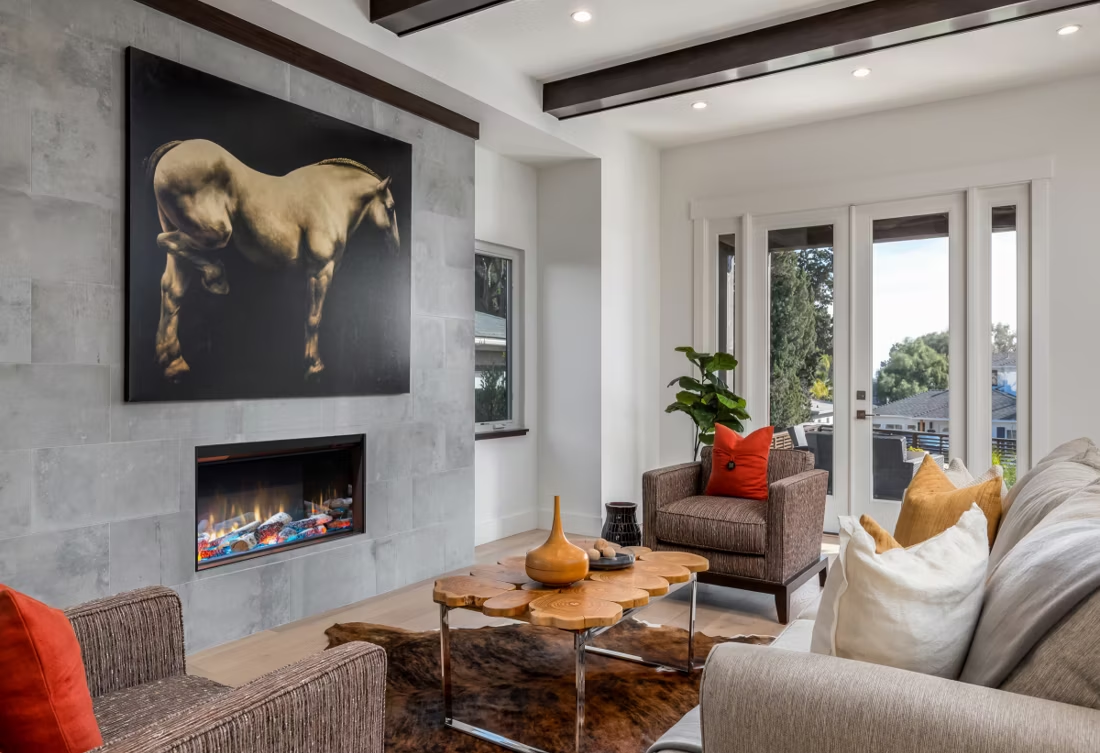
Four fuels. One honest answer for Worcester County.
Three steps. No salesperson until you're ready.
Tell us about your project
Your zip code, your situation, and the fuel you're leaning toward—or let the answers point you to one.
See what's actually available
The brands dealers within 100 miles genuinely carry—real options, never a catalog mirage.
Get your dealer & Project Guide
A trusted local dealer, plus the free Project Guide & Parts List that names every component of the job.
Frequently Asked Questions
Which fuel works best in Worcester County?
It depends on the home. Wood is common in the county's rural interior—oak, hickory, and maple from local land and tree services burn long and hot, and a wood stove or insert works well as a supplemental or backup heat source, especially valuable during the nor'easters that occasionally knock out power on the barrier islands. Gas is popular along the Route 50 corridor near Berlin and Ocean City, where many homes have propane service (natural gas mains are limited outside the more developed areas)—instant heat with no wood handling. Pellet stoves are a solid middle ground; regional brands like Energex and Greene Team keep fuel reasonably accessible without the labor of splitting and stacking wood. Electric fireplaces are widely used in Ocean City condos and vacation rentals, where mild winters (average low around 28°F) and simple installation make them a practical ambiance-plus-supplemental-heat choice. Most full-time Worcester County homes end up mixing fuels—wood or pellet for the coldest stretches, gas or electric for convenience the rest of the season.
Do I need a permit to install a fireplace in Worcester County?
In most cases, yes. New wood stoves, wood inserts, gas fireplaces, gas inserts, gas stoves, and pellet stoves typically require a building permit through the county's permitting office, or through the municipal office directly in Ocean City or Berlin if the property falls inside town limits. Gas installations need a separate gas-line permit and licensed gas-fitter, particularly for propane conversions common in the county's rural areas. New wood-burning appliances must meet current EPA emissions standards. Electric fireplaces generally skip the building permit unless the install involves hardwiring or a new circuit, in which case an electrical permit applies. Most hearth retailers in the county handle this paperwork as part of the installation, so it's rarely something the homeowner has to manage alone.
Are there air quality restrictions on wood burning in Worcester County?
No—Worcester County has no formal winter burn bans or curtailment periods. The county's coastal, low-lying geography doesn't produce the kind of stagnant winter inversions you'd see in a mountain basin, so smoke disperses fairly readily off the Atlantic breeze. That said, open burning ordinances (brush, yard debris) differ by municipality, with Ocean City enforcing tighter rules given its density, but that's separate from installed wood stoves and fireplaces, which face no seasonal restrictions here. New installs still need to meet current EPA emissions standards, which is a national requirement rather than a local air-quality response.
Can one local hearth retailer handle all four fuel types?
Some can, but coverage varies more here than in denser markets. A handful of hearth retailers near Berlin and the Route 50 corridor carry wood, gas, and pellet units with working displays of each, which is useful if you're still deciding between fuels. Electric fireplace coverage is often handled by a different set of dealers—sometimes the same showrooms, sometimes home-goods or appliance retailers that stock plug-in and built-in electric units for the Ocean City condo and rental market. If you're set on comparing all four fuels side by side, it's worth calling ahead to confirm a given showroom stocks electric units in addition to combustion appliances.
How does service work in rural areas of Worcester County?
Most chimney sweeps and gas/pellet technicians are based near Berlin or Snow Hill and travel out to Pocomoke City, Girdletree, Stockton, and the smaller communities along the Pocomoke River. Expect a modest travel fee for the more remote stops, and note that Ocean City's barrier-island location can add scheduling time during peak summer tourist season, when road traffic backs up on the causeways. Pre-season appointments in early fall are easier to book than mid-winter emergency calls, especially after a nor'easter when service crews are catching up on storm-related work.
What's the typical cost range for fireplace installation across all fuel types in Worcester County?
Ranges vary by fuel and by whether it's a straightforward retrofit or new construction. Wood stove or insert installation typically runs $4,000–$8,500, more if new chimney or hearth work is involved. Gas fireplace, insert, or stove installs run roughly $4,000–$10,000, with propane line work adding to the lower end of that range in rural areas without gas mains. Pellet stove or insert installs generally fall between $4,000–$7,000. Electric fireplaces are the most accessible entry point—$200–$3,000 for the unit itself, plus $300–$1,000 in labor for anything beyond a plug-and-play install, which covers most wall-mount and built-in units common in Ocean City rentals. For details tied to specific local retailers, see the county + fuel pages above.
Wood, gas, pellet, or electric—how do I choose?
Match the fuel to your life, not the other way around. Wood: lowest fuel cost and total power-outage independence, but you're hauling and stacking. Gas: press a button, set a thermostat, no maintenance to speak of. Pellet: wood economics with automatic feeding, in exchange for weekly cleaning and a need for electricity. Electric: plugs in anywhere with honest supplemental heat. Nobody regrets the fuel that fits how they actually live.
How much should I budget for a fireplace?
For an average home—covering the fireplace, the vent pipe, and basic installation—a budget between $3,900 and $5,500 gives you a lot of options across wood, gas, and pellet. By the time you add finish work, gas line, and electrical, the average complete installation lands between $5,000 and $12,000 all-in. In a remodel or new build, a good rule is to put about 2.5% of the total project cost toward the fireplace.
Can a fireplace actually lower my heating bill?
Yes—by creating a comfort zone. A furnace heats every square foot of the house just to warm the one room you're in; a gas fireplace on low burns roughly a sixth of the gas a typical furnace does. Set the furnace around 55–60 degrees as a baseline, then heat the rooms your family actually uses. Families who heat this way commonly save $20–$60 a month.
What are the biggest mistakes people make buying a fireplace?
Five come up constantly: budgeting for the unit but not the full job (vent, gas line, electrical, finish work); drowning in options instead of starting from style and fuel; buying without an in-home preview; handing installation to a handyman instead of a pro; and giving up out of sheer indecision. Every one is avoidable with a clear plan—step one, step two, step three.
Stove and Fireplace Dealers in Worcester County
Listings include WhyFire partner dealers, dealers we have verified as authorized for the brands we recommend, and established local businesses that carry hearth products. Every listing shows which one it is. The ones marked Preferred run on WhyFire's software, so they can show you real pricing and book your appointment right here. No manufacturer pays for placement. How we verify dealers →
Elliott's Hardware
Animal Health Sales, Inc.
Cato Oil Inc
Schagrin Gas - Millsboro
Get your Worcester County Project Guide & Parts List.
Tell us your fuel and your town—Ocean City, Berlin, Snow Hill, or elsewhere in the county—and we'll match you with a trusted local dealer and send a free Project Guide & Parts List with the exact parts, including the vent kit, for your project.
Find Your Fireplace →