
Find the right fireplace for your Eastern Shore home.
Wood, gas, pellet, and electric fireplace resources for every town in Wicomico County—from Salisbury to Delmar, Fruitland, Hebron, and Sharptown. Get matched with a trusted local hearth retailer who knows what actually works on the Eastern Shore.
Every Project Starts From One of These Five Situations
Mild winters, hardwood heritage on Maryland's Eastern Shore.
Wicomico County sits on the flat coastal plain of the Delmarva Peninsula, home to roughly 98,800 people centered around Salisbury. With a winter low average near 29°F, the heating season here is far shorter and gentler than northern climates like Burlington, VT or Duluth, MN—most homes only need real heat from about mid-November through March. Even so, oak, hickory, and maple from local woodlots and farm hedgerows have kept Eastern Shore homes warm for generations, and wood heat remains a practical, low-cost option for the county's many rural properties.
What you'll find on this hub: hearth retailers, service technicians, and fuel suppliers serving every community in the county—Salisbury, Delmar, Fruitland, Hebron, Mardela Springs, Pittsville, Sharptown, and Willards. Pick your fuel below to see local dealers, typical installation costs, and the specific units that fit a Delmarva home, whether that's a farmhouse outside Hebron or a townhome near downtown Salisbury.
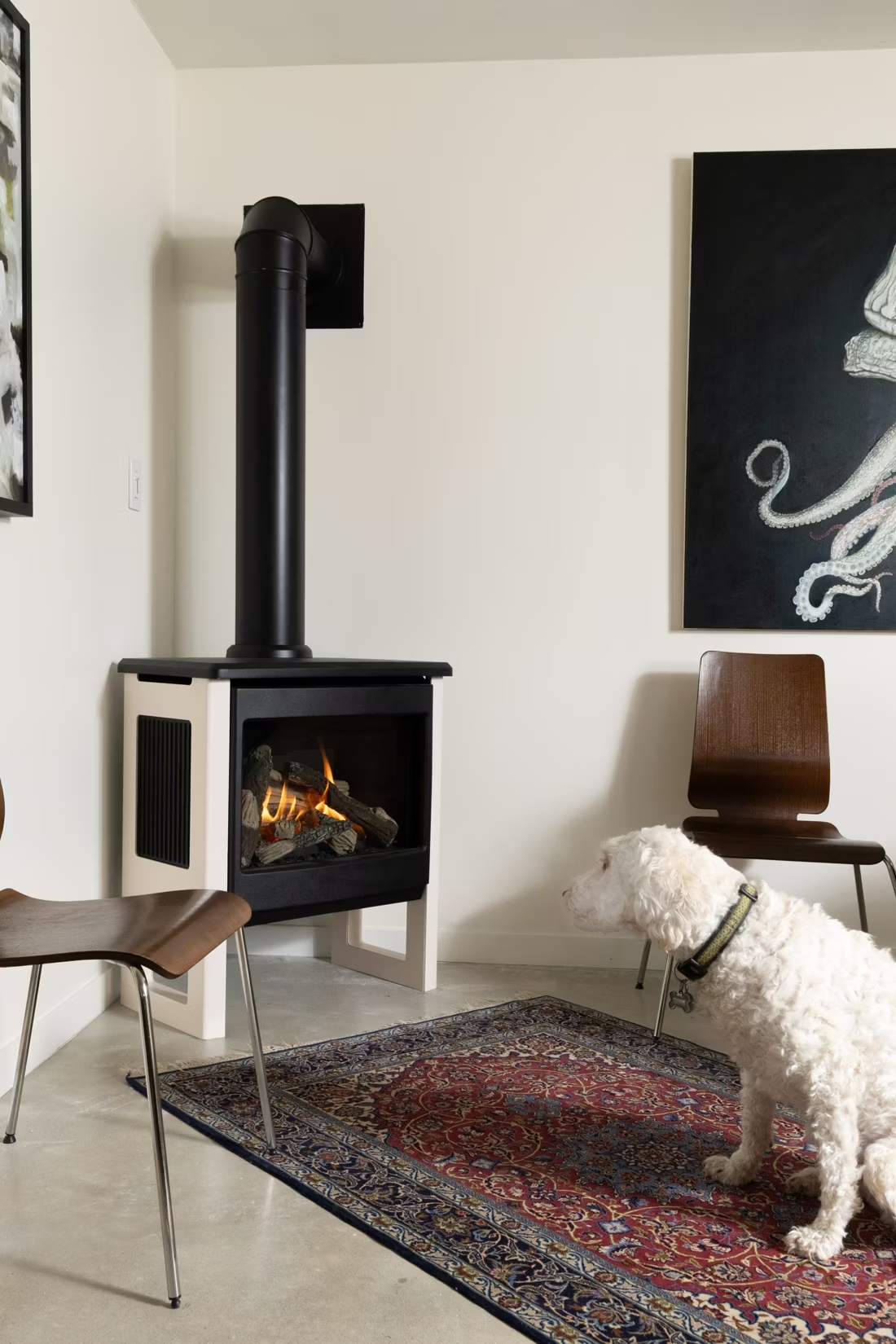
Four fuels. One honest answer for Wicomico County.
Three steps. No salesperson until you're ready.
Tell us about your project
Your zip code, your situation, and the fuel you're leaning toward—or let the answers point you to one.
See what's actually available
The brands dealers within 100 miles genuinely carry—real options, never a catalog mirage.
Get your dealer & Project Guide
A trusted local dealer, plus the free Project Guide & Parts List that names every component of the job.
Frequently Asked Questions
Which fuel works best in Wicomico County?
With average winter lows near 29°F, Wicomico County's heating needs are moderate compared to colder regions like Fargo, ND or Duluth, MN—which opens up real choice. Wood is a strong, low-cost option here: oak, hickory, and maple from local farms and woodlots burn hot and clean-splitting, and a mid-size stove or insert easily covers a typical Eastern Shore home through the shorter winter. Gas is the convenience pick—Salisbury-area homes on Chesapeake Utilities' natural gas lines get instant on-demand heat, while rural properties outside the gas footprint often run propane instead. Pellet stoves are well supported regionally, with Energex, Hamer Pellet Fuel, and Greene Team Pellet Fuel all distributed on the peninsula—a good middle ground for homeowners who want wood-style ambiance without splitting and stacking. Electric fireplaces work well as supplemental heat or pure ambiance in bedrooms, sunrooms, and secondary living spaces, since the mild climate here doesn't demand a 24/7 primary heater the way a Minnesota or Montana winter would.
Do I need a permit to install a fireplace in Wicomico County?
In most cases, yes. Wood stoves, wood inserts, gas fireplaces, gas inserts, gas stoves, and pellet stoves typically require a building permit, and gas installations also need a licensed gas-fitter and a separate gas line permit. Wood-burning appliances must meet current EPA emissions standards. If your project is inside the City of Salisbury, permits are handled through the city; everywhere else in the county, permits go through the Wicomico County Permits & Inspections Office. Electric fireplaces usually skip the permit process unless you're hardwiring a built-in unit or adding a new circuit. Most local hearth retailers pull these permits as part of the installation, so you typically aren't filing the paperwork yourself.
Are there air quality restrictions on wood burning in Wicomico County?
No—unlike basin communities out West that deal with winter temperature inversions and trapped wood smoke, Wicomico County's flat, coastal Delmarva geography doesn't create the same air-quality bottlenecks, and there are currently no county-level burn advisories or curtailment days. That said, EPA-certified stoves and well-seasoned oak, hickory, or maple (properly dried, not green-cut) still make a real difference in how much smoke a wood appliance produces, and it's worth asking your installer for a current EPA-certified model even without a local mandate requiring it.
Can one local hearth retailer handle all four fuel types?
Many Wicomico County hearth retailers carry at least three of the four fuel types, and a few multi-fuel showrooms in the Salisbury area stock wood, gas, pellet, and electric side by side—useful if you're still deciding between, say, a pellet insert and a gas log set. Smaller shops closer to Delmar or Hebron tend to specialize more narrowly, often focusing on wood and pellet given the county's rural, wood-heavy heritage, with gas as a secondary line. If you're cross-shopping fuels, ask to see working displays—comparing a live pellet burn against a gas log set side by side tends to clarify the decision faster than reading spec sheets.
How does service work in the outlying parts of Wicomico County?
Because Wicomico County is flat and compact compared to mountain or basin regions, most service technicians based in Salisbury can reach Delmar, Fruitland, Hebron, Mardela Springs, Pittsville, Sharptown, and Willards within a 20–30 minute drive—so travel fees for rural calls are minimal or waived entirely, unlike counties where a service call might mean a 60-mile trip up a mountain highway. The bigger scheduling factor is season: pre-season chimney sweeps and gas inspections (August–October) book up faster than mid-winter emergency calls, so booking early is the main thing to plan around here, not distance.
What's the typical cost range for fireplace installation across all fuel types in Wicomico County?
Ranges vary by fuel, and the county's mild climate keeps venting and structural work on the simpler end compared to snow-load regions. Wood stove or insert installation: roughly $4,000–$8,000 for a typical install, higher for new masonry chimney construction. Gas fireplace, insert, or stove: roughly $4,000–$10,000 depending on whether you're tapping existing gas line service or running new propane or natural gas lines. Pellet stove or insert: roughly $4,000–$7,000 for a standard install. Electric fireplace: $200–$3,000 for the unit itself, plus $400–$1,200 in labor for anything beyond a simple plug-and-play wall unit. See the county + fuel pages above for retailer-specific pricing tied to your project.
Does a fireplace add value to my home?
On average, a fireplace adds back to the home about the same amount you spent installing it. Add the monthly savings from heating the rooms you actually use instead of the whole house—often hundreds of dollars a year—and the value case is strong before you even count what a fire does for how your family uses the room.
What is an in-home preview and do I need one?
It's a visit where a hearth professional measures your space, confirms the model you picked actually works in your home, and walks the specs—framing, gas line, venting, finish work—before anything is ordered. Some details you just can't know until you see the house. Never make a down payment without one; it's the single most-skipped step that burns buyers.
Can I install a fireplace myself?
If you're putting a fire in your house on purpose, it's best to work with an expert. Unless you're genuinely experienced in framing, gas line, vent pipe, and the national code on clearances to combustibles, have a professional do it—and ideally the same company that sells you the fireplace, so warranty, service, and liability all live under one roof.
Wood, gas, pellet, or electric—how do I choose?
Match the fuel to your life, not the other way around. Wood: lowest fuel cost and total power-outage independence, but you're hauling and stacking. Gas: press a button, set a thermostat, no maintenance to speak of. Pellet: wood economics with automatic feeding, in exchange for weekly cleaning and a need for electricity. Electric: plugs in anywhere with honest supplemental heat. Nobody regrets the fuel that fits how they actually live.
Stove and Fireplace Dealers in Wicomico County
Listings include WhyFire partner dealers, dealers we have verified as authorized for the brands we recommend, and established local businesses that carry hearth products. Every listing shows which one it is. The ones marked Preferred run on WhyFire's software, so they can show you real pricing and book your appointment right here. No manufacturer pays for placement. How we verify dealers →
Cato Oil Inc
Compass Energy Inc.
Chesapeake Hearth & Stone
Animal Health Sales, Inc.
Chesapeake Hearth & Stone
Schagrin Gas - Millsboro
Elliott's Hardware
Collins Wood Products
Coastal Hearth & Home
Get matched with a Wicomico County hearth dealer.
Pick your fuel below and I'll match you with a trusted local retailer and send you a free Project Guide & Parts List—the exact parts, vent kit, and recommended dealer for your Wicomico County home.
Find Your Fireplace →