
Heat your home right, from Cumberland to Frostburg.
Wood, gas, pellet, and electric fireplace resources for every city and mountain community in Allegany County—from the Potomac valley in Cumberland up to the ridges above Frostburg. Find the right unit and connect with a trusted local hearth retailer.
Every Project Starts From One of These Five Situations
Appalachian heating in the heart of western Maryland.
Allegany County sits in the Appalachian Plateau of western Maryland, with Cumberland's Potomac River valley around 750 feet in elevation and Big Savage Mountain rising past 2,800 feet along the West Virginia line. Winters here run cold and steady—average lows near 22°F, roughly 5,119 heating degree days a season, and a climate zone (4A) that demands real insulation and real heat, though nowhere near as severe as Buffalo, NY's 6,400+ HDD winters. The surrounding hardwood forests—oak, hickory, and maple—have supplied firewood to this region for generations, and that heritage still shows in how many households heat their homes.
What you'll find on this hub: hearth retailers, service technicians, and fuel suppliers serving every community in the county—Cumberland and LaVale in the valley, Frostburg up on the plateau, and the smaller river towns of Westernport, Midland, and Barton along the Potomac. Pick your fuel below to drill into specifics—local dealers, installation costs, recommended units, and the resources that match your project. Whether you're heating a Cumberland rowhouse or a cabin near Green Ridge State Forest, this is the starting point.
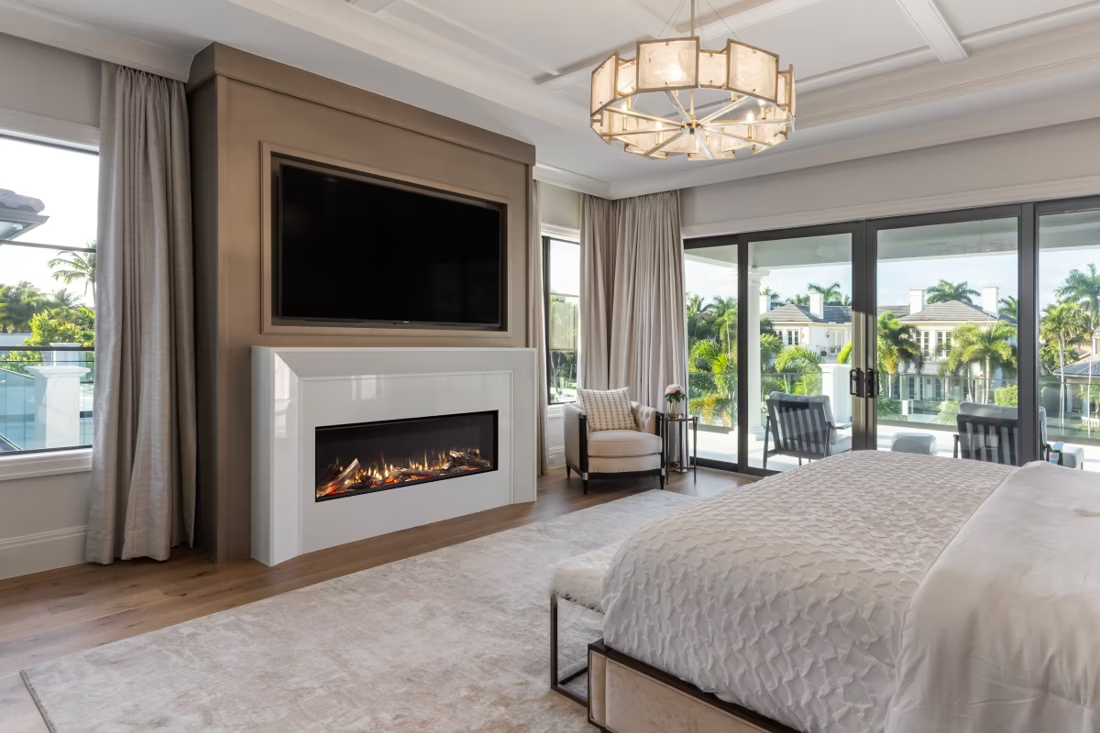
Four fuels. One honest answer for Allegany County.
Three steps. No salesperson until you're ready.
Tell us about your project
Your zip code, your situation, and the fuel you're leaning toward—or let the answers point you to one.
See what's actually available
The brands dealers within 100 miles genuinely carry—real options, never a catalog mirage.
Get your dealer & Project Guide
A trusted local dealer, plus the free Project Guide & Parts List that names every component of the job.
Frequently Asked Questions
Which fuel works best in Allegany County?
It depends on your home and where you sit in the county. Wood is the deep-rooted choice here—the oak, hickory, and maple forests covering these Appalachian ridges have heated homes for generations, and a well-fed cast iron or catalytic stove handles the 22°F average winter lows without trouble. Gas is the convenience option for homes in and around Cumberland with access to piped natural gas; homes further up into the mountains around Frostburg or out toward Westernport more often rely on propane. Pellet is a strong middle ground—regional brands like Energex, Hamer Pellet Fuel, and Greene Team Pellet Fuel are readily stocked in the area, giving you wood-style heat without splitting and stacking a woodpile. Electric works well as supplemental heat for bedrooms, sunrooms, or apartments in Cumberland and LaVale, but on its own it won't carry a home through a 5,119-HDD winter. Most Allegany County homes end up pairing a primary wood or pellet stove with gas or electric in secondary rooms.
Do I need a permit to install a fireplace in Allegany County?
In most cases, yes. Whether you're inside Cumberland or Frostburg city limits or out in unincorporated Allegany County, new wood stoves, wood inserts, gas fireplaces, gas inserts, gas stoves, and pellet stoves generally require a building permit, and gas installations need a separate gas-line permit pulled by a licensed gas fitter. Electric fireplaces are usually permit-free unless they're a built-in unit requiring a new hardwired circuit. Cumberland and Frostburg issue their own municipal permits; everywhere else in the county goes through the Allegany County permitting office. Most local hearth retailers handle this paperwork as part of the installation, so you typically aren't filing it yourself.
Are there air quality restrictions on wood burning in Allegany County?
No—Allegany County doesn't carry any air quality non-attainment designations or winter burn-ban advisories, unlike basin regions further west that deal with temperature inversions. That said, it's still worth choosing an EPA-certified stove: at 2,800+ feet of elevation on the Frostburg plateau, cold nights and dense hardwood loads (oak and hickory burn hotter and longer than softer woods) can build creosote fast in an older or uncertified unit, raising chimney fire risk. A modern EPA-certified stove burns cleaner, uses less wood per BTU, and needs less frequent sweeping—a practical upgrade even without a regulatory push to make it.
Can one local hearth retailer handle all four fuel types?
Many can, particularly the larger retailers clustered around Cumberland and LaVale, which tend to carry wood, gas, pellet, and electric under one roof so you can compare options side by side before committing. Smaller specialty shops out toward Frostburg or the river towns of Westernport and Midland more often focus on one or two fuels—frequently wood and pellet, given the county's forestry roots and the number of households that split their own firewood. If you're not sure which fuel fits your home, a multi-fuel dealer in the Cumberland corridor is generally the easiest place to see working displays of each type before deciding.
How does service work in rural areas of Allegany County?
Most chimney sweeps and gas/pellet technicians are based in the Cumberland–LaVale corridor and travel out to Frostburg, the Georges Creek towns of Westernport and Barton, and rural stretches near Green Ridge State Forest. Expect a modest travel fee for calls outside the immediate Cumberland area, and know that scheduling gets tighter once cold weather sets in—booking your annual sweep or gas inspection in late summer or early fall, before the 5,119-HDD heating season kicks in, is far easier than trying to get an emergency appointment in January.
What's the typical cost range for fireplace installation across all fuel types in Allegany County?
Ranges vary by fuel. Wood stove or insert installation: roughly $3,800–$8,000 for a typical retrofit, more if new chimney liner or masonry work is needed. Gas fireplace, insert, or stove: roughly $4,000–$9,500, with cost depending heavily on whether a new gas line has to be run—lower if existing gas service is already in place. Pellet stove or insert: roughly $4,000–$6,800 for a standard install. Electric fireplace: $200–$2,800 for the unit itself, plus $350–$1,000 in labor for anything beyond a simple plug-in, which covers most wall-mount and built-in jobs. For a plan tailored to your specific home, the county + fuel pages above break down local pricing in more detail.
Can I install a fireplace myself?
If you're putting a fire in your house on purpose, it's best to work with an expert. Unless you're genuinely experienced in framing, gas line, vent pipe, and the national code on clearances to combustibles, have a professional do it—and ideally the same company that sells you the fireplace, so warranty, service, and liability all live under one roof.
Does a fireplace add value to my home?
On average, a fireplace adds back to the home about the same amount you spent installing it. Add the monthly savings from heating the rooms you actually use instead of the whole house—often hundreds of dollars a year—and the value case is strong before you even count what a fire does for how your family uses the room.
Should the dealer who sells my fireplace also install it?
Ideally, yes. A fireplace project involves vent pipe, gas line, electrical, and often tile or stone. Hire three or four separate trades and you own the liability and the game of telephone between them. One company selling and installing means one accountable party, start to finish—ask about factory training, on-time completion records, and what happens if an inspection fails.
Wood, gas, pellet, or electric—how do I choose?
Match the fuel to your life, not the other way around. Wood: lowest fuel cost and total power-outage independence, but you're hauling and stacking. Gas: press a button, set a thermostat, no maintenance to speak of. Pellet: wood economics with automatic feeding, in exchange for weekly cleaning and a need for electricity. Electric: plugs in anywhere with honest supplemental heat. Nobody regrets the fuel that fits how they actually live.
Stove and Fireplace Dealers in Allegany County
Listings include WhyFire partner dealers, dealers we have verified as authorized for the brands we recommend, and established local businesses that carry hearth products. Every listing shows which one it is. The ones marked Preferred run on WhyFire's software, so they can show you real pricing and book your appointment right here. No manufacturer pays for placement. How we verify dealers →
Ebyland, LLC
Warners Hearth & Patio
Slanesville Home &Hardware
Chimney Wizard Woodstoves
Find your fireplace in Allegany County.
Tell us about your home and we'll match you with a trusted local dealer and send you a free Project Guide & Parts List—a plan for your fireplace project in Allegany County, with the exact parts, vent kit, and recommended local installer.
Find Your Fireplace →