
Real fire ambiance for Winnipeg winters, no chimney required.
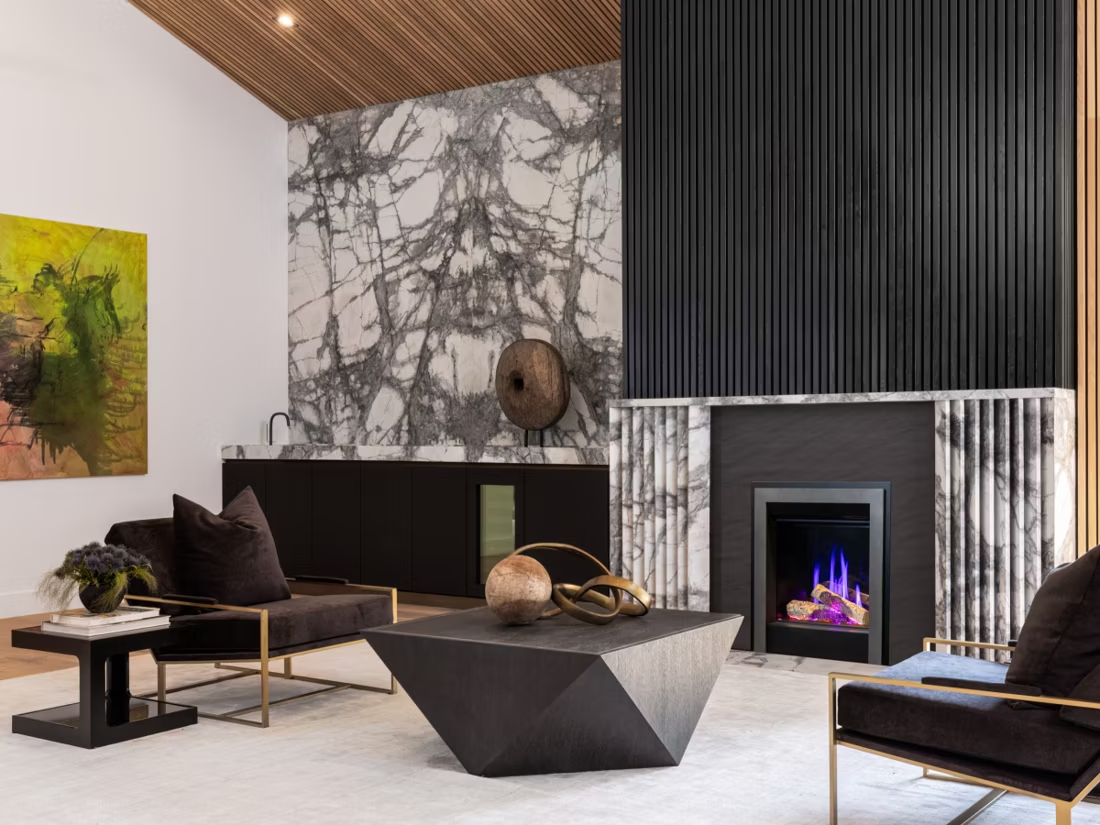
With Manitoba Hydro among the cheapest power in the country and winters that average -21.4°C, an electric fireplace or insert is an easy way to add real zone heat and ambiance to a room, no flue, no gas line, and no WETT inspection. I'll match you with a trusted local dealer who can spec the right unit for your space and send a free planning packet.
Every Project Starts From One of These Five Situations
Manitoba Hydro's low rates make electric heat an easy call.
The Winnipeg Region stretches beyond the city proper into East St. Paul, West St. Paul, Headingley, and the Selkirk corridor along the Red River, home to roughly 806,000 people in Climate Zone 7B, one of the harshest classifications in the country. Winter lows here average -21.4°C, and the heating season runs from October well into April, rivaling Regina and Saskatoon for sheer duration and depth of cold. Homeowners here have long relied on wood species like trembling aspen, paper birch, bur oak, and black ash for backup heat, but electric fireplaces have carved out a genuine niche of their own thanks to Manitoba Hydro's rates, which sit among the lowest in Canada because the province generates most of its power from hydroelectric dams rather than natural gas or coal. That makes an electric fireplace or built-in unit a realistic everyday heat source for a den, basement, or condo, not just a decorative box.
It's worth being upfront about what electric heat can't do: when a January storm knocks out power along the Perimeter Highway or in outlying municipalities like Headingley, an electric fireplace goes dark right along with everything else on the circuit. That's precisely why so many Winnipeg Region homes pair a plug-in or built-in electric unit for daily ambiance and zone heat with a wood stove or gas insert as the actual outage backup—a pattern any local dealer will recognize immediately. On the upside, because electric appliances involve no combustion, they sidestep the CSA B365 installation code and the WETT inspection that insurers commonly require for wood-burning systems, and permitting through your municipal building department is typically limited to an electrical permit for a dedicated circuit, not a full mechanical review.
Three steps. No salesperson until you're ready.
Tell us about your project
Your postal code, your situation, and the fuel you're leaning toward—or let the answers point you to one.
See what's actually available
The brands dealers within 100 miles genuinely carry—real options, never a catalog mirage.
Get your dealer & Project Guide
A trusted local dealer, plus the free Project Guide & Parts List that names every component of the job.
Frequently Asked Questions
How much does an electric fireplace installation cost in the Winnipeg Region?
Electric fireplace installs across the Winnipeg Region typically run $500 to $1,600 CAD, one of the lowest entry points of any fuel type. A basic plug-in insert dropped into an existing wood fireplace opening or a wall-mounted unit on an existing outlet sits at the bottom of that range. A unit that needs a dedicated 240-volt circuit run by an electrician, or a linear built-in framed into a new wall during a basement or living room renovation, lands toward the top. Homes in outlying municipalities like West St. Paul or Selkirk may see a modest travel charge if your electrician is based downtown.
Do I need a permit to install an electric fireplace in the Winnipeg Region?
Often yes, though it's a lighter lift than a combustion appliance. Your municipal building department generally requires an electrical permit if the installation needs a new dedicated circuit or panel work, which a licensed electrician pulls as part of the job. Because there's no flue, chimney, or combustion byproduct involved, electric installations skip the CSA B365 code and the WETT inspection that insurers commonly require for wood-burning appliances in the region.
Will an electric fireplace still work during a power outage?
No, and this is worth planning around. Manitoba Hydro's grid powers the fan, heating element, and flame-effect display, so when the power goes out, so does your electric fireplace, unlike a wood stove that keeps burning regardless of the utility. Given how often winter storms knock out power to outlying parts of the region, many households treat electric fireplaces as their everyday, ambiance-and-zone-heat appliance while keeping a wood stove or gas insert on hand as genuine outage backup.
How much does it cost to run an electric fireplace on Manitoba Hydro rates?
Running cost is one of the strongest arguments for electric heat in the Winnipeg Region. Manitoba Hydro's rates rank among the lowest in Canada, since the provincial grid runs almost entirely on hydroelectric generation rather than natural gas or coal. A typical 1,500-watt electric fireplace run for several hours an evening adds only a modest amount to a monthly bill, which is part of why electric units have become a popular way to add supplemental heat to a chilly bonus room or basement without touching the furnace.
What's the difference between an electric insert and a standalone electric stove?
An electric insert is built to slide into an existing masonry or steel fireplace opening, using the surround you already have, while a standalone electric stove or wall-mount unit is a freestanding or hung appliance for a room with no existing firebox. Converting an old wood-burning fireplace to an electric insert is common in older Winnipeg neighbourhoods like Wolseley or River Heights, where homeowners want the look of a fire without maintaining a flue that may no longer meet code.
Are electric fireplaces a good fit for downtown Winnipeg condos?
Yes, and this is where electric heat is often the only real option. Electric fireplaces fit well in the Winnipeg Region's growing stock of downtown and Exchange District condos, where strata rules and shared venting systems often rule out a wood stove or even a gas insert. Because an electric unit needs nothing more than a standard or dedicated outlet, it's frequently the only fireplace type a condo board will approve without requiring an exterior vent or chimney access.
Can I install an electric fireplace in an apartment or manufactured home?
Yes. Electric fireplaces work well in apartments, manufactured homes, and rental units across the region precisely because there's no chimney, no gas line, and minimal clearance requirements compared to a wood or gas appliance. Many landlords in the Winnipeg Region will approve a plug-in or wall-mounted electric unit where they'd never sign off on a solid-fuel installation.
Can an electric fireplace really handle a Winnipeg winter?
Winnipeg's winters are genuinely severe—average lows near -21.4°C put the region in the same league as Regina and Saskatoon for sustained cold, and windchill routinely pushes well past -30°C during a January cold snap. An electric fireplace is a legitimate zone-heat solution for a specific room on those nights, but it isn't sized or intended to replace a whole-home furnace. Most Winnipeg Region homeowners use electric fireplaces to take the edge off a basement, sunroom, or bedroom while the furnace handles the rest of the house.
How much maintenance does an electric fireplace need?
Maintenance is minimal, which is another reason electric appliances appeal to Winnipeg Region homeowners already managing a furnace and possibly a wood stove. There's no annual WETT inspection, no chimney sweep, and no ash to manage, just occasional dusting of the unit and, eventually, replacing an LED module or heating element after years of regular use, usually a straightforward job for the dealer who supplied it.
How much does an electric fireplace cost to run?
With the heater on, a typical unit draws about 1,500 watts—at average electric rates that's roughly 20 cents an hour. Run the flame effect alone and it costs pennies; the flames are LED-driven and use about as much power as a light bulb. There's no pilot light, no fuel delivery, and essentially no maintenance.
What fireplace styles should I know before shopping?
Four cover most of the market: screen-front traditional (mesh front, open feel, fits craftsman homes), traditional door set (the classic look you grew up with), modern linear (wide, low, the statement piece for entertaining), and clean face contemporary (no trim—your tile or stone runs right to the fire's edge). Walk in knowing those four terms and you're ahead of most buyers.
Do electric fireplaces actually produce heat?
Yes—most put out around 4,800–5,000 BTUs from a standard outlet, which comfortably warms a bedroom, office, or den as a comfort-zone heater. What they won't do is carry a whole house the way wood, gas, or pellet can. Think of electric as ambiance-first with honest supplemental heat: flames on with no heat in July, flames plus warmth in January.
Does an electric fireplace need a vent or chimney?
No—that's its superpower. An electric fireplace needs a wall and an outlet, period. No vent pipe, no gas line, no clearances to design around, which is why it works in bedrooms, offices, apartments, and walls where venting a gas or wood unit would be impractical or impossible. Installation is typically the simplest and least expensive of any fireplace type.
Stove and Fireplace Dealers in Winnipeg Region
Listings include WhyFire partner dealers, dealers we have verified as authorized for the brands we recommend, and established local businesses that carry hearth products. Every listing shows which one it is. The ones marked Preferred run on WhyFire's software, so they can show you real pricing and book your appointment right here. No manufacturer pays for placement. How we verify dealers →
TimberStone Distribution Winnipeg
Springhill Lumber Wholesale Ltd
National Energy Equipment Inc.
Mantario Chimney
Mbm Plumbing Services
C-Pex Plumbing
McMunn & Yates Building Supply
Electric Service in Winnipeg Region
An electric fireplace's heater draws about 1,500 watts—pennies per hour at local rates.
Manitoba Hydro
Get your free Winnipeg Region electric fireplace Project Guide & Parts List.
Tell us about your home, the room you want to heat, and whether you're converting an existing fireplace opening, and we'll match you with a trusted local Winnipeg Region dealer and send a free Project Guide & Parts List, the exact unit, wiring needs, and recommended dealer for your electric fireplace project.
Find Your Fireplace →