
Built for West St. Paul winters that drop past -21°C.
West St. Paul sits in Climate Zone 7B, where average winter lows of -21.4°C stretch across a long, dry Manitoba heating season. A pellet stove gives you thermostat-controlled heat without splitting cordwood. I'll match you with a trusted local dealer who knows what's actually installable on your street.
Every Project Starts From One of These Five Situations
Efficient heat, but you need the power to run it.
At 231 metres in the Red River Valley just north of Winnipeg, West St. Paul sits among the coldest major-city winter climates in the country, closer in feel to Winnipeg's own long cold season than to anywhere further south. A pellet stove's automatic auger feed and thermostat control make it a genuinely good fit for that kind of stretch-out winter, since it holds a steady setpoint overnight without anyone getting up to reload. That's a real advantage over splitting and stacking trembling aspen, paper birch, bur oak, or black ash, which is still how plenty of neighbours in the region heat.
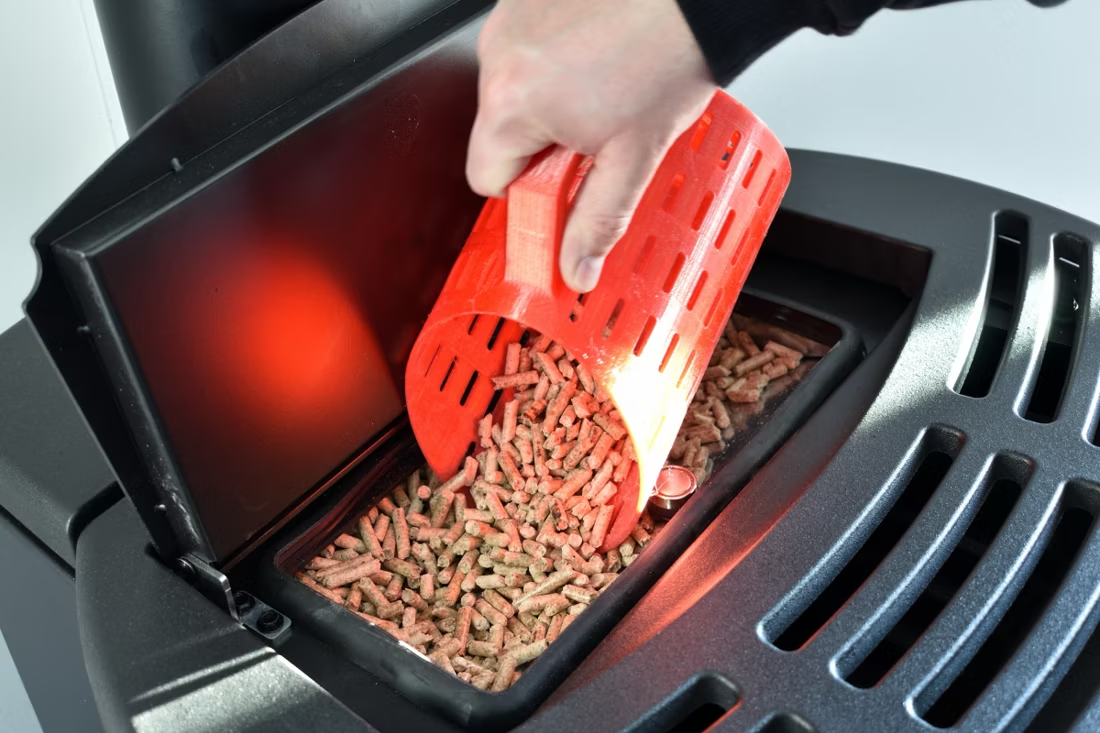
Manitoba Hydro's residential electricity rate, around 10.3 cents per kWh, is low enough that running the auger and combustion blower costs very little compared to many other provinces, and pellets from regional suppliers like La Crete Sawmills and Spruce Products typically run $400 to $575 CAD per tonne delivered or picked up in bags. The tradeoff is that a pellet stove needs continuous electricity to feed itself and push exhaust out the vent. When an ice storm or a hard prairie cold snap knocks out Manitoba Hydro service, an unpowered pellet stove goes cold within minutes, which is one reason a lot of West St. Paul households still keep a wood stove or gas fireplace as a backup heat source alongside pellet as their daily driver.
Three steps. No salesperson until you're ready.
Tell us about your project
Your postal code, your situation, and the fuel you're leaning toward—or let the answers point you to one.
See what's actually available
The brands dealers within 100 miles genuinely carry—real options, never a catalog mirage.
Get your dealer & Project Guide
A trusted local dealer, plus the free Project Guide & Parts List that names every component of the job.
Frequently Asked Questions
How much does a pellet stove installation cost in West St. Paul?
Most pellet stove installs here run $6,000 to $10,000 CAD. A freestanding stove venting through an exterior wall in a bungalow or split-level, common throughout West St. Paul's older subdivisions, tends to land toward the lower end. A pellet insert going into an existing masonry firebox, or a install requiring longer horizontal vent runs because of where the chimney chase sits, pushes toward the top. A permit through the municipal building department is required either way, and most dealers who install regularly in the Winnipeg region fold that into their quote.
What size pellet stove do I need for a West St. Paul home?
With winter lows averaging -21.4°C and routine colder snaps on top of that, undersizing is the mistake to avoid. A stove rated for 1,200 to 1,600 square feet suits a well-insulated newer build along the river, but many of West St. Paul's older rural-residential homes on larger lots need a stove at the higher end of that range, or even a second heat source in a detached shop or garage. A local dealer will size it against your actual floor plan, ceiling height, and insulation rather than square footage on a spec sheet alone.
Do I need a permit to install a pellet stove in West St. Paul?
Yes. New installations go through the municipal building department, and the installation itself has to meet CSA B365 requirements for venting and clearances. Pellet stoves are a solid-fuel appliance, so most insurance providers in the Winnipeg region will also ask for a WETT inspection before they'll add the unit to your policy, even though pellet burns cleaner and requires far less chimney maintenance than an open wood fire. A dealer who installs regularly in the area can usually arrange the WETT inspection as part of the project.
Where do I buy pellets near West St. Paul, and what do they cost?
Regional brands like La Crete Sawmills and Spruce Products supply most of the bagged pellets sold through Manitoba dealers, typically running $400 to $575 CAD per tonne depending on the season and how far ahead you buy. Buying a season's supply in late summer, before the first cold snap drives up demand, is the standard local move. Pellets need to stay dry, so a garage, basement, or covered shed works, but they can't sit directly on a damp concrete floor or they'll swell and clog the feed system.
What happens to my pellet stove during a Manitoba Hydro power outage?
It stops. The auger, igniter, and combustion blower all run on household electricity, so an outage during a prairie ice storm or a deep cold snap shuts the stove down within minutes, even with a full hopper. Some models, including certain Enviro and Harman units, accept a small battery backup that will keep the unit running for a limited stretch, and that's worth asking your dealer about given how far West St. Paul winters can push the grid. Many households here pair a pellet stove for daily convenience with a wood stove or gas fireplace elsewhere in the house specifically for outage backup.
Pellet stove vs. wood stove—which makes more sense here?
Wood is the cheaper fuel and it keeps working without power, which matters given how often winter storms interrupt Manitoba Hydro service in this area. A cutting permit from the Manitoba Natural Resources Forestry Branch runs $26 for 2.5 cubic metres up to $74.50 for 25 cubic metres, and trembling aspen, paper birch, bur oak, and black ash are all common species locally, with oak in particular burning long and hot. Pellet trades that fuel-cost advantage for convenience: no splitting, stacking, or daily loading, cleaner glass, and a thermostat that holds a steady temperature overnight on its own. Households that want low-maintenance daily heat tend to choose pellet; households prioritizing outage resilience and the lowest fuel cost tend to lean wood, or run both.
How often does a pellet stove need cleaning and service in West St. Paul?
Plan on a full professional service once a year, ideally in late summer or early fall before West St. Paul's long heating season gets underway and technicians book up. Between services, the ash pot and burn pot need emptying every few days during heavy winter use, and the hopper and auger benefit from a wipe-down monthly. Because pellet appliances still fall under WETT and CSA B365 as solid-fuel equipment, keeping up with cleaning also matters for insurance purposes, not just performance.
Pellet vs. natural gas—which is the better fit for a West St. Paul home?
Natural gas through Manitoba Hydro's gas service is available throughout most of West St. Paul, and a gas fireplace or insert typically runs $6,000 to $15,000 CAD installed, fires instantly, and needs almost no fuel handling. Pellet installs are usually cheaper, $6,000 to $10,000, and the stove itself doubles as a strong secondary heat source, but it depends on a hopper you refill and an electrical supply that has to stay live. Homeowners who already have gas service and want zero-maintenance convenience often lean gas; those who like the idea of a visible, controllable fire and don't mind refilling pellets tend to choose pellet.
Are there rebates available for a pellet stove upgrade in West St. Paul?
Efficiency Manitoba periodically runs incentive programs for home heating upgrades, and it's worth checking current offerings before you buy since funding and eligible equipment change from year to year. Because Manitoba Hydro's residential electricity rate is already low, the bigger financial case for pellet here tends to be fuel savings against a home currently heating with baseboard electric or an older, less efficient wood stove rather than a rebate alone. A dealer who installs regularly in the Winnipeg region will know what's currently funded and can walk you through the paperwork.
Why do fireplace quotes vary so much?
Because a fireplace is an iceberg—there's more behind the wall than in front of it. A low quote often covers only the unit; the full scope includes vent pipe, gas line or electrical, framing, and the tile or stone that has to come off and go back on. Make every bidder price the whole job. If a dealer can't speak to the full scope with confidence, that's your signal to keep looking.
Is it worth replacing an old fireplace that still sort of works?
Ask three questions: Is it ugly? Is it drafty? Does it actually work? Most old fireplaces fail at least two. Beyond looks, an old unit leaks air around the damper year-round and—if it's gas with a standing pilot—quietly burns a couple hundred dollars a year. A modern replacement seals the wall, heats the room, and changes how the whole space gets used.
What does it take to replace an existing fireplace?
Fireplaces are like icebergs—bigger behind the wall than in front of it. Replacement means removing the surrounding tile or stone (the finish material laps onto the fireplace face), pulling the old unit, setting the new one in the same enclosure, and re-finishing the wall. A hearth professional can determine what's behind your wall without demolition during an in-home preview.
Why is my open fireplace making my house colder?
Open fireplaces suck—literally. As the fire burns, it consumes air your furnace already paid to heat and pulls it out through the chimney, so the house is actually colder after the fire goes out than before you lit it. An insert fixes this: it seals the chimney, puts fixed glass across the front, and turns that hole in your house into a real heat source.
Nearby Dealers
Hearth shops serving West St. Paul and the surrounding area. Every listing shows whether it is a WhyFire partner, a dealer we have verified as authorized for the brands we recommend, or a local business carrying hearth products. No manufacturer pays for placement. How we verify dealers →
National Energy Equipment Inc.
Springhill Lumber Wholesale Ltd
TimberStone Distribution Winnipeg
Mantario Chimney
Mbm Plumbing Services
C-Pex Plumbing
McMunn & Yates Building Supply
Pellet Brands Stocked Around West St. Paul
Typical price runs $400-$575 per ton—buy early-season for the best rates. Manufacturers will point you to the nearest stocking dealer.
La Crete Sawmills
Spruce Products
Get your free Project Guide & Parts List for a West St. Paul pellet stove.
Tell me about your home and your current heating setup, and I'll match you with a trusted local dealer who knows CSA B365, WETT, and what's actually available through Manitoba Hydro service in your area. You'll get a free Project Guide & Parts List with the vent kit and parts your project needs.
Find Your Fireplace →