
Set-it-and-forget-it heat for Ste. Anne's -22°C winters.
Ste. Anne sits in the Winnipeg Region where winter lows average -22°C and cold snaps run well past that. A pellet stove gives you thermostatically controlled heat without splitting cordwood. I'll match you with a trusted local dealer and send a free Project Guide & Parts List sized for your home.
Every Project Starts From One of These Five Situations
Consistent heat without a woodpile to manage.
Ste. Anne is a small community in the Winnipeg Region, and its winters rank among the coldest that any populated stretch of Canada sees, with average lows near -22°C and long stretches where the mercury doesn't climb much past that overnight. Trembling aspen, paper birch, bur oak, and black ash are the wood species most local burners rely on, and wood heat has deep roots here, but a lot of homeowners are choosing pellet appliances instead for the same reason they'd choose a furnace over a woodstove: load the hopper, set the thermostat, and the auger handles the rest through a five-plus-month heating season.
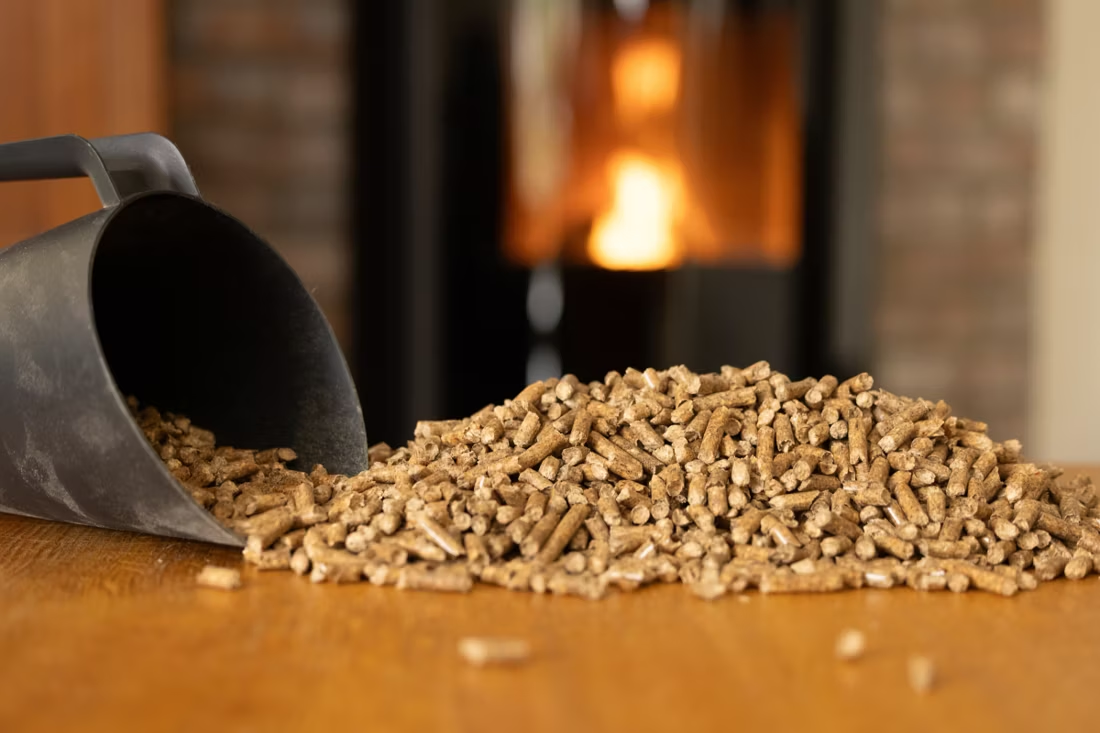
Regional pellet brands like La Crete Sawmills and Spruce Products supply the area at roughly $400-$575 a tonne, and unlike cordwood, there's no Manitoba Natural Resources Forestry Branch cutting permit to buy or truck to load—you're picking up bagged fuel from a dealer instead. The one tradeoff worth knowing: pellet stoves need electricity to run the auger and combustion blower, and this is a region where power outages during hard winter storms are a real planning factor. Manitoba Hydro rates are low at roughly 10.3 cents per kWh, which keeps pellet appliances cheap to run day to day, but most local dealers will talk you through a battery backup option or a wood stove as a second heat source for outage resilience.
Three steps. No salesperson until you're ready.
Tell us about your project
Your postal code, your situation, and the fuel you're leaning toward—or let the answers point you to one.
See what's actually available
The brands dealers within 100 miles genuinely carry—real options, never a catalog mirage.
Get your dealer & Project Guide
A trusted local dealer, plus the free Project Guide & Parts List that names every component of the job.
Frequently Asked Questions
How much does a pellet stove installation cost in Ste. Anne?
Typical pellet installs in this area run $6,000 to $10,000 CAD, which covers the appliance, hearth pad, direct-vent piping through an exterior wall, and the electrical hookup for the auger and blower. Homes with an existing wood fireplace or chimney chase to reuse for venting tend to land toward the lower end; new construction or a full wall-through install with no existing penetration pushes toward the top of that range. Your municipal building department permit and inspection are typically folded into a local dealer's quote.
What size pellet stove do I need for a Ste. Anne home?
With winter lows averaging -22°C and routine drops colder than that, most Ste. Anne homes need a mid-to-large pellet stove rather than a small supplemental unit, especially if it's carrying real heating load rather than backing up a furnace. A stove rated for 1,500 to 2,200 square feet handles a typical bungalow or two-storey here through the coldest stretches of the season, but a local dealer should size it against your actual insulation and layout, not just square footage, since older farmhouses around town lose heat differently than newer builds.
Do I need a permit to install a pellet stove in Ste. Anne?
Yes. New installations go through the municipal building department, and the work needs to meet CSA B365 installation code. Most insurers in Manitoba also want a WETT inspection on file for solid-fuel appliances, pellet stoves included, before they'll write or renew a homeowner's policy—it's a routine step, not a red flag, and a local dealer who installs pellet appliances regularly in the Winnipeg Region will already have the paperwork process down.
Where do I buy pellets near Ste. Anne, and what do they cost?
Regional brands like La Crete Sawmills and Spruce Products supply most of the pellet fuel sold through dealers in this part of Manitoba, typically running $400 to $575 a tonne depending on the season and how early you buy. Stocking up in late summer or early fall, before the first cold snap drives demand up, is the usual strategy locals use to land toward the lower end of that range. A season's supply for a home using pellets as primary heat is generally 3 to 5 tonnes, depending on how cold the winter runs.
Will my pellet stove still work during a winter power outage?
Not without backup power. Pellet stoves rely on electricity to run the auger that feeds fuel and the blower that pushes heat into the room, so a Manitoba Hydro outage during a hard winter storm shuts the appliance down even with a full hopper. This is a real consideration in the Winnipeg Region, where prolonged cold-weather outages do happen. Many households here pair a pellet stove with a small battery backup or generator, or keep a wood stove burning trembling aspen or bur oak in another room as an outage-proof fallback—your local dealer can talk through both options.
Pellet stove or wood stove—which makes more sense for my house?
Wood stoves burning local species like trembling aspen, paper birch, bur oak, or black ash keep working through a power outage and can be fed with wood cut under a Manitoba Natural Resources Forestry Branch permit for as little as $26 for 2.5 cubic metres. Pellet stoves trade that outage independence for convenience—no splitting, no stacking, and a thermostat that holds a steady temperature overnight without reloading. Given how often backup heat during outages comes up for homes in this region, some households run pellet as the daily-use appliance and keep a wood stove in the basement or garage as the storm-day backup.
Pellet vs. natural gas—which is the better fit in Ste. Anne?
Natural gas through Manitoba Hydro's gas service is available in Ste. Anne, and a gas fireplace or insert offers instant on-demand heat with a battery-backed ignition option that can survive short outages, which pellet appliances can't do without added battery equipment. Pellet stoves generally cost less to install ($6,000-$10,000 versus $6,000-$15,000 for gas) and give you visible flame and a wood-fire feel that a lot of homeowners still want. If you're deciding between the two, it usually comes down to whether you want that traditional-looking fire (pellet) or the lowest-maintenance, instant-on convenience (gas).
How much maintenance does a pellet stove need?
Plan on emptying the ash pan every few days during heavy winter use, a full burn-pot and glass cleaning weekly, and a professional service visit once a year, ideally before the season's first cold nights rather than mid-January when local technicians are booked solid. A well-maintained unit running through Ste. Anne's long, cold heating season should give consistent output all winter; skipping the annual service is the most common reason homeowners see auger jams or ignition failures on the coldest week of the year.
What's the difference between a pellet stove and a pellet insert?
A pellet stove is a freestanding unit on its own hearth pad, which works well in newer Ste. Anne homes that don't already have a masonry fireplace. A pellet insert slides into an existing wood-burning fireplace opening and vents out through the current chimney chase, which is the more common retrofit in older farmhouses around town that were originally built with a wood or masonry fireplace. Inserts often land toward the lower end of the $6,000-$10,000 install range since less new venting work is required.
Why do fireplace quotes vary so much?
Because a fireplace is an iceberg—there's more behind the wall than in front of it. A low quote often covers only the unit; the full scope includes vent pipe, gas line or electrical, framing, and the tile or stone that has to come off and go back on. Make every bidder price the whole job. If a dealer can't speak to the full scope with confidence, that's your signal to keep looking.
Is it worth replacing an old fireplace that still sort of works?
Ask three questions: Is it ugly? Is it drafty? Does it actually work? Most old fireplaces fail at least two. Beyond looks, an old unit leaks air around the damper year-round and—if it's gas with a standing pilot—quietly burns a couple hundred dollars a year. A modern replacement seals the wall, heats the room, and changes how the whole space gets used.
What do I measure to size a fireplace insert?
Four numbers tell you what fits: the front width, the front height, the back width, and the overall depth of your existing fireplace opening. Grab a tape measure, jot those down, and snap a photo of the wall—those two things do more to move your project forward than anything else you can do today.
Are pellet stoves loud?
They make some noise—there are two fans running plus an auger motor that turns as it feeds pellets. But there's a real range: premium models are engineered quiet, and the best offer a whisper-quiet mode you can comfortably watch TV next to. If noise matters in your room, ask to hear a stove running before you buy—it's a five-minute test that saves years of annoyance.
Nearby Dealers
Hearth shops serving Ste. Anne and the surrounding area. Every listing shows whether it is a WhyFire partner, a dealer we have verified as authorized for the brands we recommend, or a local business carrying hearth products. No manufacturer pays for placement. How we verify dealers →
McMunn & Yates Building Supply
TimberStone Distribution Winnipeg
Mbm Plumbing Services
Springhill Lumber Wholesale Ltd
National Energy Equipment Inc.
C-Pex Plumbing
Pellet Brands Stocked Around Ste. Anne
Typical price runs $400-$575 per ton—buy early-season for the best rates. Manufacturers will point you to the nearest stocking dealer.
La Crete Sawmills
Spruce Products
Get your free Project Guide & Parts List for a Ste. Anne pellet stove.
Tell me about your home and your backup-power plans for winter outages, and I'll match you with a trusted local dealer and send a free Project Guide & Parts List with the exact vent kit and parts your project needs.
Find Your Fireplace →