
Steady heat for Red River winters that average -21°C.
Selkirk sits along the Red River in the Winnipeg Region, at 227 metres elevation, where winter lows average -21.4°C and the heating season runs long. I'll match you with a trusted local dealer who knows what pellet appliance actually fits your home, and send a free Project Guide & Parts List to go with it.
Every Project Starts From One of These Five Situations
Automated heat built for a long, hard winter.
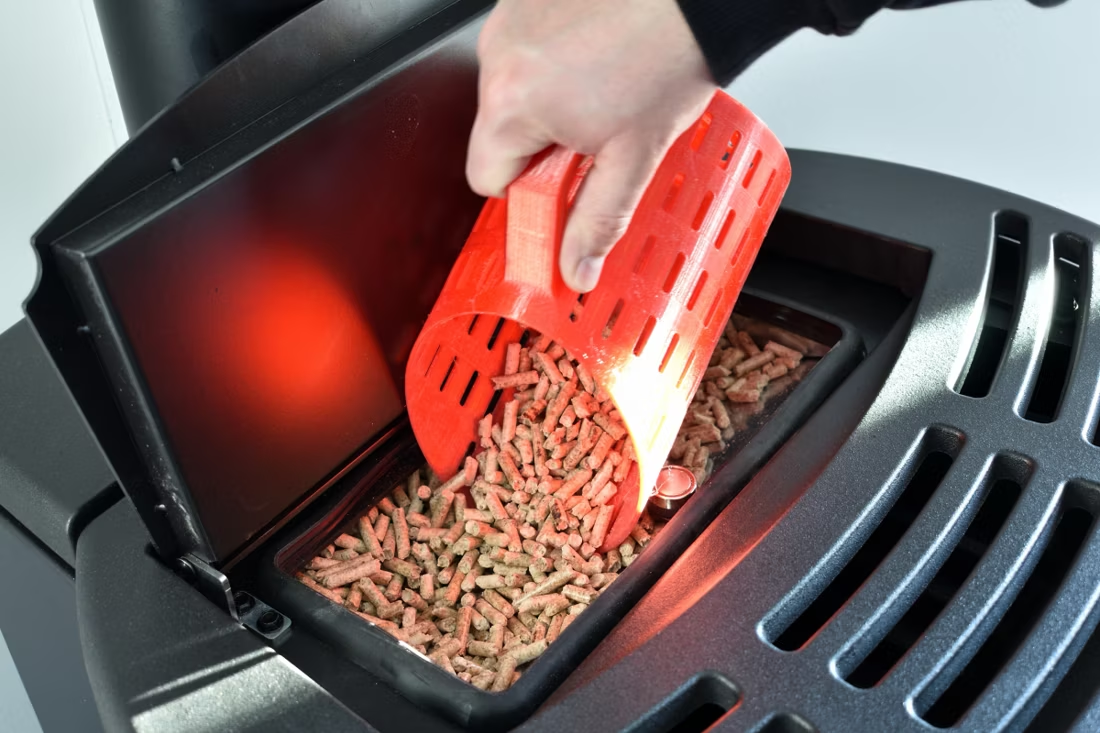
Selkirk's winters rank among the coldest of any Canadian city near a major population centre—average lows of -21.4°C are common, and cold snaps rivaling Winnipeg or Regina aren't rare. Most homes here still burn trembling aspen, paper birch, bur oak, or black ash in a wood stove for backup heat, since a cutting permit through Manitoba Natural Resources, Forestry Branch runs a modest $26 for 2.5 cubic metres up to $74.50 for 25. But splitting and stacking cordwood isn't for everyone, and that's where pellet stoves earn their place: load the hopper, set the thermostat, and get the same steady heat output without the daily wood-hauling.
Pellet supply locally comes through regional producers like La Crete Sawmills and Spruce Products, running roughly $400 to $575 CAD a tonne depending on the season and how early you buy. Manitoba Hydro serves Selkirk with both electricity, among the lowest residential rates in the country at just over 10 cents a kWh, and natural gas, so plenty of homes here already lean on cheap grid power for baseline heat. Pellet stoves fit alongside that as a clean-burning, low-maintenance secondary source, though the tradeoff is that the auger and blower need electricity to run, which matters in a region where winter storms occasionally knock out hydro service for hours at a stretch.
Three steps. No salesperson until you're ready.
Tell us about your project
Your postal code, your situation, and the fuel you're leaning toward—or let the answers point you to one.
See what's actually available
The brands dealers within 100 miles genuinely carry—real options, never a catalog mirage.
Get your dealer & Project Guide
A trusted local dealer, plus the free Project Guide & Parts List that names every component of the job.
Frequently Asked Questions
How much does a pellet stove installation cost in Selkirk?
Most pellet stove and insert installations in Selkirk run $6,000 to $10,000 CAD. A pellet insert going into an existing masonry firebox, common in the older riverfront homes near Selkirk's downtown, tends to land at the lower end since the chimney chase is already there. A freestanding pellet stove in a home without existing venting costs more once you add wall or roof penetration and a proper hearth pad. Your municipal building department will require a permit either way, and most local dealers fold that paperwork into the quote.
What size pellet stove do I need for a Selkirk home?
With average winter lows of -21.4°C and a heating season that runs from October well into April, undersizing is the bigger risk. A stove in the 40,000 to 50,000 BTU range comfortably heats an open main floor in most Selkirk homes, but older two-storey houses near the Red River with less insulation often do better with a larger hopper and higher maximum output so it can run through a multi-day cold snap without constant refilling. A local dealer will size against your actual square footage, ceiling height, and insulation rather than a generic chart.
Do I need a permit to install a pellet stove in Selkirk?
Yes. Installations go through your municipal building department, and the work needs to meet CSA B365 installation code. Even though pellet appliances burn cleaner than cordwood, insurers in Manitoba commonly still ask for a WETT inspection before they'll cover a new solid-fuel appliance, pellet included, so budget for that as part of getting your policy updated after installation.
Where do I buy pellets in Selkirk, and how should I store them?
Regional producers like La Crete Sawmills and Spruce Products supply most of the bagged pellets sold in the area, typically running $400 to $575 CAD a tonne. Buying in late summer before demand peaks usually gets you the better end of that range. Store bags off a concrete floor and away from any dampness—Manitoba's humidity swings between a dry winter and a wetter spring melt, and pellets that absorb moisture will jam an auger fast.
Pellet stove vs. wood stove—which makes more sense in Selkirk?
Wood, split from trembling aspen, paper birch, bur oak, or black ash cut under a Manitoba Natural Resources, Forestry Branch permit, keeps burning with zero electricity, which is a real advantage during the ice storms that periodically take down hydro lines in the Winnipeg Region. A pellet stove burns cleaner, needs less daily tending, and holds a steadier temperature, but the auger and blower both need power, so it goes cold in an extended outage unless you add battery backup. Plenty of Selkirk households run pellet for daily convenience and keep a wood stove or insert as the outage backup.
Pellet stove vs. gas fireplace—how do they compare for Selkirk homes?
Manitoba Hydro delivers natural gas through most of Selkirk, and a gas fireplace or insert typically installs for $6,000 to $15,000 CAD, firing instantly with a remote or wall switch and needing far less maintenance than a pellet appliance's ash pan and hopper. Pellet stoves cost less to install and give you that live-flame, wood-heat feel, but need regular fuel deliveries or trips to pick up bags and monthly cleaning. If your priority is truly hands-off heat, gas usually wins; if you want the visual and heat character of a real fire without splitting cordwood, pellet is the middle ground.
How much maintenance does a pellet stove need in Selkirk?
Plan on emptying the ash pan every few days during steady winter use and a full burn-pot and venting cleaning roughly every two to three weeks, more often if you're running the stove nearly around the clock through a Selkirk cold snap. An annual professional service, ideally in September before the heating season starts in earnest, checks the auger, blower motor, and gaskets, components that see heavier wear here given how many months a year the stove actually runs.
What happens to my pellet stove during a power outage?
It stops. Pellet stoves depend on electricity to run the auger that feeds fuel and the blower that distributes heat, so a hydro outage shuts the unit down even with a full hopper. Given that winter storms in the Winnipeg Region occasionally knock out power for several hours, some Selkirk homeowners pair their pellet stove with a small battery backup or portable generator specifically to ride out those gaps, while others keep a wood stove elsewhere in the house as a no-power fallback.
What pellet stove features matter most for Selkirk's climate?
Look for a large hopper capacity, ideally 60 or more pounds, so the stove can run through an overnight cold snap without a refill, plus a higher maximum output given how long and cold the season runs here. Regional pellet supply through La Crete Sawmills and Spruce Products is consistent enough that fuel availability isn't usually the limiting factor. A local dealer can walk you through which models handle Manitoba's cold-soak startup conditions best and which have the easiest ash and burn-pot access for the frequent cleaning a Selkirk heating season demands.
Why do fireplace quotes vary so much?
Because a fireplace is an iceberg—there's more behind the wall than in front of it. A low quote often covers only the unit; the full scope includes vent pipe, gas line or electrical, framing, and the tile or stone that has to come off and go back on. Make every bidder price the whole job. If a dealer can't speak to the full scope with confidence, that's your signal to keep looking.
Is it worth replacing an old fireplace that still sort of works?
Ask three questions: Is it ugly? Is it drafty? Does it actually work? Most old fireplaces fail at least two. Beyond looks, an old unit leaks air around the damper year-round and—if it's gas with a standing pilot—quietly burns a couple hundred dollars a year. A modern replacement seals the wall, heats the room, and changes how the whole space gets used.
Can a pellet stove heat a whole house?
It genuinely can. I burned a pellet stove as my only heat source for years after a furnace died, and it kept the entire house warm. Pellets feed automatically from a hopper, so you get wood-heat economics with thermostat-style control. Two honest caveats: it needs weekly cleaning during the season, and most models need electricity to run—ask about battery backup if outages are a concern.
What does it take to replace an existing fireplace?
Fireplaces are like icebergs—bigger behind the wall than in front of it. Replacement means removing the surrounding tile or stone (the finish material laps onto the fireplace face), pulling the old unit, setting the new one in the same enclosure, and re-finishing the wall. A hearth professional can determine what's behind your wall without demolition during an in-home preview.
Nearby Dealers
Hearth shops serving Selkirk and the surrounding area. Every listing shows whether it is a WhyFire partner, a dealer we have verified as authorized for the brands we recommend, or a local business carrying hearth products. No manufacturer pays for placement. How we verify dealers →
C-Pex Plumbing
Mbm Plumbing Services
Springhill Lumber Wholesale Ltd
TimberStone Distribution Winnipeg
National Energy Equipment Inc.
McMunn & Yates Building Supply
Pellet Brands Stocked Around Selkirk
Typical price runs $400-$575 per ton—buy early-season for the best rates. Manufacturers will point you to the nearest stocking dealer.
La Crete Sawmills
Spruce Products
Get your free Project Guide & Parts List for a Selkirk pellet project.
Tell me about your home and I'll match you with a trusted local dealer and send a free Project Guide & Parts List—sized for Selkirk's long, cold winters, with the vent kit and parts specified.
Find Your Fireplace →