
Find your fireplace across Northern Manitoba.
Wood, gas, pellet, and electric fireplace resources for the whole region—from Thompson and Flin Flon down through The Pas and the smaller communities along the highway and rail lines. Pick a fuel and we'll match you with a local dealer who actually installs and services it out here.
Every Project Starts From One of These Five Situations
Winters average -29.3°C, and backup heat isn't optional here.
Northern Manitoba stretches from the boreal forest around Flin Flon and The Pas up through Thompson and Gillam toward Churchill on Hudson Bay, a landscape of exposed rock, muskeg, and stands of trembling aspen, paper birch, bur oak, and black ash. Winters here average -29.3°C, among the coldest major-city winters anywhere in Canada—cold enough to sit alongside Fort McMurray or Whitehorse for sheer overnight severity. A long heating season stretches from September through May, and the region's Climate Zone 8 rating reflects just how much load a home here has to carry through the dark months.
Manitoba Hydro keeps electricity and natural gas rates low across the region, which is why so many homes run a gas furnace or electric baseboard as primary heat. But hydro lines here run through hundreds of kilometres of exposed bush, and a winter storm can knock out power for a day or more—so a wood stove or gas fireplace rated to run without electricity isn't a luxury, it's the backup plan most households actually rely on. Anyone cutting their own firewood typically works through a permit from Manitoba Natural Resources, Forestry Branch, and any wood-burning install should expect a WETT inspection before an insurer will sign off, plus a permit from the municipal building department under the CSA B365 installation code. This hub rolls up retailers, service technicians, and fuel suppliers across Northern Manitoba, from Thompson and Flin Flon to The Pas and the smaller communities in between. Pick your fuel below for dealers, install costs, and unit recommendations suited to your part of the region.
Four fuels. One honest answer for Northern Manitoba.
Three steps. No salesperson until you're ready.
Tell us about your project
Your postal code, your situation, and the fuel you're leaning toward—or let the answers point you to one.
See what's actually available
The brands dealers within 100 miles genuinely carry—real options, never a catalog mirage.
Get your dealer & Project Guide
A trusted local dealer, plus the free Project Guide & Parts List that names every component of the job.
Frequently Asked Questions
Which fireplace fuel actually makes sense in Northern Manitoba's climate?
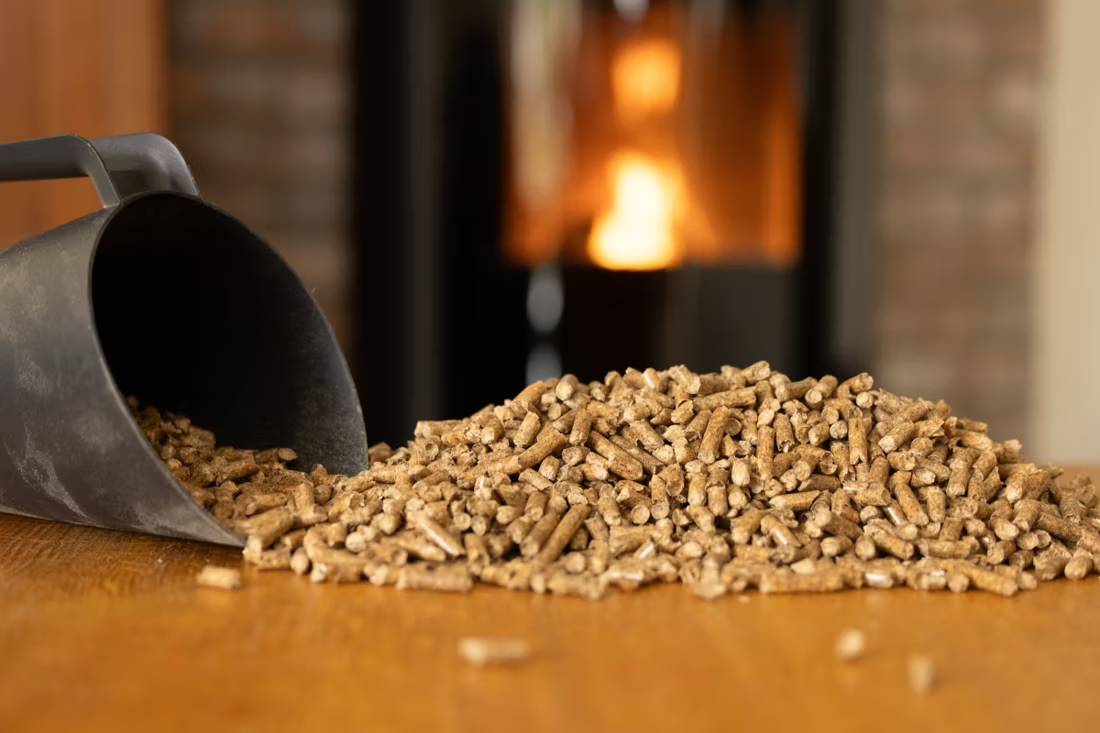
All four fuels have a real place here, and most homes end up with more than one. Wood is the traditional backbone—paper birch and bur oak both split and season well, and a catalytic wood stove loaded with birch will hold a fire through an overnight low near -29.3°C without needing power. Natural gas is common in Thompson, Flin Flon, and The Pas, where a gas fireplace or insert gives you heat that doesn't depend on splitting and stacking wood every week. Pellet stoves work well too, though supply comes from regional mills like La Crete Sawmills and Spruce Products rather than a corner hardware store, so it's worth confirming delivery before you commit. Electric fireplaces are popular for ambiance and zone heat in a home already served by Manitoba Hydro, but on their own they're not built to be the only heat source through a Northern Manitoba winter—they're a supplement, not the primary plan.
What permits do I need to install a wood stove or gas fireplace here?
Almost every installation goes through the municipal building department in whichever community you're in, and the installation itself has to meet the CSA B365 code for solid-fuel appliances. If you're adding or replacing a wood stove or insert, expect your insurer to ask for a WETT inspection before your policy will cover it—this is standard practice across the region given how many households burn wood as backup heat. Gas fireplace installs need a licensed gas fitter for the line connection in addition to the building permit. Most retailers we match homeowners with handle the permit paperwork and schedule the WETT inspection as part of the job, so it's not something you're chasing down on your own.
Why do so many homes here keep a wood stove or gas fireplace as backup heat?
Manitoba Hydro keeps power reliable most of the year, but the transmission lines serving Northern Manitoba run through long stretches of exposed bush and muskeg, and a winter storm or line fault can leave a community without power for hours or, occasionally, a full day. When that happens at -29.3°C, a furnace that needs electricity to run its blower or ignition doesn't help much. A wood stove needs no power at all, and many gas fireplaces can be ordered with a battery-backed or millivolt ignition system that keeps working through an outage. That's the real reason wood and gas both stay standard fuel choices here even in homes that otherwise heat with electric baseboard.
Is natural gas actually available everywhere in the region?
No, and it's worth checking before you plan around it. The mainline reaches Thompson, Flin Flon, and The Pas and the communities along that corridor, but smaller and more remote communities—particularly those without year-round road access—typically rely on bottled or bulk-delivered propane instead of piped natural gas. A propane fireplace or stove installs and burns almost identically to a natural gas unit, so it's rarely a dealbreaker, but your dealer needs to know which fuel is actually reaching your address before ordering the unit.
What does a typical fireplace installation cost in Northern Manitoba?
Costs depend on the fuel and how much venting or gas-line work the job needs. Wood stove or insert installs, including a WETT inspection, typically run $4,500-$9,500 CAD, with full chimney work for new construction landing higher. Gas fireplaces and inserts generally run $5,000-$11,000 depending on whether the gas line needs to be extended. Pellet stove installs usually fall between $4,000-$7,500. Electric fireplaces are the low end—often $300-$3,000 for the unit plus a few hundred dollars in labour for anything beyond a simple plug-in placement. Freight and remoteness can push any of these figures higher in communities further from Thompson or The Pas, since parts and technicians both have farther to travel.
Which local wood species burn best through a Northern Manitoba winter?
Bur oak and paper birch are the two households reach for first—both are dense hardwoods that season well and put out strong, steady heat, which matters when you're trying to hold a stove through a long overnight burn. Trembling aspen is abundant and easy to source but burns faster and cooler, so it's often used to get a fire going rather than as the main overnight load. Black ash falls in between and is a solid all-around choice. If you're cutting your own, a permit from Manitoba Natural Resources, Forestry Branch is required on public land, and most experienced burners here split and stack a full year ahead, since wood needs a real summer to season properly before a Northern Manitoba winter puts it to the test.
How many BTUs do I need in a fireplace?
Wrong question—and the industry's favorite way to confuse you. More BTUs isn't better if the fireplace cooks you out of the room you spent thousands to enjoy. Think in terms you can verify: how many square feet the unit heats, whether it's primary or backup heat, and whether you want it running overnight. Those three answers size a fireplace correctly every time.
Will we actually use a fireplace once we have one?
In my own home, the room with the fireplace has never been the same—it became the social hub. Game nights, holidays, date nights after the kids are down: the fire is where the house gathers. There's a reason people in this industry joke that we're really in the romance and entertainment business. You won't wonder whether you'll use it; you'll wonder how the room worked before.
What fireplace styles should I know before shopping?
Four cover most of the market: screen-front traditional (mesh front, open feel, fits craftsman homes), traditional door set (the classic look you grew up with), modern linear (wide, low, the statement piece for entertaining), and clean face contemporary (no trim—your tile or stone runs right to the fire's edge). Walk in knowing those four terms and you're ahead of most buyers.
What are the biggest mistakes people make buying a fireplace?
Five come up constantly: budgeting for the unit but not the full job (vent, gas line, electrical, finish work); drowning in options instead of starting from style and fuel; buying without an in-home preview; handing installation to a handyman instead of a pro; and giving up out of sheer indecision. Every one is avoidable with a clear plan—step one, step two, step three.
Stove and Fireplace Dealers in Northern Manitoba
Listings include WhyFire partner dealers, dealers we have verified as authorized for the brands we recommend, and established local businesses that carry hearth products. Every listing shows which one it is. The ones marked Preferred run on WhyFire's software, so they can show you real pricing and book your appointment right here. No manufacturer pays for placement. How we verify dealers →
McMunn & Yates
McMunn & Yates
McMunn & Yates
Health Basics
Get matched with a trusted dealer in Northern Manitoba.
Pick your fuel below and we'll put together a free Project Guide & Parts List—the right unit, the vent kit it needs, and the local Northern Manitoba dealer we recommend for your project.
Find Your Fireplace →