
Find the right fireplace for St. Martin Parish's short, mild winters.
With just a light winter heating load and winter lows that rarely drop below the low 40s, most St. Martin Parish homes lean on gas and electric fireplaces for warmth and ambiance—not wood or pellet. We'll connect you with a local dealer who knows what actually fits an Acadiana home.
Every Project Starts From One of These Five Situations
Gulf Coast heating in the heart of Acadiana.
St. Martin Parish sits in climate zone 2A, with an average winter low around 44°F and only a light winter heating load a year—a fraction of what a cold-climate city like Duluth, Minnesota logs in a single hard month. Cold fronts do roll through and can drop temperatures into the 20s for a night or two, but sustained heating season, in the sense that a Northern homeowner would recognize it, doesn't really exist here. Cypress from the Atchafalaya Basin, along with oak and pecan from the parish's bayou-side hardwood stands, are part of the local landscape and firewood tradition for camps and outdoor pits, but they're rarely the primary heat source inside a St. Martin Parish home.
What you'll find on this hub: hearth retailers, service technicians, and fuel suppliers serving every community in the parish—from Breaux Bridge and St. Martinville down through Henderson and Parks, out to Cecilia and Catahoula. Pick your fuel below for local dealers, realistic cost ranges, and the resources that match your home. Gas and electric are where most of the activity is; wood and pellet get an honest, straightforward treatment for the smaller number of homeowners genuinely considering them for a camp, a basin cabin, or pure ambiance.
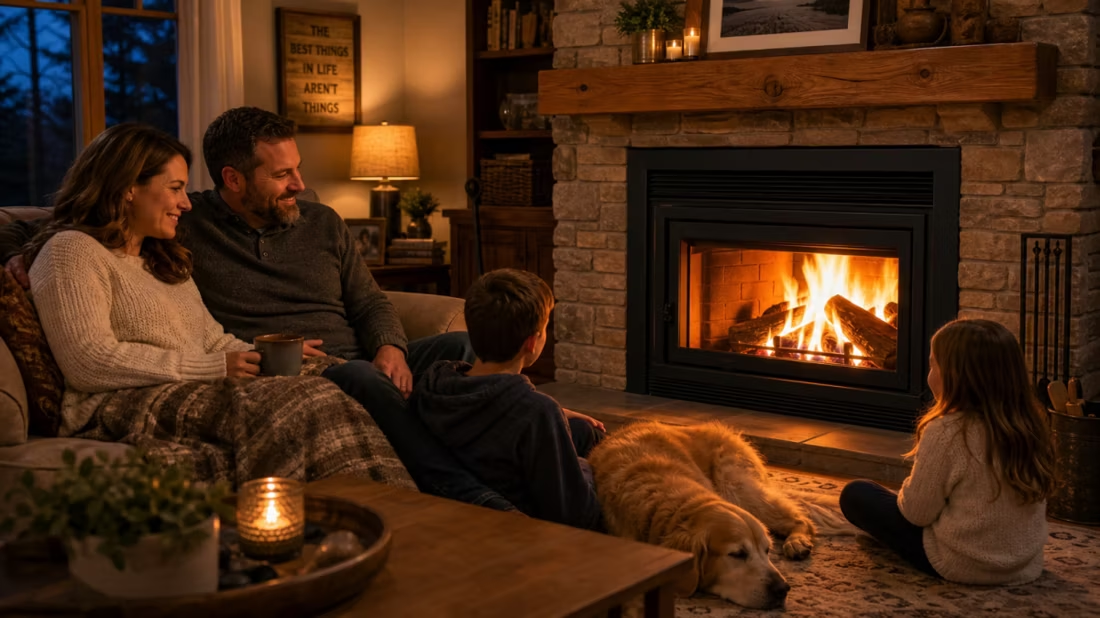
Four fuels. One honest answer for St. Martin County.
Three steps. No salesperson until you're ready.
Tell us about your project
Your zip code, your situation, and the fuel you're leaning toward—or let the answers point you to one.
See what's actually available
The brands dealers within 100 miles genuinely carry—real options, never a catalog mirage.
Get your dealer & Project Guide
A trusted local dealer, plus the free Project Guide & Parts List that names every component of the job.
Frequently Asked Questions
Which fuel works best in St. Martin Parish?
For most homes here, gas is the practical choice—a gas fireplace, insert, or log set gives instant ambiance and takes the chill off during the occasional cold front without asking a homeowner to manage firewood or hoppers for a climate that barely needs sustained heat. Electric fireplaces are a strong secondary option—supplemental warmth in a bedroom or den, zero venting requirements, and low upfront cost. Wood stoves are genuinely rare in St. Martin Parish; the light winter heating load here just doesn't create the demand that drives wood heat in colder states, though a handful of basin camps and older St. Martinville and Breaux Bridge homes keep a wood-burning fireplace for atmosphere on the few frosty nights each winter. Pellet stoves are rarer still—the ones you'll find are mostly in hunting camps near the Atchafalaya Basin, not primary residences.
Do I need a permit to install a fireplace in St. Martin Parish?
Generally yes, though the process differs depending on where you live. Inside incorporated towns like Breaux Bridge and St. Martinville, permits for gas line work and electrical circuits are issued through the town's own building department; in unincorporated parts of the parish, that falls to St. Martin Parish government. Gas fireplace and insert installations typically require a permit and a licensed gas-fitter for the line connection. Electric fireplaces usually don't need a permit unless you're hardwiring a built-in unit into a new circuit. Wood and pellet installations are uncommon enough that most local retailers handle the rare permit request directly as part of the installation—worth asking up front since it's not a routine transaction here the way it is in colder states.
Are there air quality restrictions on wood burning in St. Martin Parish?
No—St. Martin Parish has no wood-burning air quality restrictions, unlike inversion-prone basins out West. The parish does see agricultural burning tied to the sugarcane harvest each fall, but that's regulated separately from residential fireplaces and doesn't affect wood stove permitting or use. If you do install a wood-burning appliance, there's no curtailment season or advisory system to track—the main consideration is simply that, given how light the winter heating load is in this climate, most owners use it for occasional evenings rather than daily heat.
Can one local hearth retailer handle all four fuel types?
Most retailers serving St. Martin Parish focus on gas and electric, since that's where the demand is. A few Lafayette and New Iberia-based dealers carry a limited wood-burning line for camps and older homes, and one or two stock pellet stoves largely for basin hunting camps rather than everyday use. If you're set on wood or pellet, ask specifically—the inventory for those fuels tends to be smaller and less prominently displayed than the gas fireplace and electric showroom sections, since that's what most St. Martin Parish homeowners actually buy.
How does service work in rural parts of St. Martin Parish?
Technicians serving St. Martin Parish are mostly based out of Lafayette or New Iberia and travel into the basin-side communities—Henderson, Catahoula, Cecilia, and the fishing camps along the Atchafalaya—for gas line checks, propane tank service, and electric fireplace installs. Expect a modest travel fee for calls out toward the basin. Because so few homes here rely on wood or pellet as primary heat, there's little of the pre-season sweep rush you'd see in a cold-climate market—most service calls are gas pilot and igniter checks or electric unit troubleshooting, and they can typically be scheduled without the seasonal backlog common up North.
What's the typical cost range for fireplace installation across fuel types in St. Martin Parish?
Gas fireplace, insert, or log set: roughly $2,500–$7,000 depending on whether an existing gas line is in place or new line work is needed—on the lower end for a simple log set conversion, higher for a full gas insert with venting. Electric fireplace: $200–$2,500 for the unit itself, plus $300–$900 in labor for anything beyond a plug-and-play install, which covers most wall-mount and insert options. Wood stove or insert: $4,000–$8,000 when installed, though this is an infrequent request given the climate. Pellet stove: similar range, $4,000–$7,000, mostly quoted for basin camps rather than primary residences. For specifics, see the parish + fuel pages above, each tied to local retailer pricing.
Wood, gas, pellet, or electric—how do I choose?
Match the fuel to your life, not the other way around. Wood: lowest fuel cost and total power-outage independence, but you're hauling and stacking. Gas: press a button, set a thermostat, no maintenance to speak of. Pellet: wood economics with automatic feeding, in exchange for weekly cleaning and a need for electricity. Electric: plugs in anywhere with honest supplemental heat. Nobody regrets the fuel that fits how they actually live.
Can a fireplace actually lower my heating bill?
Yes—by creating a comfort zone. A furnace heats every square foot of the house just to warm the one room you're in; a gas fireplace on low burns roughly a sixth of the gas a typical furnace does. Set the furnace around 55–60 degrees as a baseline, then heat the rooms your family actually uses. Families who heat this way commonly save $20–$60 a month.
Does a fireplace add value to my home?
On average, a fireplace adds back to the home about the same amount you spent installing it. Add the monthly savings from heating the rooms you actually use instead of the whole house—often hundreds of dollars a year—and the value case is strong before you even count what a fire does for how your family uses the room.
What are the biggest mistakes people make buying a fireplace?
Five come up constantly: budgeting for the unit but not the full job (vent, gas line, electrical, finish work); drowning in options instead of starting from style and fuel; buying without an in-home preview; handing installation to a handyman instead of a pro; and giving up out of sheer indecision. Every one is avoidable with a clear plan—step one, step two, step three.
Stove and Fireplace Dealers in St. Martin County
Listings include WhyFire partner dealers, dealers we have verified as authorized for the brands we recommend, and established local businesses that carry hearth products. Every listing shows which one it is. The ones marked Preferred run on WhyFire's software, so they can show you real pricing and book your appointment right here. No manufacturer pays for placement. How we verify dealers →
Area – Baton Rouge, La
Acoustical Spec & Supply
Woodburners, Inc
Economy Brick Sales
Get matched with a hearth dealer in St. Martin Parish.
Tell us your fuel and your home, and we'll match you with a trusted local dealer and send a free Project Guide & Parts List—the exact parts, including the vent kit, and the dealer we recommend for your project.
Find Your Fireplace →