
Find the right fireplace for a mild Sabine County winter.
Wood, gas, pellet, and electric fireplace resources for every town in Sabine County—from Many to Zwolle. Get matched with a trusted local hearth retailer who can tell you what's actually right for a short heating season near the Toledo Bend shoreline.
Every Project Starts From One of These Five Situations
Short heating season, real fireplace demand in Sabine County, Louisiana.
Sabine County sits in Climate Zone 3A along the Toledo Bend Reservoir on the Texas border, with an average winter low near 35°F and roughly 2,322 heating degree days a year—a fraction of what a place like Duluth, MN sees, but enough cold to matter three or four months out of twelve. There's no wood-burning air quality advisory system here and no curtailment periods to track. Local oak, pecan, and cypress are all common firewood species cut from the surrounding piney-woods and bottomland, and a lot of homeowners in Many, Zwolle, and Florien still split their own.
What you'll find on this hub: hearth retailers, service technicians, and fuel suppliers covering every community in the county—from the county seat in Many out to Zwolle, Florien, Noble, and the lake communities ringing Toledo Bend. Pick your fuel below to see local dealers, real installation cost ranges, and recommended units for a mild, moderate-humidity climate. Whether you're heating a lake cabin or a year-round home outside Many, this is the starting point.
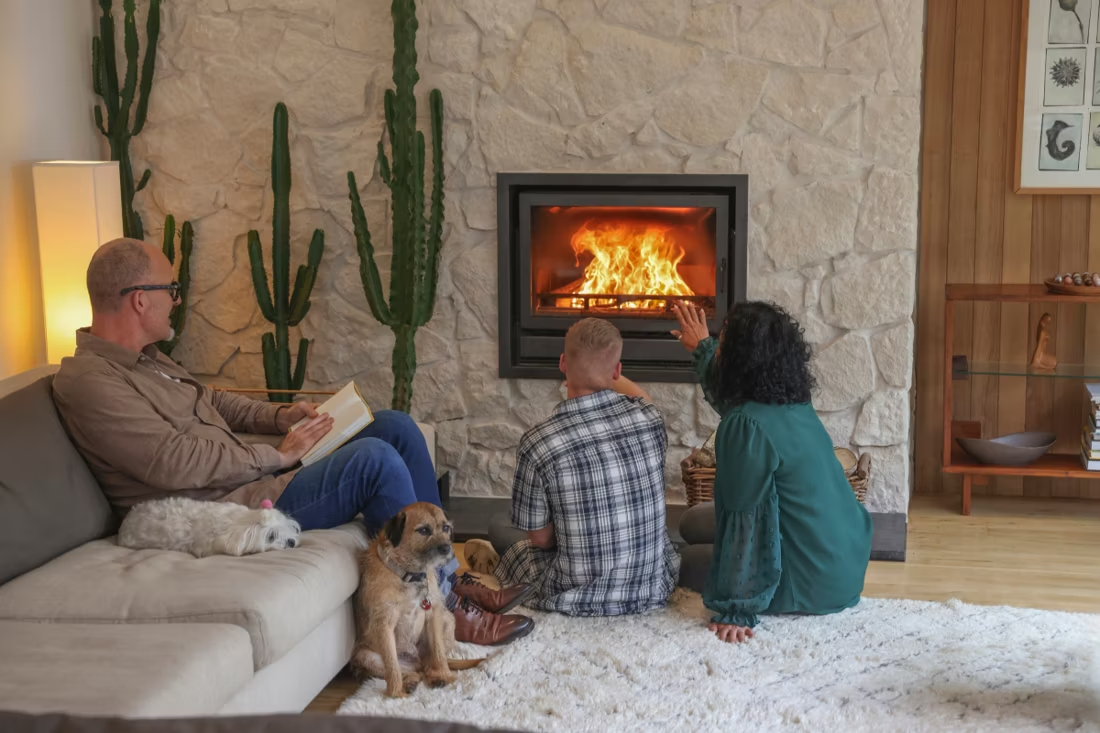
Four fuels. One honest answer for Sabine County.
Three steps. No salesperson until you're ready.
Tell us about your project
Your zip code, your situation, and the fuel you're leaning toward—or let the answers point you to one.
See what's actually available
The brands dealers within 100 miles genuinely carry—real options, never a catalog mirage.
Get your dealer & Project Guide
A trusted local dealer, plus the free Project Guide & Parts List that names every component of the job.
Frequently Asked Questions
Which fuel makes sense for a mild climate like Sabine County?
With around 2,322 heating degree days and winter lows averaging 35°F, Sabine County doesn't need the all-night, single-digit heat output that a place like Fargo, ND requires—but there's still real demand across all four fuels. Wood remains popular because it's cultural and cheap here: oak, pecan, and cypress are locally abundant, and a lot of homeowners already have a woodlot or a source. Gas is the low-maintenance choice for folks who want instant ambiance without tending a fire—common in newer builds around Many and the lake. Pellet stoves are a solid middle ground, especially with regional supply from Hamer Pellet Fuel and Greenway Renewable Energy keeping fuel local and affordable. Electric fireplaces do well here precisely because the climate is mild—many homeowners use one as their only supplemental heat source in a den or bedroom, since a short cold season doesn't demand a high-BTU primary unit.
Do I need a permit to install a fireplace in Sabine County?
Generally yes for anything involving new venting, gas lines, or structural chimney work. New wood stoves, wood inserts, gas fireplaces, gas inserts, and pellet stoves typically require a building permit through the parish permitting office, and gas work requires a licensed gas-fitter and a separate gas permit. Electric fireplace installs usually don't need a permit unless you're hardwiring a built-in unit into a new circuit. Because Sabine is a smaller, rural parish, permitting can be less standardized than in a metro area—your local hearth retailer will typically know exactly what's required for your specific address and usually handles the paperwork as part of the install.
Are there any wood-burning restrictions in Sabine County?
No—Sabine County has no air quality non-attainment designation, no winter inversion issues, and no burn curtailment program. That's a meaningful difference from places out West that deal with wildfire smoke or basin inversions. There's no local rule against installing or running a wood stove or fireplace on any given day. The main things to plan around are practical, not regulatory: making sure your chimney or vent is properly sized and sealed for a humid Gulf-adjacent climate, and using well-seasoned local hardwood like oak or pecan rather than green wood, which burns dirtier and gums up flues faster in humid conditions.
Can one local retailer in Sabine County handle all four fuel types?
It depends on the dealer, and in a county this size, fuel coverage tends to vary more between individual retailers than in bigger markets. Some hearth retailers based near Many carry wood, gas, and pellet units and can walk you through trade-offs across all three; fewer stock a deep electric fireplace lineup, since electric units are often sold through general appliance or big-box channels instead. If you're trying to compare fuels side by side, it's worth asking a retailer directly which lines they carry before you drive out—Find My Fireplace can match you with a dealer whose actual inventory matches what you're looking for, rather than sending you on a guess.
How does fireplace service work for homes around Toledo Bend and rural Sabine County?
Most technicians serving Sabine County are based in or near Many and drive out to Zwolle, Florien, Noble, and the lakefront communities around Toledo Bend Reservoir for service calls. Because the heating season here is short, a lot of homeowners wait until the first cold front to think about their chimney or pellet stove—which means fall booking windows (September–October) fill up fast and mid-winter emergency calls can mean a longer wait. If you're at a seasonal lake property, it's worth scheduling an annual sweep or gas inspection before you close the place up for summer, so it's ready to go the next time a cold front rolls through.
What's the typical cost range for fireplace installation across all fuel types in Sabine County?
Costs run somewhat lower here than in colder, higher-demand markets, since most installs don't require heavy-duty venting for extreme cold. Wood stove or insert installation: roughly $3,500–$7,500 for a typical job, more if new chimney construction is involved. Gas fireplace, insert, or stove: roughly $3,500–$8,500 depending on whether a new gas line has to be run. Pellet stove or insert: roughly $3,500–$6,000 for most installs. Electric fireplace: $200–$2,500 for the unit itself, plus $300–$900 in labor for anything beyond a plug-and-play wall unit. See the county + fuel pages above for retailer-specific pricing detail.
What is an in-home preview and do I need one?
It's a visit where a hearth professional measures your space, confirms the model you picked actually works in your home, and walks the specs—framing, gas line, venting, finish work—before anything is ordered. Some details you just can't know until you see the house. Never make a down payment without one; it's the single most-skipped step that burns buyers.
What are the biggest mistakes people make buying a fireplace?
Five come up constantly: budgeting for the unit but not the full job (vent, gas line, electrical, finish work); drowning in options instead of starting from style and fuel; buying without an in-home preview; handing installation to a handyman instead of a pro; and giving up out of sheer indecision. Every one is avoidable with a clear plan—step one, step two, step three.
Should the dealer who sells my fireplace also install it?
Ideally, yes. A fireplace project involves vent pipe, gas line, electrical, and often tile or stone. Hire three or four separate trades and you own the liability and the game of telephone between them. One company selling and installing means one accountable party, start to finish—ask about factory training, on-time completion records, and what happens if an inspection fails.
Can a fireplace actually lower my heating bill?
Yes—by creating a comfort zone. A furnace heats every square foot of the house just to warm the one room you're in; a gas fireplace on low burns roughly a sixth of the gas a typical furnace does. Set the furnace around 55–60 degrees as a baseline, then heat the rooms your family actually uses. Families who heat this way commonly save $20–$60 a month.
Stove and Fireplace Dealers in Sabine County
Listings include WhyFire partner dealers, dealers we have verified as authorized for the brands we recommend, and established local businesses that carry hearth products. Every listing shows which one it is. The ones marked Preferred run on WhyFire's software, so they can show you real pricing and book your appointment right here. No manufacturer pays for placement. How we verify dealers →
O'Neal Gas Inc.
Southern Lp Gas
Fireplace Specialties
Find your fireplace in Sabine County.
Pick your fuel below and I'll match you with a trusted local dealer and send over a free Project Guide & Parts List—the exact parts, including the vent kit, and the dealer I'd recommend for your home.
Find Your Fireplace →