
Reliable Warmth When New Orleans Loses Power.
Instant, dependable heat for the occasional cold front, plus a backup flame for hurricane season. Find the right gas fireplace, insert, or log set and connect with a trusted local dealer.
Every Project Starts From One of These Five Situations
Gas fits New Orleans's mild winters and historic homes.
New Orleans sits at just below sea level in climate zone 2A and has a mild, short winter season—a fraction of what a place like Buffalo NY or Minneapolis MN deals with in a single hard month. The winter low average hovers around 47°F, and for most of the season a fireplace here is about atmosphere more than survival. But the city isn't heat-free: Gulf cold fronts push through most winters and can drop nighttime temperatures into the 30s for a day or two, and Entergy New Orleans—which supplies both electric and natural gas service across Orleans Parish—sees real demand spikes during those snaps. Gas is what most homeowners here land on: no ash, no cordwood sitting in a humid climate that isn't kind to firewood, and instant heat exactly when a front rolls through.
Much of New Orleans's housing stock—the Creole cottages, shotgun doubles, and townhomes of the French Quarter, Garden District, and Bywater—was built with a working masonry fireplace as a matter of course, long before central heat existed. Many of those fireboxes sit unused today, blocked off or no longer safe for wood. A gas insert or a vented gas log set brings that original hearth back to life without the humidity, pest, and storage headaches of keeping cordwood in a subtropical climate. And with hurricane season bringing the real possibility of multi-day power outages, a gas fireplace with battery-backup or self-powered ignition gives a New Orleans home a genuine source of heat and light when the grid goes down—not just ambiance.
Three steps. No salesperson until you're ready.
Tell us about your project
Your zip code, your situation, and the fuel you're leaning toward—or let the answers point you to one.
See what's actually available
The brands dealers within 100 miles genuinely carry—real options, never a catalog mirage.
Get your dealer & Project Guide
A trusted local dealer, plus the free Project Guide & Parts List that names every component of the job.
Frequently Asked Questions
How much does a gas fireplace installation cost in New Orleans?
Most New Orleans gas fireplace and insert installations run $3,500 to $9,000, depending on whether you're converting an existing masonry fireplace or starting from scratch. A gas log set or insert going into a chimney that's already lined and vented sits on the lower end. Homes in the French Quarter or other historic districts sometimes carry added cost if the Vieux Carré Commission or the Historic District Landmarks Commission needs to review any change to an exterior-visible vent termination—your installer can tell you upfront whether your address falls under that review. New gas line runs from the meter push either end of the range higher.
Can I convert my home's existing fireplace to gas in New Orleans?
Yes, and it's one of the most common projects in the city given how much of New Orleans's housing stock—Creole cottages, shotgun doubles, Garden District townhomes—was built with a working masonry fireplace. Most conversions install a direct-vent gas insert or a vented gas log set using the existing chimney, relined with a stainless liner if the flue is original brick. Expect $3,500 to $7,000 depending on flue condition and whether new gas piping is needed. It's a popular fix for chimneys that have sat unused for decades and are no longer safe to burn wood in.
Do I need natural gas service, or should I use propane?
Entergy New Orleans provides natural gas service throughout most of Orleans Parish, so the large majority of installations in the city run on natural gas rather than propane. If you're outside the service footprint—some outlying pockets of the parish—propane with a small tank is the fallback, and most gas fireplace models can be configured for either fuel with the right orifice kit. Your local dealer will confirm which utility serves your address before recommending a unit.
Will a gas fireplace keep working if the power goes out during a hurricane?
Most direct-vent gas fireplaces with IPI (intermittent pilot ignition) include a battery backup that takes over automatically when Entergy power drops, so the fireplace still lights on demand. Given how storm season here can mean outages lasting several days, that's not a minor feature. Valor fireplaces go a step further—their pilot generates its own electricity through the thermocouple, so there's no battery to check or replace at all. For a New Orleans household thinking about hurricane preparedness, a gas fireplace with reliable independent ignition is worth asking about specifically.
What's the difference between a gas fireplace, insert, and log set?
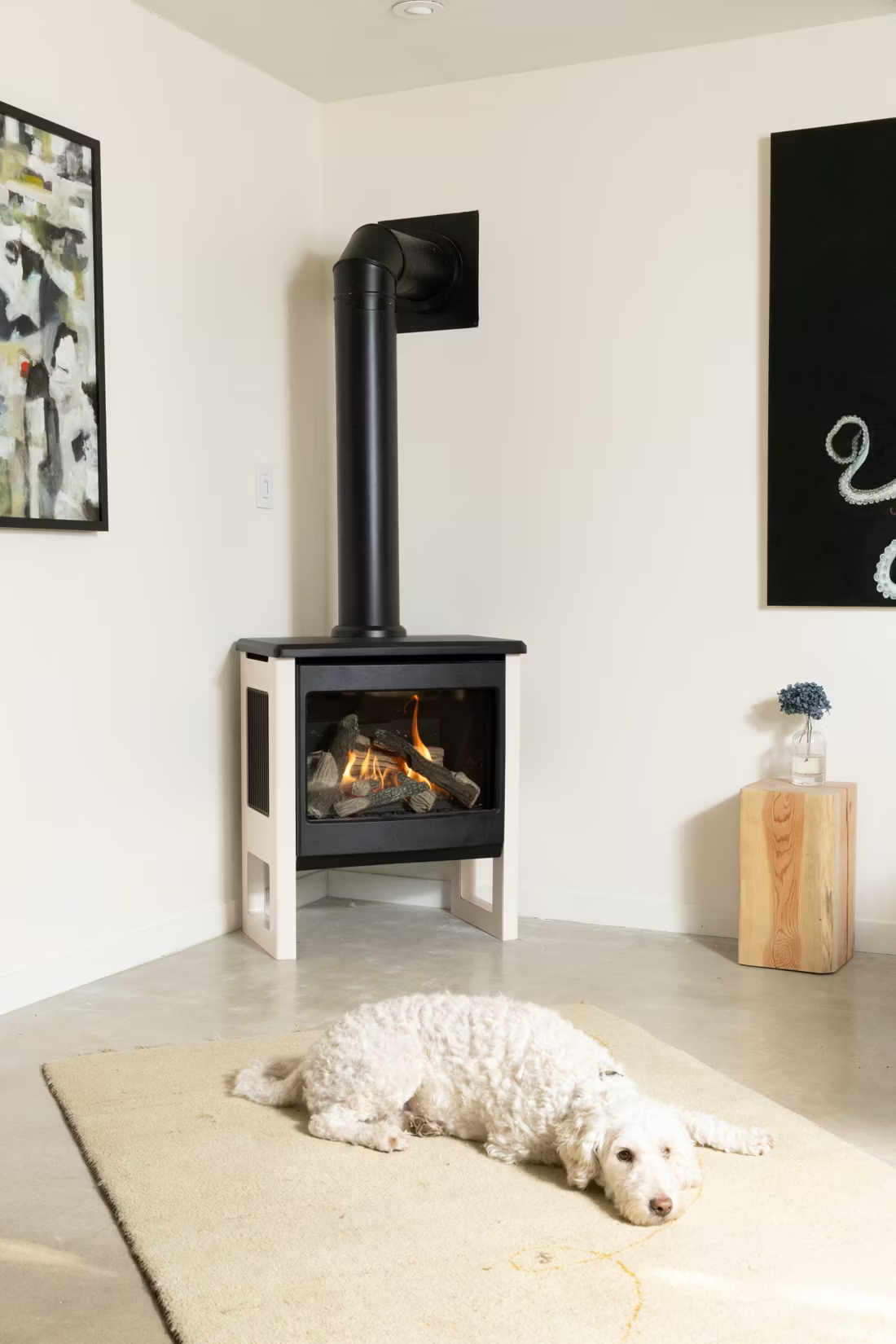
A built-in gas fireplace is a fully enclosed unit installed into new framing—common in newer construction outside the historic core. A gas insert drops into an existing masonry firebox and uses the chimney as the vent, which is the natural fit for New Orleans's older housing stock with an original fireplace opening. A vented gas log set is the simplest option: real-looking ceramic logs burning inside an existing fireplace, vented through the chimney's damper—often the lowest-cost way to bring a historic hearth back into use. Freestanding gas stoves are less common here simply because shotgun houses and Creole cottages rarely have the floor space for one.
Do I need a permit to install a gas fireplace in New Orleans?
Yes. The City of New Orleans Department of Safety and Permits requires a permit for gas fireplace installation, including a mechanical permit for the appliance and a separate permit for any new gas line work, which must be run by a licensed gas fitter. If your home is in the French Quarter, the Vieux Carré Commission reviews any exterior-visible change, including new vent terminations; homes in the Garden District, Bywater, or other local historic districts may fall under Historic District Landmarks Commission review for the same reason. A local hearth dealer familiar with the city's historic-district rules will usually coordinate this for you.
Should I choose a vented or vent-free gas fireplace in New Orleans?
Vented (direct-vent) units draw combustion air from outside and exhaust it back outside through sealed venting—the standard, code-accepted choice everywhere, including Louisiana. Vent-free units burn directly into the room and release some water vapor and combustion byproducts indoors, which is a real drawback in a climate that's already humid nine months of the year. Adding more moisture to a New Orleans home—where mold and mildew are a constant, ongoing concern—is why most local dealers steer customers toward direct-vent units even where vent-free is technically legal.
How often does a gas fireplace need servicing in New Orleans?
An annual inspection is recommended, and it matters more here than in a drier climate—the Gulf Coast's salt air and year-round humidity accelerate corrosion on venting components and burner assemblies faster than in inland regions. A certified technician should check the venting, burner, pilot assembly, and glass seal each year, ideally before the first cold front of the season in November or December. Local gas appliance service providers typically charge $150 to $250 for a full annual inspection.
Should I consider a wood-burning fireplace instead of gas?
For most New Orleans homes, no—wood stoves are uncommon here, and for good reason. With only a mild, short winter season and winter lows averaging in the upper 40s, there simply isn't enough sustained cold to justify a dedicated wood-heating appliance the way there is in a place like Duluth MN. New Orleans's humidity also makes storing cordwood—even good local oak or pecan—a losing battle against mold and termites. Where a masonry fireplace already exists, gas logs or a gas insert give you the same visual warmth without the wood-handling problems. Wood is really only worth considering for a homeowner who specifically wants the smell and ritual of a real fire on a rare cold night and is prepared to manage dry storage carefully.
Is my gas fireplace wasting gas?
If it was installed more than 15 years ago, probably. Older gas fireplaces keep a standing pilot light burning all the time, and that little flame can cost a couple hundred dollars a year. Newer models use pilot-on-demand ignition—the pilot lights only when you use the fireplace and goes out when you turn it off.
What's the difference between an insert and a zero-clearance fireplace?
An insert is a fireplace that slides into a pre-existing wood-burning fireplace—if you don't have one, there's nothing to insert it into. A zero-clearance fireplace is built into a framed wall, which makes it the answer for remodels and new construction. Simple test: existing masonry fireplace means insert; blank or framed wall means zero-clearance.
Does a fireplace add value to my home?
On average, a fireplace adds back to the home about the same amount you spent installing it. Add the monthly savings from heating the rooms you actually use instead of the whole house—often hundreds of dollars a year—and the value case is strong before you even count what a fire does for how your family uses the room.
How much should I budget for a fireplace?
For an average home—covering the fireplace, the vent pipe, and basic installation—a budget between $3,900 and $5,500 gives you a lot of options across wood, gas, and pellet. By the time you add finish work, gas line, and electrical, the average complete installation lands between $5,000 and $12,000 all-in. In a remodel or new build, a good rule is to put about 2.5% of the total project cost toward the fireplace.
Nearby Dealers
Hearth shops serving New Orleans and the surrounding area. Every listing shows whether it is a WhyFire partner, a dealer we have verified as authorized for the brands we recommend, or a local business carrying hearth products. No manufacturer pays for placement. How we verify dealers →
Backyard Living Furniture
Outdoor Home Store
Livio Designs
Find your gas fireplace in New Orleans.
Tell us about your home and we'll put together a free Project Guide & Parts List—a plan for your gas fireplace or insert project in New Orleans, with the exact parts including the vent kit, and match you with a trusted local dealer who can pull the permits and get it installed correctly.
Find Your Fireplace →