
Fireplace and stove options built for Livingston Parish's mild winters.
Wood, gas, pellet, and electric fireplace resources for every community in Livingston Parish—from Denham Springs to French Settlement. Find the right unit for a short heating season and connect with a trusted local hearth dealer.
Every Project Starts From One of These Five Situations
Short, humid winters shape how Livingston Parish heats its homes.
Livingston Parish sits in the Florida Parishes region east of Baton Rouge, low and flat along the Amite River, with oak, pecan, and cypress stands common across the bottomlands. Winters here are mild by any national standard—the average low sits around 42°F and the parish logs roughly 1,534 heating degree days a year, a fraction of what a place like Duluth, Minnesota racks up in a single cold month. Most years bring only a handful of nights that dip into the 20s. That doesn't mean fireplaces are rare here—it means they do different work than in colder climates. A fireplace or stove in Livingston Parish is as likely to be a gathering-space centerpiece and hurricane-season backup heat source as it is a daily winter necessity, and wood-burning appliances are sized and used accordingly, usually running a handful of cold-front weeks each winter rather than a full heating season.
What you'll find on this hub: hearth retailers, service technicians, and fuel suppliers covering every town in the parish—Denham Springs, Walker, Livingston, Springfield, Albany, French Settlement, and Killian. Pick your fuel below to see local dealers, typical installation costs, and recommended units for this climate. Whether you're outfitting a den for cold-front evenings or want a backup heat source for the next tropical-storm outage, this is the starting point.
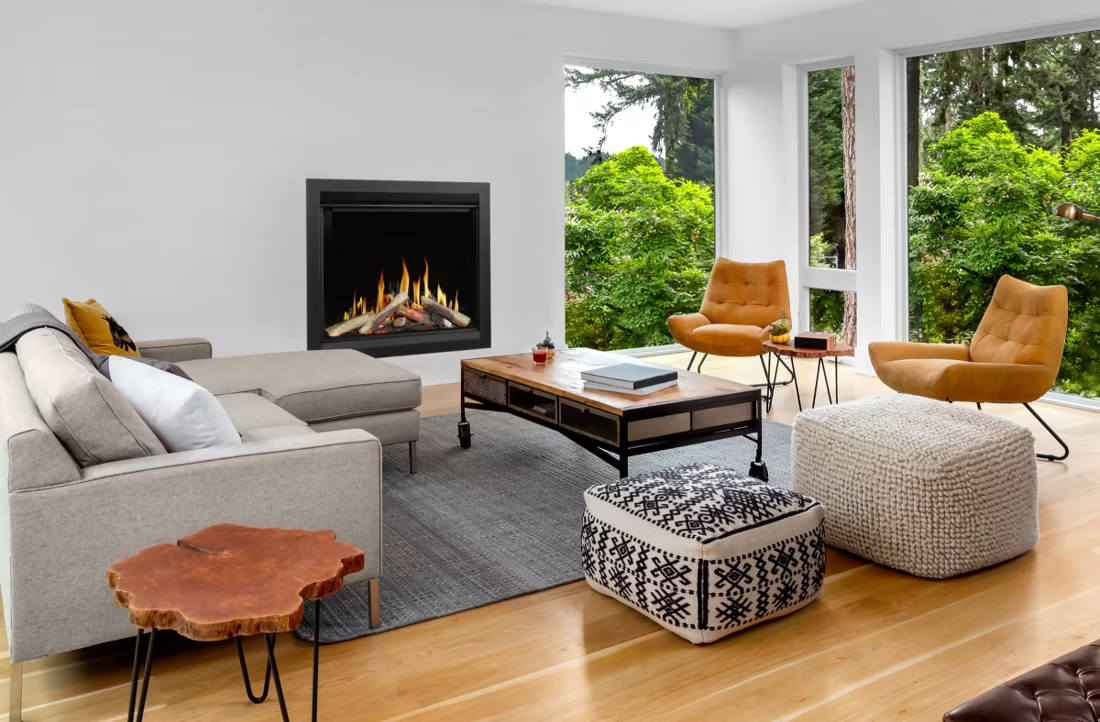
Four fuels. One honest answer for Livingston County.
Three steps. No salesperson until you're ready.
Tell us about your project
Your zip code, your situation, and the fuel you're leaning toward—or let the answers point you to one.
See what's actually available
The brands dealers within 100 miles genuinely carry—real options, never a catalog mirage.
Get your dealer & Project Guide
A trusted local dealer, plus the free Project Guide & Parts List that names every component of the job.
Frequently Asked Questions
Which fuel works best in Livingston Parish?
With only about 1,534 heating degree days a year and winter lows averaging 42°F, no fuel in Livingston Parish carries the year-round workload it would in a colder state—it's more about matching the fuel to how you'll actually use it. Wood is popular for its look and gathering appeal, and locally seasoned oak and pecan burn well for the handful of cold-front weeks each winter; it also doubles as backup heat if a hurricane or ice storm knocks out power. Gas—usually propane in this parish, since natural gas mains are limited outside a few pockets—is the low-maintenance choice for instant ambiance without woodpile upkeep in Louisiana's humidity. Pellet stoves are a smaller niche here (Lignetics and Hamer Pellet Fuel both distribute regionally) and appeal mostly to homeowners who want wood-style heat without storing cordwood. Electric fireplaces are common for bedrooms, camps near the Amite River, and rentals where venting isn't practical. Most parish homeowners choose based on aesthetic and outage-preparedness rather than raw heating need.
Do I need a permit to install a fireplace in Livingston Parish?
Usually, yes. New wood stoves, wood inserts, gas fireplaces, gas inserts, gas stoves, and pellet stoves typically require a building permit through the Livingston Parish Permits Office, or through the relevant municipality if you're inside Denham Springs, Walker, or Livingston city limits. Wood-burning appliances sold new must meet current EPA 2020 NSPS emissions standards. Gas installations need a licensed gas-fitter for the propane or gas-line connection, separate from the building permit. Electric fireplaces generally don't require a permit unless you're hardwiring a built-in unit into a new circuit. Most local hearth retailers handle the permitting paperwork as part of the installation quote, so it's rarely something you have to manage yourself.
Are there air quality or burn restrictions in Livingston Parish?
No—Livingston Parish has no winter inversion issues, wildfire smoke concerns, or non-attainment designations, so there are no seasonal burn bans or curtailment days to plan around. The practical challenge here is humidity, not air quality: cypress, oak, and pecan firewood need real seasoning time and dry, covered storage in Louisiana's climate, or they'll smoke heavily and burn inefficiently even though burning itself is unrestricted. If a stove or insert smokes excessively, the fuel's moisture content is almost always the cause, not a regulatory issue.
Can one local hearth retailer handle all four fuel types?
Several dealers serving Livingston Parish carry three or four fuel types, which is useful if you're deciding between, say, a gas insert and an electric unit for a den remodel. Retailers based in Denham Springs and Walker tend to stock working displays of wood, gas, and electric units, with pellet stoves often available as a special order given the smaller local demand. If pellet heat is your priority, ask specifically—not every showroom keeps a pellet unit on the floor, but most can source one through Lignetics or Greenway Renewable Energy distribution.
How does service work in rural parts of Livingston Parish?
Technicians based in Denham Springs and Walker cover outlying communities like French Settlement, Springfield, and Killian, usually with a modest travel fee for the farther stops. Because the heating season is short, the busiest service window is late summer through early fall, ahead of hurricane season and the first cold fronts—scheduling a sweep or gas inspection in August or September beats waiting until a December cold snap when everyone else is calling too. If you're relying on a wood or gas unit as backup heat during storm-season outages, an annual pre-season check is worth prioritizing even in a mild-winter parish like this one.
What's the typical cost range for fireplace installation across all fuel types in Livingston Parish?
Wood stove or insert installation: roughly $4,000–$8,500 for a typical install, since chimney runs here tend to be shorter than in colder-climate homes. Gas fireplace, insert, or stove: $4,000–$10,000 depending on whether propane line work is needed; conversions on existing gas service run lower. Pellet stove or insert: $4,500–$7,000, plus the cost of sourcing units locally since pellet inventory is lighter in this market. Electric fireplace: $200–$3,000 for the unit itself, with $400–$1,200 in labor for anything beyond a plug-and-play install. Costs skew slightly lower than national averages overall, since venting and clearance work is simpler in a mild climate—see the parish + fuel pages above for retailer-specific pricing.
Can a fireplace actually lower my heating bill?
Yes—by creating a comfort zone. A furnace heats every square foot of the house just to warm the one room you're in; a gas fireplace on low burns roughly a sixth of the gas a typical furnace does. Set the furnace around 55–60 degrees as a baseline, then heat the rooms your family actually uses. Families who heat this way commonly save $20–$60 a month.
What is an in-home preview and do I need one?
It's a visit where a hearth professional measures your space, confirms the model you picked actually works in your home, and walks the specs—framing, gas line, venting, finish work—before anything is ordered. Some details you just can't know until you see the house. Never make a down payment without one; it's the single most-skipped step that burns buyers.
Wood, gas, pellet, or electric—how do I choose?
Match the fuel to your life, not the other way around. Wood: lowest fuel cost and total power-outage independence, but you're hauling and stacking. Gas: press a button, set a thermostat, no maintenance to speak of. Pellet: wood economics with automatic feeding, in exchange for weekly cleaning and a need for electricity. Electric: plugs in anywhere with honest supplemental heat. Nobody regrets the fuel that fits how they actually live.
How much should I budget for a fireplace?
For an average home—covering the fireplace, the vent pipe, and basic installation—a budget between $3,900 and $5,500 gives you a lot of options across wood, gas, and pellet. By the time you add finish work, gas line, and electrical, the average complete installation lands between $5,000 and $12,000 all-in. In a remodel or new build, a good rule is to put about 2.5% of the total project cost toward the fireplace.
Stove and Fireplace Dealers in Livingston County
Listings include WhyFire partner dealers, dealers we have verified as authorized for the brands we recommend, and established local businesses that carry hearth products. Every listing shows which one it is. The ones marked Preferred run on WhyFire's software, so they can show you real pricing and book your appointment right here. No manufacturer pays for placement. How we verify dealers →
Woodburners, Inc
Acoustical Spec & Supply
Economy Brick Sales
Lacox Propane Gas Co., Inc.
Area – Baton Rouge, La
Find your fireplace in Livingston Parish.
Tell us about your project and we'll match you with a trusted local dealer and send a free Project Guide & Parts List—the exact parts, including the vent kit, and the dealer we recommend for your home in Livingston Parish.
Find Your Fireplace →