
Fireplaces built for Lafourche Parish's mild winters.
With only a light winter heating load each year and winter lows that hover in the mid-40s, Lafourche Parish doesn't need a furnace-grade wood stove—but a gas or electric fireplace still adds warmth on cold fronts and year-round ambiance from Thibodaux to Golden Meadow. Find a trusted local dealer who installs for this climate, not a colder one.
Every Project Starts From One of These Five Situations
Low heating demand, high ambiance value across Lafourche Parish, Louisiana.
Lafourche Parish stretches from Thibodaux down Bayou Lafourche through Raceland, Lockport, Larose, Cut Off, and Golden Meadow to Port Fourchon on the Gulf. It sits in climate zone 2A—hot and humid most of the year, with an average winter low around 44°F and a heating season that amounts to only a light dusting of cold spells annually. For comparison, a place like Duluth, Minnesota has a winter heating load roughly eight times heavier; Lafourche Parish's heating season amounts to a handful of cold fronts each winter, not a season of sustained cold. Oak, pecan, and cypress grow throughout the parish's bayou hardwood forests and cypress swamps, but they're prized here for lumber, furniture, and shade—not stacked as firewood for daily heat.
That's why this hub leans on gas and electric fireplace options rather than wood or pellet dealers. What you'll find below: hearth retailers, service technicians, and fuel suppliers serving the whole parish, from Thibodaux's downtown historic district to the fishing communities near Golden Meadow and Cut Off. Pick a city to see local dealers, typical installation costs, and the units that make sense in a climate where a fireplace is about comfort and atmosphere more than survival heat.
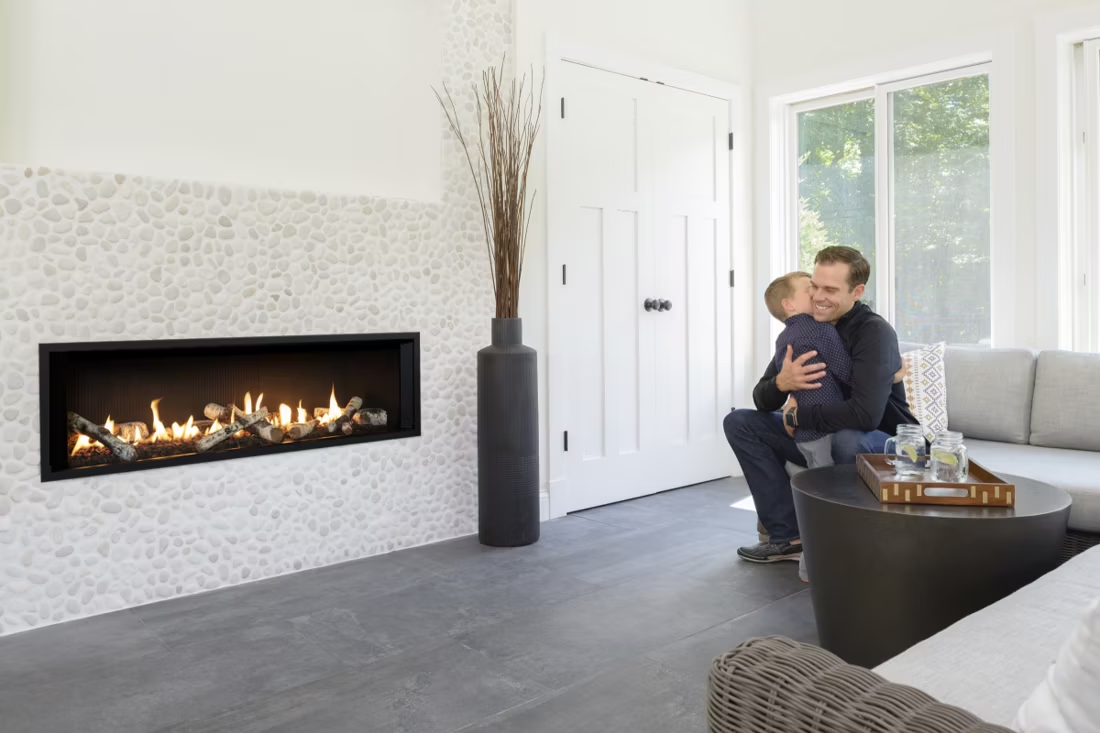
Four fuels. One honest answer for Lafourche County.
Three steps. No salesperson until you're ready.
Tell us about your project
Your zip code, your situation, and the fuel you're leaning toward—or let the answers point you to one.
See what's actually available
The brands dealers within 100 miles genuinely carry—real options, never a catalog mirage.
Get your dealer & Project Guide
A trusted local dealer, plus the free Project Guide & Parts List that names every component of the job.
Frequently Asked Questions
Which fuel works best in Lafourche Parish?
Gas and electric are the fireplaces homeowners here actually install. Gas fireplaces and inserts give instant heat on the handful of genuinely cold nights the parish sees each winter, and many homes near Thibodaux and Raceland already have gas service given the region's oil-and-gas industry infrastructure around Port Fourchon. Electric fireplaces are popular for camps, elevated homes, and rental properties where no venting is possible or wanted—plug in, get flame effect and supplemental warmth, done. Wood-burning fireplaces are uncommon here; with only a light winter heating load each year, there's rarely enough sustained cold to justify a woodpile, though a small number of homeowners still install a wood or gas-log insert purely for ambiance during rare hard freezes. Pellet stoves are essentially absent from the residential market for the same reason.
Do I need a permit to install a fireplace in Lafourche Parish?
Generally yes for gas installations—a gas fireplace, insert, or stove typically requires both a building permit and a separate gas-line permit, with the gas connection performed by a licensed gas fitter. Your local building permit office in Lafourche Parish (Thibodaux and the unincorporated parish areas each have their own process) will want to confirm venting and clearances before final inspection. Electric fireplaces usually skip the permit process entirely unless it's a built-in unit that requires a new dedicated circuit and hardwiring, in which case an electrical permit applies. Most local hearth retailers in the parish handle the permitting paperwork as part of the installation quote.
Why don't more homes in Lafourche Parish burn wood, given all the oak and cypress around?
It's a climate math problem, not a lack of local wood. Oak, pecan, and cypress are all common in the parish's hardwood bottomlands and swamps, but with a winter low averaging 44°F and a heating season measured in single cold fronts rather than months, there simply isn't enough sustained cold to make a wood stove worth the maintenance, chimney sweeping, and humidity headaches. Louisiana's Gulf Coast humidity also makes storing dry firewood harder than it is in a place like Fargo or Bismarck. A few rural and camp properties still keep a wood-burning fireplace for occasional ambiance on the coldest nights, but it's the exception, not the norm.
I noticed pellet brands like Lignetics and Hamer Pellet Fuel are made near here—why isn't pellet heat popular locally?
Louisiana is actually one of the largest wood pellet producers in the country, and companies like Lignetics, Hamer Pellet Fuel, and Greenway Renewable Energy operate pellet mills in the region—but that production is overwhelmingly for export to colder markets in Europe and the northeastern U.S., not for local residential heating. With Lafourche Parish's mild winters and only a light winter heating load, there's very little local demand for a pellet stove's kind of sustained, automated heat output. If you're set on a pellet appliance for aesthetic reasons, a handful of multi-fuel dealers can special-order one, but it won't be a stocked, commonly-installed option the way gas or electric units are.
Does coastal humidity or hurricane risk affect fireplace installation in Lafourche Parish?
Yes, on both counts. Salt air and high humidity accelerate corrosion on metal venting and fireplace components faster here than inland, so a good local installer will spec stainless steel or corrosion-resistant venting rather than standard galvanized parts—this matters more the closer you get to Golden Meadow, Cut Off, and Port Fourchon. Many homes in the lower parish are also built elevated on piers due to flood zone requirements, which changes hearth placement and venting runs compared to a slab-on-grade house in Thibodaux or Raceland. A trusted local dealer who works in this parish regularly will already account for both—it's a common miss for installers unfamiliar with bayou-country construction.
What's the typical cost range for fireplace installation across fuel types in Lafourche Parish?
Gas fireplace, insert, or stove: roughly $4,500–$10,500 depending on whether a new gas line needs to be run and how much venting work is involved; conversions where gas service already exists land toward the lower end. Electric fireplace: $200–$3,000 for the unit itself, with $400–$1,200 in labor for anything beyond a plug-and-play wall mount, such as a built-in with a new dedicated circuit. Wood or gas-log inserts installed purely for ambiance run comparable to gas pricing above, since the appliance and venting costs are similar even when it's not the primary heat source. Pellet stove installs are rare enough locally that pricing is typically quoted case-by-case by the few dealers willing to special-order one.
What is an in-home preview and do I need one?
It's a visit where a hearth professional measures your space, confirms the model you picked actually works in your home, and walks the specs—framing, gas line, venting, finish work—before anything is ordered. Some details you just can't know until you see the house. Never make a down payment without one; it's the single most-skipped step that burns buyers.
How much should I budget for a fireplace?
For an average home—covering the fireplace, the vent pipe, and basic installation—a budget between $3,900 and $5,500 gives you a lot of options across wood, gas, and pellet. By the time you add finish work, gas line, and electrical, the average complete installation lands between $5,000 and $12,000 all-in. In a remodel or new build, a good rule is to put about 2.5% of the total project cost toward the fireplace.
Wood, gas, pellet, or electric—how do I choose?
Match the fuel to your life, not the other way around. Wood: lowest fuel cost and total power-outage independence, but you're hauling and stacking. Gas: press a button, set a thermostat, no maintenance to speak of. Pellet: wood economics with automatic feeding, in exchange for weekly cleaning and a need for electricity. Electric: plugs in anywhere with honest supplemental heat. Nobody regrets the fuel that fits how they actually live.
Can a fireplace actually lower my heating bill?
Yes—by creating a comfort zone. A furnace heats every square foot of the house just to warm the one room you're in; a gas fireplace on low burns roughly a sixth of the gas a typical furnace does. Set the furnace around 55–60 degrees as a baseline, then heat the rooms your family actually uses. Families who heat this way commonly save $20–$60 a month.
Stove and Fireplace Dealers in Lafourche County
Listings include WhyFire partner dealers, dealers we have verified as authorized for the brands we recommend, and established local businesses that carry hearth products. Every listing shows which one it is. The ones marked Preferred run on WhyFire's software, so they can show you real pricing and book your appointment right here. No manufacturer pays for placement. How we verify dealers →
Antique Brick Company
The Brick Yard
Backyard Living Furniture
Find your fireplace in Lafourche Parish.
Tell us about your home in Thibodaux, Raceland, Golden Meadow, or anywhere along Bayou Lafourche, and we'll match you with a trusted local dealer and send a free Project Guide & Parts List—the exact parts, including the vent kit sized for coastal humidity, and the dealer we recommend for your project.
Find Your Fireplace →