
Every fuel type, matched to your Scott County home.
Wood, gas, pellet, and electric fireplace resources for every city and rural community in Scott County—from Georgetown to Sadieville. Find the right fit and connect with a trusted local hearth retailer.
Every Project Starts From One of These Five Situations
Moderate winters, a real heating season, in the Bluegrass.
Scott County sits in the Bluegrass region of central Kentucky, where winters are milder than the northern tier of the country but still cold enough to matter—average winter lows around 25°F and a heating season with real workload, a fraction of what a place like Duluth MN sees but enough to justify a real supplemental or primary heat source for several months. Oak, hickory, maple, and cherry are the region's dominant hardwoods, and firewood availability is generally good for anyone burning wood, whether self-cut from nearby Daniel Boone National Forest land or sourced from a local supplier. There are no formal air quality non-attainment concerns here, so wood burning isn't restricted the way it is in basin or inversion-prone regions out west.
What you'll find on this hub: hearth retailers, service technicians, and fuel suppliers serving every community in the county—from Georgetown, the county seat and largest population center, out to Stamping Ground, Sadieville, and the rural areas in between. Pick your fuel below to drill into specifics—local dealers, installation costs, recommended units, and the resources that match your project. Whether you're heating a farmhouse outside Sadieville or a newer build near Georgetown, this is the starting point.
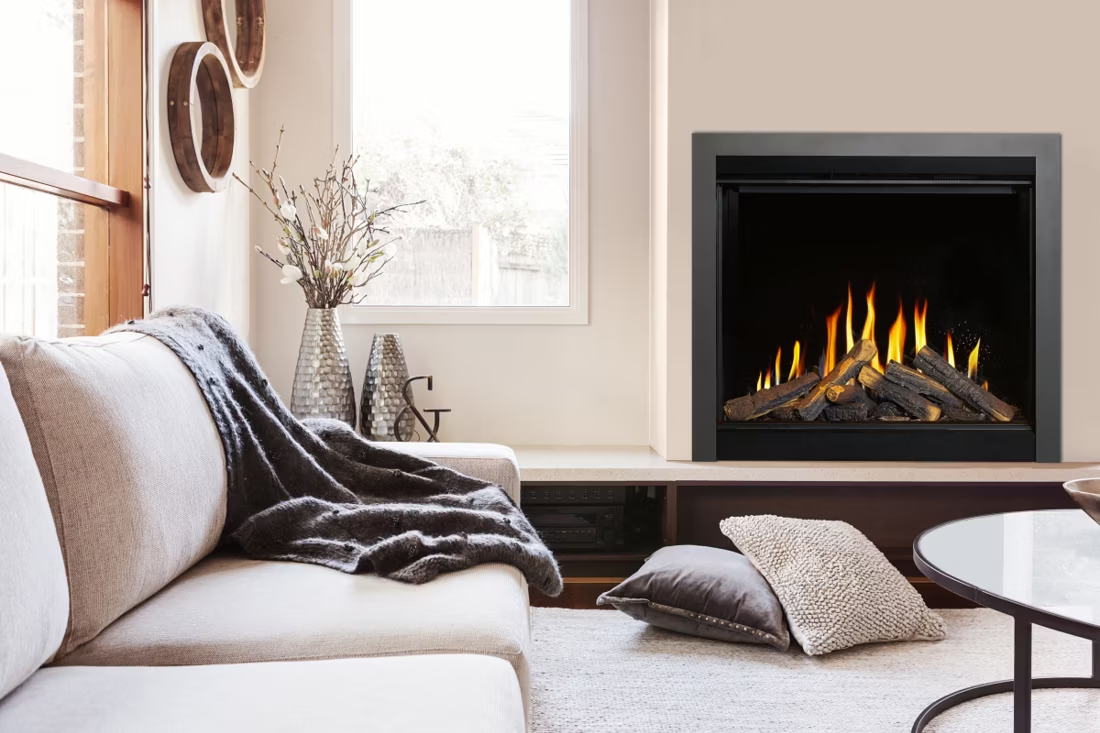
Four fuels. One honest answer for Scott County.
Three steps. No salesperson until you're ready.
Tell us about your project
Your zip code, your situation, and the fuel you're leaning toward—or let the answers point you to one.
See what's actually available
The brands dealers within 100 miles genuinely carry—real options, never a catalog mirage.
Get your dealer & Project Guide
A trusted local dealer, plus the free Project Guide & Parts List that names every component of the job.
Frequently Asked Questions
Which fuel works best in Scott County?
It depends on your home and priorities, but all four fuels are genuinely viable here. Wood is well-supported given local oak and hickory availability—a mid-size wood stove or insert handles Scott County's moderate winter heating workload comfortably, and Daniel Boone National Forest offers self-cut options for landowners nearby. Gas is the convenience pick for Georgetown-area homes with natural gas service—no wood handling, thermostat control, and quick installs where gas lines already exist. Pellet is a solid middle ground with regional brands like Lignetics and Hamer Pellet Fuel readily available, giving you wood-like ambiance without splitting and stacking. Electric works well as supplemental heat in bedrooms, basements, or additions, though it's rarely anyone's sole heat source given the length of the local heating season. Many Scott County homes run one fuel as primary and another as backup or supplemental.
Do I need a permit to install a fireplace in Scott County?
In most cases, yes. New wood stoves, wood inserts, gas fireplaces, gas inserts, gas stoves, and pellet stoves typically require a building permit through the applicable local jurisdiction—Georgetown's city building office for in-town installs, or the Scott County building office for unincorporated areas. Gas installations also need a separate gas line permit and licensed gas-fitter for the connection work. Wood-burning appliances installed new should meet current EPA emissions standards. Electric fireplaces usually don't need a permit unless you're doing a built-in installation with hardwiring and a new circuit. Most local hearth retailers handle the permitting process as part of the installation, so you generally aren't filing paperwork yourself.
Are there air quality restrictions on wood burning in Scott County?
No, Scott County doesn't have the kind of winter inversion or non-attainment issues that trigger burn advisories in western basin regions. There's no local equivalent of a yellow or red burn-restriction day here. That said, choosing an EPA-certified wood stove is still worth doing for efficiency and lower particulate output—you'll burn less wood for the same heat, and newer catalytic and non-catalytic designs produce noticeably less visible smoke than older uncertified units. If you're installing new, your local retailer can walk you through current-generation options.
Can one local hearth retailer handle all four fuel types?
Many hearth retailers serving Scott County carry at least two or three fuel types, and some carry all four—wood, gas, pellet, and electric—under one roof, which is useful if you're still deciding between options. Others specialize, focusing heavily on gas and electric for Georgetown-area new construction, or on wood and pellet for the more rural parts of the county. Check each retailer's fuel coverage listed on this hub before visiting, so you know they stock and install what you're actually considering—a showroom that's strong on gas inserts isn't necessarily set up to spec a wood-burning chimney liner.
How does service work in rural areas of Scott County?
Most service technicians covering Scott County are based near Georgetown and travel out to Stamping Ground, Sadieville, and the surrounding farmland. Expect service calls in rural areas to run a bit longer to schedule than in-town appointments, and some techs charge a modest travel fee beyond a set radius. Pre-season appointments, ideally scheduled in late summer or early fall before the first cold snap, are far easier to book than mid-winter emergency calls when everyone's chimney or gas unit needs attention at once. If you're on a rural property, keeping a backup heat source on hand—even a portable electric heater—is a reasonable hedge against a delayed service call during a cold stretch.
What's the typical cost range for fireplace installation across all fuel types in Scott County?
Costs vary by fuel and by the scope of the install. Wood stove or insert installation typically runs $3,500-$7,500, more if new chimney or liner work is needed. Gas fireplace, insert, or stove installation generally runs $3,500-$9,000 depending on whether a new gas line has to be run or existing service can be tapped. Pellet stove or insert installation typically falls in the $3,500-$6,500 range. Electric fireplace costs are the widest spread—$200-$3,000 for the unit itself, plus $300-$1,000 in labor for anything beyond a simple plug-and-play placement. For more specific numbers tied to local retailer pricing, see the county + fuel pages above.
What is an in-home preview and do I need one?
It's a visit where a hearth professional measures your space, confirms the model you picked actually works in your home, and walks the specs—framing, gas line, venting, finish work—before anything is ordered. Some details you just can't know until you see the house. Never make a down payment without one; it's the single most-skipped step that burns buyers.
Can I install a fireplace myself?
If you're putting a fire in your house on purpose, it's best to work with an expert. Unless you're genuinely experienced in framing, gas line, vent pipe, and the national code on clearances to combustibles, have a professional do it—and ideally the same company that sells you the fireplace, so warranty, service, and liability all live under one roof.
Does a fireplace add value to my home?
On average, a fireplace adds back to the home about the same amount you spent installing it. Add the monthly savings from heating the rooms you actually use instead of the whole house—often hundreds of dollars a year—and the value case is strong before you even count what a fire does for how your family uses the room.
Wood, gas, pellet, or electric—how do I choose?
Match the fuel to your life, not the other way around. Wood: lowest fuel cost and total power-outage independence, but you're hauling and stacking. Gas: press a button, set a thermostat, no maintenance to speak of. Pellet: wood economics with automatic feeding, in exchange for weekly cleaning and a need for electricity. Electric: plugs in anywhere with honest supplemental heat. Nobody regrets the fuel that fits how they actually live.
Stove and Fireplace Dealers in Scott County
Listings include WhyFire partner dealers, dealers we have verified as authorized for the brands we recommend, and established local businesses that carry hearth products. Every listing shows which one it is. The ones marked Preferred run on WhyFire's software, so they can show you real pricing and book your appointment right here. No manufacturer pays for placement. How we verify dealers →
Barnhill Chimney Company
Housewarmings
Wood Energy Warehouse
Whitehead-Hancock Plumbing, Heating & Cooling
Clark Propane Plus
Find your fireplace project in Scott County.
Pick your fuel below and we'll match you with a trusted local dealer and send over a free Project Guide & Parts List—the parts you need, including the vent kit, and who locally can install it.
Find Your Fireplace →