
Find hearth heat built for Robertson County, Kentucky.
Wood, gas, pellet, and electric fireplace resources for Mount Olivet and the rural crossroads that make up Robertson County. Find the right unit for your home and connect with a trusted local hearth dealer.
Every Project Starts From One of These Five Situations
Small-county heating in the oak-hickory hills of north-central Kentucky.
Robertson County is one of Kentucky's smallest counties by population—just 147 people spread across roughly 100 square miles of the Eden Shale Hills, a rumpled, wooded landscape that drains toward the Licking River. The climate here is Zone 4A, mixed-humid: winters bring regular frost and occasional hard freezes, but not the extreme sustained cold of the upper Midwest. What the county has in abundance is hardwood—oak, hickory, maple, and cherry cover the hillsides and farm woodlots, and a lot of local households have cut their own firewood off family land for generations. Mount Olivet, the county seat, is the only incorporated city; most residents live on scattered farms and along rural routes outside town.
Because Robertson County is so sparsely populated, there isn't a hearth retailer with a storefront inside the county itself—but that doesn't mean you're on your own. Dealers based in Maysville, Flemingsburg, Carlisle, and Mount Sterling regularly service Robertson County homes, and this hub rounds up the retailers, technicians, and fuel suppliers who do. Pick your fuel below to see local dealer coverage, typical installation costs, and the resources that fit your project, whether you're in Mount Olivet or out on a wooded ridge road.
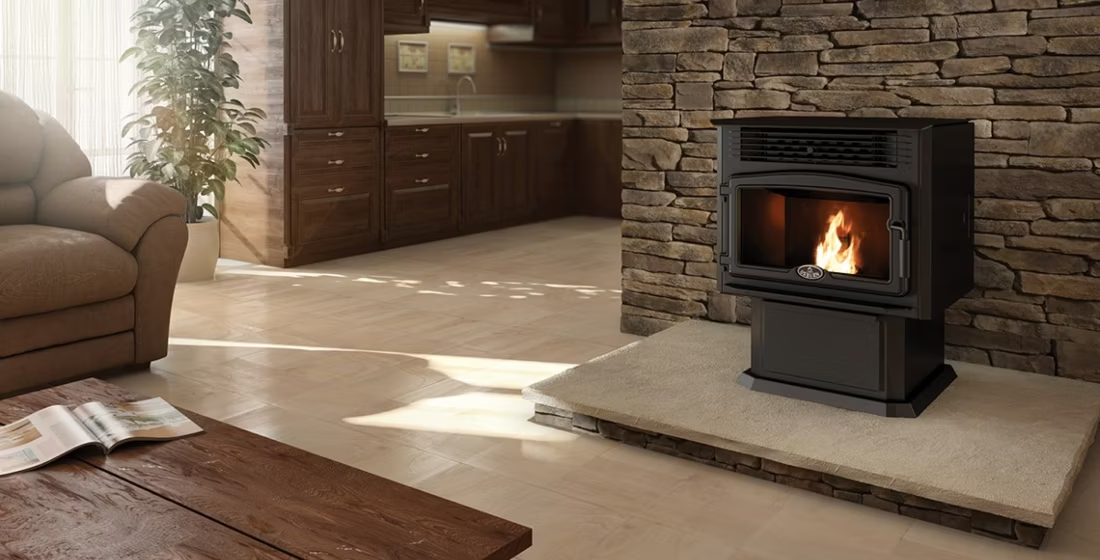
Four fuels. One honest answer for Robertson County.
Three steps. No salesperson until you're ready.
Tell us about your project
Your zip code, your situation, and the fuel you're leaning toward—or let the answers point you to one.
See what's actually available
The brands dealers within 100 miles genuinely carry—real options, never a catalog mirage.
Get your dealer & Project Guide
A trusted local dealer, plus the free Project Guide & Parts List that names every component of the job.
Frequently Asked Questions
Which fuel works best for a home in Robertson County?
It depends on where you live and what your home already has. Wood is the natural fit for a lot of Robertson County households—oak and hickory cover the hillsides, cherry and maple show up in farm woodlots, and cutting your own firewood is still a normal part of rural life here. A cast-iron or steel wood stove handles the Zone 4A winters without much trouble. Gas is mostly a propane story in this county—piped natural gas is scarce outside larger towns like Maysville, so a propane fireplace or insert is the realistic 'flip a switch' option for most addresses. Pellet stoves are a solid middle ground: no splitting or stacking, and Lignetics, Hamer Pellet Fuel, and Greenway Renewable Energy are all sold by dealers in the surrounding counties. Electric fireplaces work well as supplemental heat—good for a bedroom or a room without a chimney—but they're not a primary heat source for a Kentucky winter. Plenty of homes here run wood or pellet as the main heater with a propane or electric unit for convenience elsewhere in the house.
Do I need a permit to install a fireplace in Robertson County?
Almost certainly, though the process looks different than in a bigger county. Robertson County doesn't run a standalone building-permit office the way larger Kentucky counties do—for a county of 147 people, permitting for wood stoves, gas inserts, and pellet appliances typically routes through the county judge-executive's office, with code compliance for the appliance itself governed statewide by the Kentucky Office of the State Fire Marshal. In practice, most local installers who work in Robertson County already know this process and handle it as part of the job. Electric fireplaces generally skip the permit step unless you're wiring a new circuit for a built-in unit. If you're unsure, ask your installing dealer directly—they'll know exactly who signs off in this county.
Are there any wood-burning or air quality restrictions in Robertson County?
No—Robertson County has no local air-quality nonattainment designation and no wood-burning curfews or advisory days on record. The county's small population and rural, wooded geography mean smoke buildup simply isn't the regulatory issue it is in denser or bowl-shaped basins elsewhere. That said, any new wood stove sold and installed still has to meet the EPA's federal New Source Performance Standards for emissions—that's a national baseline, not a Robertson County rule, and it applies whether you buy your stove in Maysville, Flemingsburg, or anywhere else.
Is there a hearth retailer actually located in Robertson County?
Not currently—with a population this small, there isn't enough local demand to support a standalone hearth showroom inside the county. What you'll find instead are multi-fuel retailers based in Maysville, Flemingsburg, Carlisle, and Mount Sterling who regularly install and service units in Robertson County homes, from Mount Olivet out to the rural routes. Several of these dealers carry wood, gas, and pellet units side by side, so you can compare fuels in one visit even if that visit means a short drive out of the county.
How does installation and service actually work in a county this rural?
Expect your installer or technician to be coming from somewhere else—Maysville, Flemingsburg, Carlisle, or Mount Sterling are the most common home bases for crews working in Robertson County. Travel time over the Eden Shale Hills' winding, hilly roads is the main variable, so a small trip fee for rural service calls is normal. The upside of a low-density county is scheduling flexibility outside of peak season—booking your annual chimney sweep or gas inspection in late summer or early fall, before the pre-winter rush hits the busier neighboring counties, tends to get you an appointment faster.
What's the typical cost range for fireplace installation across fuel types in Robertson County?
Costs track pretty closely with what you'd see in Maysville or Flemingsburg, since that's where most installers are based, plus a modest travel add-on for the drive into the county. Wood stove or insert: roughly $4,000–$8,500 for a typical install, more if new chimney work is needed. Propane fireplace, insert, or stove: roughly $4,000–$10,000 depending on tank setup and venting, since piped natural gas isn't an option for most addresses here. Pellet stove or insert: roughly $4,000–$7,000 installed. Electric fireplace: $200–$3,000 for the unit itself, with $400–$1,200 in labor for anything beyond a plug-in install. Ask any dealer serving Robertson County for a written quote that includes the trip and any propane tank or line work up front.
Wood, gas, pellet, or electric—how do I choose?
Match the fuel to your life, not the other way around. Wood: lowest fuel cost and total power-outage independence, but you're hauling and stacking. Gas: press a button, set a thermostat, no maintenance to speak of. Pellet: wood economics with automatic feeding, in exchange for weekly cleaning and a need for electricity. Electric: plugs in anywhere with honest supplemental heat. Nobody regrets the fuel that fits how they actually live.
Does a fireplace add value to my home?
On average, a fireplace adds back to the home about the same amount you spent installing it. Add the monthly savings from heating the rooms you actually use instead of the whole house—often hundreds of dollars a year—and the value case is strong before you even count what a fire does for how your family uses the room.
What is an in-home preview and do I need one?
It's a visit where a hearth professional measures your space, confirms the model you picked actually works in your home, and walks the specs—framing, gas line, venting, finish work—before anything is ordered. Some details you just can't know until you see the house. Never make a down payment without one; it's the single most-skipped step that burns buyers.
Can a fireplace actually lower my heating bill?
Yes—by creating a comfort zone. A furnace heats every square foot of the house just to warm the one room you're in; a gas fireplace on low burns roughly a sixth of the gas a typical furnace does. Set the furnace around 55–60 degrees as a baseline, then heat the rooms your family actually uses. Families who heat this way commonly save $20–$60 a month.
Stove and Fireplace Dealers in Robertson County
Listings include WhyFire partner dealers, dealers we have verified as authorized for the brands we recommend, and established local businesses that carry hearth products. Every listing shows which one it is. The ones marked Preferred run on WhyFire's software, so they can show you real pricing and book your appointment right here. No manufacturer pays for placement. How we verify dealers →
Barnhill Chimney Company
Vonderhaar's Factory Outlet
Hardymon Lumber
Bethel Feed & Supply Inc.
Charlie's Chimney Sweeps & Masonry
Southern Ohio Stove Systems
Clark Propane Plus
Wood Energy Warehouse
Housewarmings
Find your fireplace in Robertson County.
Tell us about your home and we'll match you with a trusted dealer who actually services Robertson County, plus a free Project Guide & Parts List—the exact parts, vent kit included, and the local pro who can install it.
Find Your Fireplace →