
Every fuel, every corner of Mercer County.
Wood, gas, pellet, and electric fireplace resources for the whole county—from Harrodsburg's historic square out to Burgin and Salvisa. Pick a fuel and get matched with a local dealer who actually installs it here.
Every Project Starts From One of These Five Situations
Bluegrass winters, a moderate winter heating load, and hardwood country.
Mercer County sits in Kentucky's Bluegrass region between Lexington and Danville, with winter lows averaging 27°F and a winter heating load roughly half what a place like Madison, Wisconsin or Duluth, Minnesota deals with each winter, which means shoulder-season comfort matters here as much as surviving a deep cold snap. Harrodsburg, the county seat and Kentucky's oldest permanent settlement, anchors a county of rolling farmland where oak, hickory, maple, and cherry are the wood species most households burn. Hickory in particular is a local favorite for its long, hot burn, and it's the same hardwood stock that keeps the region's bourbon barrel coopers busy.
Mercer County isn't a non-attainment area and has no winter inversion or curtailment restrictions, so wood-burning households here aren't dealing with the burn-day limits some Western counties face—the main considerations are simply seasoning your firewood properly and sizing the unit to a milder heating season. If you cut your own wood under a public-land permit, the nearest Forest Service option is Daniel Boone National Forest, about an hour east. This hub rolls up hearth retailers, service techs, and fuel suppliers across the whole county, from Harrodsburg down to Burgin and out toward Salvisa. Pick your fuel below for local dealers, install costs, and unit recommendations specific to your town.
Four fuels. One honest answer for Mercer County.
Three steps. No salesperson until you're ready.
Tell us about your project
Your zip code, your situation, and the fuel you're leaning toward—or let the answers point you to one.
See what's actually available
The brands dealers within 100 miles genuinely carry—real options, never a catalog mirage.
Get your dealer & Project Guide
A trusted local dealer, plus the free Project Guide & Parts List that names every component of the job.
Frequently Asked Questions
Which fireplace fuel makes the most sense in Mercer County?
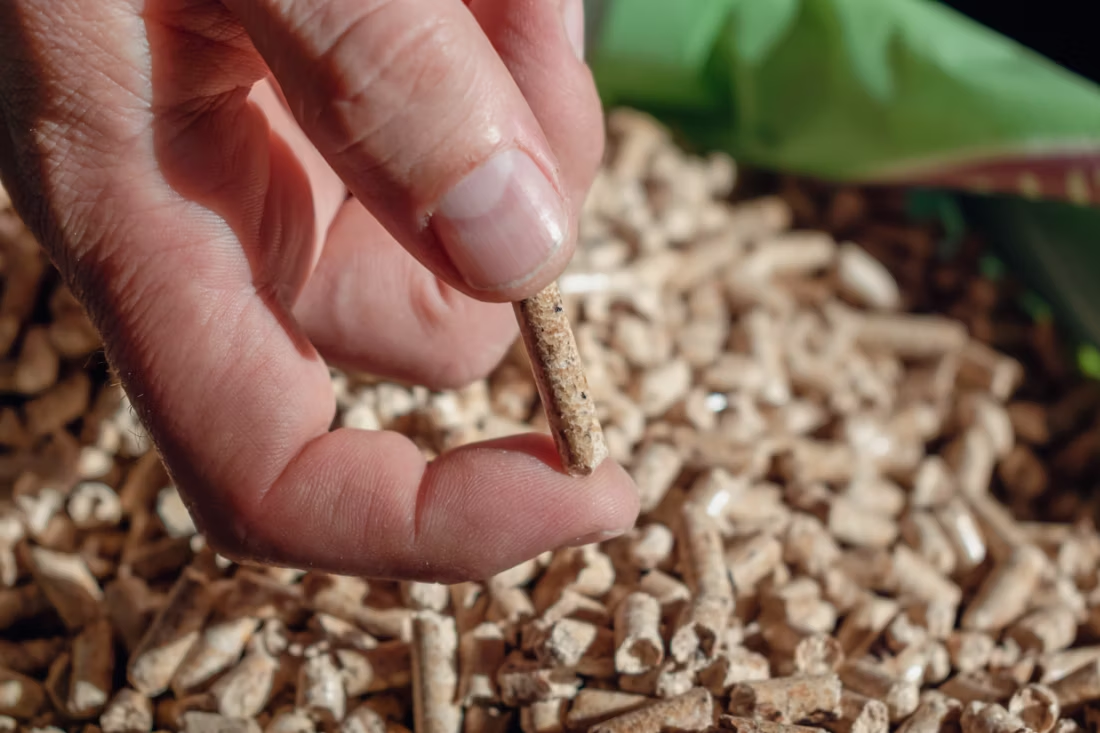
All four fuels work well here, and the choice usually comes down to how much of the heating load you want a stove or fireplace to carry. Wood is a strong option given how much oak, hickory, maple, and cherry grows locally—a hickory-fed stove holds heat well even though Mercer County's fairly moderate winter heating load and 27°F average winter low are a lighter burden compared to a harsher climate like Burlington, Vermont. Gas is popular for its convenience, though homes outside Harrodsburg's immediate service area often run on propane rather than a piped gas line. Pellet stoves have a real presence too, with Lignetics, Hamer Pellet Fuel, and Greenway Renewable Energy all distributed regionally, and they're a good fit for anyone who wants wood-like heat without splitting and stacking logs. Electric fireplaces are mostly supplemental here—with milder winters than much of the country, they can genuinely take the edge off a cool evening in a room that doesn't need full-time heat, though they're not typically a home's main heat source.
Do I need a permit to install a wood stove or fireplace in Mercer County?
Most installations do require a permit through the Mercer County building and planning office, or the City of Harrodsburg if your property is inside city limits. New wood stoves and inserts generally need to meet current EPA emissions standards to pass inspection, and any gas installation requires a separate gas-line permit plus a licensed gas fitter for the hookup. Pellet stoves are permitted similarly to wood units. Electric fireplaces usually skip the permitting process unless you're hardwiring a built-in unit that requires a new circuit. Most retailers we match homeowners with handle the paperwork as part of the installation, so it's rarely something you're navigating alone.
What firewood works best in Mercer County, and how should I season it?
Oak, hickory, maple, and cherry are the wood species most Mercer County households burn, and all four are widely available from local firewood dealers or, if you're cutting your own under a permit, from Daniel Boone National Forest about an hour east. Oak and hickory need the longest seasoning time—a full 12 months split and stacked under cover is typical before they're dry enough to burn cleanly, since burning green hardwood is one of the biggest causes of creosote buildup and chimney fires. Cherry and maple season a bit faster, closer to 6-9 months. If you're buying from a dealer, ask how long the wood has already been split and stacked rather than taking 'seasoned' at face value.
Are there any burning restrictions or air quality rules in Mercer County?
No. Mercer County isn't a designated non-attainment area and doesn't experience the winter inversions or curtailment-day restrictions that affect wood burning in some Western counties. That means a wood stove or fireplace here can run on cold mornings without the yellow-day limits homeowners in places like the Pacific Northwest have to track. The main compliance point is simply making sure a new unit meets current EPA emissions standards at the time of installation, which any reputable local dealer will confirm as part of the sale.
What does a fireplace installation typically cost in Mercer County?
Costs vary by fuel and by how much venting or gas-line work is involved. Wood stove or insert installs typically run $4,000–$8,500, with a full masonry chimney for new construction pushing higher. Gas fireplaces, inserts, and stoves generally run $4,000–$10,000 depending on whether propane needs to be run to the unit or you're converting an existing hearth. Pellet stove or insert installs usually land around $4,000–$7,000. Electric fireplaces are the most affordable entry point—$200–$3,000 for the unit, plus $400–$1,200 in labor for anything beyond a simple plug-in placement. The county + fuel pages above break these numbers down further with local retailer pricing.
Can I get service if I live outside Harrodsburg?
Yes. Service techs and installation crews are based mainly in and around Harrodsburg but routinely travel out to Burgin, Salvisa, and the rural stretches between them. Expect a modest trip fee for the farthest calls, and expect scheduling to fill up fastest in late fall as households get their annual chimney sweep or gas inspection done before the first cold snap—booking in September or early October ahead of the rush is the easiest way to avoid a wait.
Does a fireplace add value to my home?
On average, a fireplace adds back to the home about the same amount you spent installing it. Add the monthly savings from heating the rooms you actually use instead of the whole house—often hundreds of dollars a year—and the value case is strong before you even count what a fire does for how your family uses the room.
Wood, gas, pellet, or electric—how do I choose?
Match the fuel to your life, not the other way around. Wood: lowest fuel cost and total power-outage independence, but you're hauling and stacking. Gas: press a button, set a thermostat, no maintenance to speak of. Pellet: wood economics with automatic feeding, in exchange for weekly cleaning and a need for electricity. Electric: plugs in anywhere with honest supplemental heat. Nobody regrets the fuel that fits how they actually live.
I know I want a fireplace—where do I actually start?
Do two things today: snap a photo of the wall or fireplace you want to transform, and take a tape measure to the space—width, height, depth. Those two artifacts answer most of a hearth professional's first questions. Then settle fuel (wood, gas, pellet, or electric) and set a realistic budget: $3,900–$5,500 covers fireplace, vent, and basic install for most homes.
Can I install a fireplace myself?
If you're putting a fire in your house on purpose, it's best to work with an expert. Unless you're genuinely experienced in framing, gas line, vent pipe, and the national code on clearances to combustibles, have a professional do it—and ideally the same company that sells you the fireplace, so warranty, service, and liability all live under one roof.
Stove and Fireplace Dealers in Mercer County
Listings include WhyFire partner dealers, dealers we have verified as authorized for the brands we recommend, and established local businesses that carry hearth products. Every listing shows which one it is. The ones marked Preferred run on WhyFire's software, so they can show you real pricing and book your appointment right here. No manufacturer pays for placement. How we verify dealers →
Barnhill Chimney Company
Housewarmings
Wood Energy Warehouse
Whitehead-Hancock Plumbing, Heating & Cooling
Dowell Furniture Co.
Ace Chimney Sweep
Custom Fireplaces & Woodworking
Clark Propane Plus
Get matched with a local Mercer County dealer.
Pick your fuel below and we'll put together a free Project Guide & Parts List—the right unit, the vent kit it needs, and the local dealer we recommend for your project.
Find Your Fireplace →