
Instant Heat for Louisville's River Valley Winters.
Louisville has a moderate winter heating load and winter lows near 26°F—enough to make a gas fireplace a smart daily-use heat source. Find the right unit and get matched with a trusted local dealer.
Every Project Starts From One of These Five Situations
Reliable heat that matches Louisville's moderate winters.
At 519 feet along the Ohio River, Louisville sits in climate zone 4A—cold enough for real heating need but nowhere near the extremes of places like Minneapolis or Fargo. With a moderate winter heating load and average winter lows around 26°F, most Jefferson County homes need consistent supplemental or zone heat for four to five months a year, not a wood-burning survival setup. That's exactly the gap a gas fireplace fills well.
Louisville Gas & Electric (LG&E) serves natural gas throughout most of the metro, from the Highlands and Crescent Hill to newer subdivisions in the 40245 and 40241 zip codes, which makes adding a gas fireplace or converting an existing masonry fireplace a straightforward project for the large majority of homeowners here. There are no air-quality non-attainment restrictions or wood-smoke curtailment rules in Jefferson County, so the choice between gas and wood comes down to convenience rather than regulation. Given Louisville's history of ice storms—including extended multi-day outages—a gas fireplace with battery-backup ignition is also a practical hedge against winter power loss.
Three steps. No salesperson until you're ready.
Tell us about your project
Your zip code, your situation, and the fuel you're leaning toward—or let the answers point you to one.
See what's actually available
The brands dealers within 100 miles genuinely carry—real options, never a catalog mirage.
Get your dealer & Project Guide
A trusted local dealer, plus the free Project Guide & Parts List that names every component of the job.
Frequently Asked Questions
How much does a gas fireplace installation cost in Louisville?
Most gas fireplace installations in Louisville run between $4,000 and $10,000, depending on the unit, the venting path, and whether new gas line work is needed. A direct-vent insert installed into an existing masonry fireplace with LG&E gas already run to that side of the house tends to land on the lower end. New construction or a built-in gas fireplace in a remodel—framing, venting, and a fresh gas line—sits toward the middle and upper end, especially in newer subdivisions like those in the 40245 and 40299 zip codes where gas lines may need to be extended to a new hearth location. A local dealer will give you a firm number after an in-home walkthrough.
Can I convert my existing wood fireplace to gas?
Yes, and it's a common project in Louisville's older neighborhoods—the Highlands, Crescent Hill, and St. Matthews all have plenty of homes with original masonry fireplaces that burned local oak and hickory for decades before homeowners switched to gas for convenience. A gas insert typically uses your existing chimney with a stainless liner, and the project usually runs $4,000 to $8,500 depending on the insert model and whether LG&E gas is already present at the house. Homes already piped for gas—for a furnace or water heater—are usually on the lower end.
Do I need natural gas, or is propane an option in Louisville?
LG&E provides natural gas across most of Jefferson County, so the majority of homes in zip codes like 40218, 40222, and 40241 can tie a gas fireplace directly into existing service. In more rural pockets on the edges of the metro—parts of 40059 or 40118—natural gas lines may not reach every property, and propane becomes the standard alternative with a tank supplied by a local propane company. Most gas fireplace models can be configured for either fuel; your installer sets the correct orifice and regulator for whichever you have.
Will my gas fireplace work during a power outage?
For the most part, yes. Units with IPI (intermittent pilot ignition) run on a small battery backup that kicks in automatically when power drops, so the fireplace still lights on demand. That matters in Louisville, where ice storms have knocked out power for a week or more in past winters—the 2009 ice storm being the most memorable example for a lot of longtime residents. Valor fireplaces take a different approach: their pilot assembly generates its own electricity through the thermocouple, so there's no battery to remember or replace. Ask your local dealer which ignition system a given model uses before you buy.
What's the difference between a gas fireplace, gas insert, and gas stove?
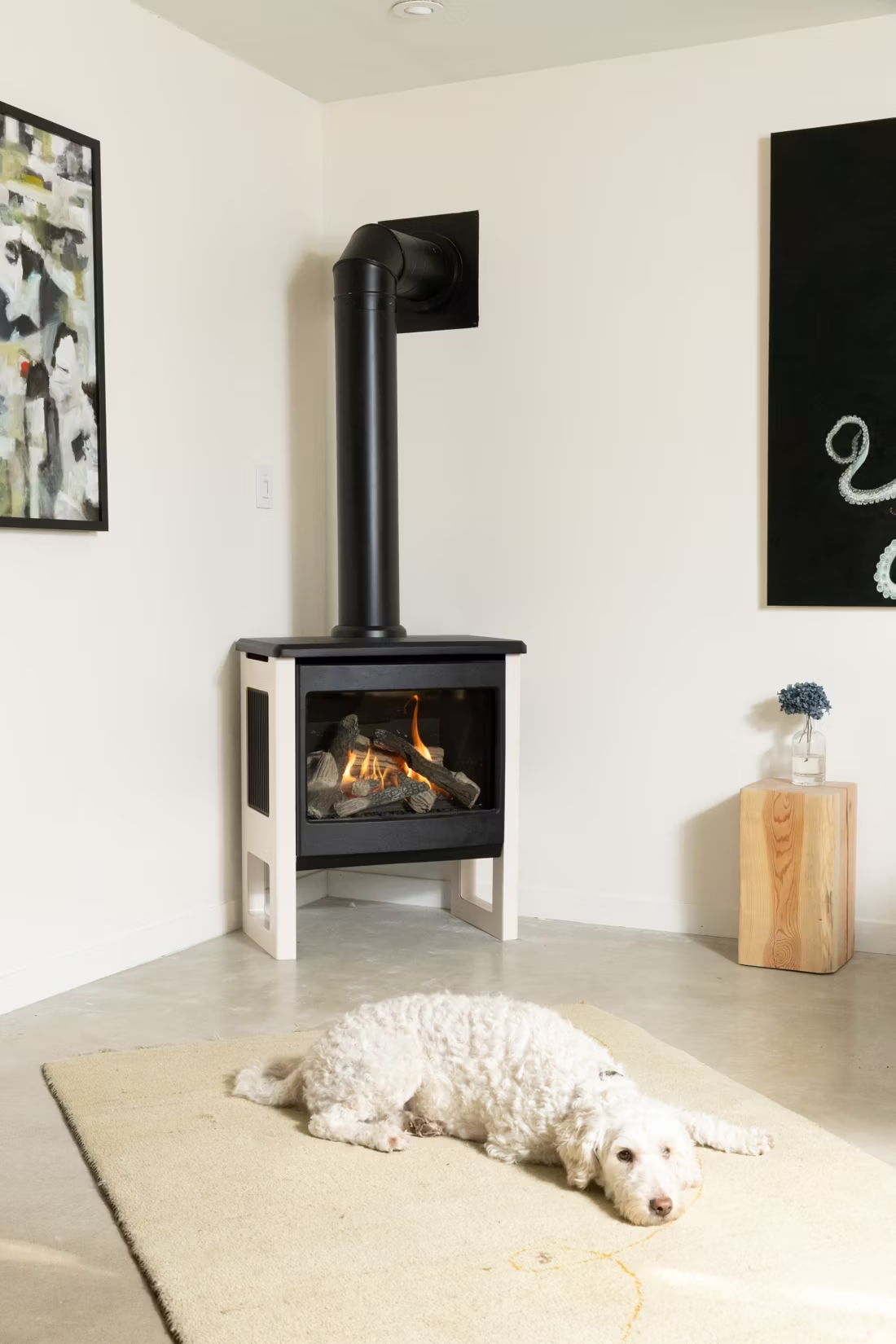
A gas fireplace is a fully built-in unit framed into a wall—the right choice for new construction or a remodel where there's no existing masonry opening. A gas insert slides into an existing fireplace and uses the chimney as its vent path, which is why it's the go-to choice for older Louisville homes in neighborhoods like Clifton or Germantown that already have a brick fireplace. A gas stove is freestanding, sitting on the floor like a wood stove but running on gas—a good option for a room without any existing fireplace opening where you don't want to frame in a full built-in unit.
Do I need a permit to install a gas fireplace in Louisville?
Yes. New gas fireplace installations in Jefferson County require both a building permit and a gas permit, handled through Louisville Metro Government's Develop Louisville Construction Review Division. The gas line portion has to be done by a licensed gas fitter, and most established hearth dealers coordinate the permit, the gas line, and the final inspection as part of the installation rather than leaving you to manage separate trades.
What's the difference between vented and vent-free gas fireplaces?
Vented (direct-vent) gas fireplaces pull combustion air from outside and exhaust gases back outside through a sealed pipe—they're the cleanest, safest option and the one most Louisville dealers recommend by default. Vent-free units burn directly into the room without external venting; they're legal in Kentucky but come with strict room-size and ventilation requirements, since they release some combustion byproducts indoors. Because Jefferson County has no wood-smoke or air-quality curtailment rules like non-attainment areas out west, the choice here really comes down to installation flexibility rather than local regulation—vent-free can work in a room with no chimney or flue access, while direct-vent remains the better everyday option for full-time heating use.
How often should my gas fireplace be serviced?
Plan on an annual inspection, ideally in early fall before the heating season ramps up. A certified technician checks the burner, pilot assembly, venting, and gas connections, and cleans the glass and interior—this runs $150 to $250 in the Louisville area, well below the cost of a wood-stove chimney sweep but just as important for safe operation over a Kentucky winter of daily use.
Gas vs. wood—which makes more sense for a Louisville home?
Louisville's climate zone 4A and moderate winter heating load put it well short of the wood-heat-as-necessity climates you'd find in a place like Duluth or Bozeman, so most homeowners here choose gas for daily convenience rather than out of climate necessity. Wood still has its fans—oak, hickory, and cherry are all locally abundant and burn well—but hauling and stacking cordwood is a bigger commitment than most Louisville households want for a fireplace that's mainly used a few evenings a week. Gas wins for most primary living spaces here: instant on-off, no ash, and with battery-backup ignition, a real hedge against the ice-storm outages this region occasionally sees.
Can I put a TV above my fireplace?
Yes—with an asterisk. Fireplaces are hot and TVs don't like heat. Either put a mantel between them to deflect rising warmth, or choose a fireplace with heat-management technology that creates a cool zone on the wall above—the wall stays around 125 degrees, barely warm, while the room still gets full heat. If you like clean lines and don't want a mantel, heat management is the answer.
What's the difference between an insert and a zero-clearance fireplace?
An insert is a fireplace that slides into a pre-existing wood-burning fireplace—if you don't have one, there's nothing to insert it into. A zero-clearance fireplace is built into a framed wall, which makes it the answer for remodels and new construction. Simple test: existing masonry fireplace means insert; blank or framed wall means zero-clearance.
Does a fireplace add value to my home?
On average, a fireplace adds back to the home about the same amount you spent installing it. Add the monthly savings from heating the rooms you actually use instead of the whole house—often hundreds of dollars a year—and the value case is strong before you even count what a fire does for how your family uses the room.
Can a fireplace actually lower my heating bill?
Yes—by creating a comfort zone. A furnace heats every square foot of the house just to warm the one room you're in; a gas fireplace on low burns roughly a sixth of the gas a typical furnace does. Set the furnace around 55–60 degrees as a baseline, then heat the rooms your family actually uses. Families who heat this way commonly save $20–$60 a month.
Nearby Dealers
Hearth shops serving Louisville and the surrounding area. Every listing shows whether it is a WhyFire partner, a dealer we have verified as authorized for the brands we recommend, or a local business carrying hearth products. No manufacturer pays for placement. How we verify dealers →
Fireplace Distributors, Inc
Honest Home
The Fire Place
Allgeier Air
Eastwood Stove & Outdoor Shop
Pc Lumber & Hardware
Victory Chimney Sweeps
Ace Chimney Sweep
Watts Home Center
Premier Outdoor Space
Coffman's Chimney Sweeps
Find your gas fireplace in Louisville.
Tell us about your home and we'll match you with a trusted local Louisville dealer and send over a free Project Guide & Parts List—the exact parts, vent kit, and recommended installer for your gas fireplace project.
Find Your Fireplace →