
Heating know-how for every corner of Fleming County.
Wood, gas, pellet, and electric fireplace resources for Flemingsburg, Ewing, Hillsboro, and the farms and hollows in between. Find the right unit and connect with a trusted local hearth retailer.
Every Project Starts From One of These Five Situations
Steady winters, hardwood country in Fleming County, Kentucky.
Fleming County sits in the rolling hill country of northeastern Kentucky, with about 4,846 heating degree days and average winter lows around 23°F—nowhere near Duluth or Burlington cold, but enough to run a woodstove hard from November through March. The county's timber is dominated by oak, hickory, maple, and cherry, all dense hardwoods that split well and burn long, and a fair number of Fleming County households still cut their own firewood from private wooded acreage or supplement with wood harvested under permit from the Daniel Boone National Forest. Climate zone 4A means moderate humidity and a real but not extreme heating season—the kind of climate where a mid-efficiency stove or a well-sized gas insert both make practical sense.
What you'll find on this hub: hearth retailers, service technicians, and fuel suppliers covering all of Fleming County—from the county seat in Flemingsburg out to Ewing, Hillsboro, Poplar Plains, and the unincorporated crossroads communities that make up most of the county's population. Pick your fuel below to see local dealers, typical installation costs, and the resources that fit your project, whether you're heating a farmhouse on Fox Chase Road or a cabin near the national forest boundary.
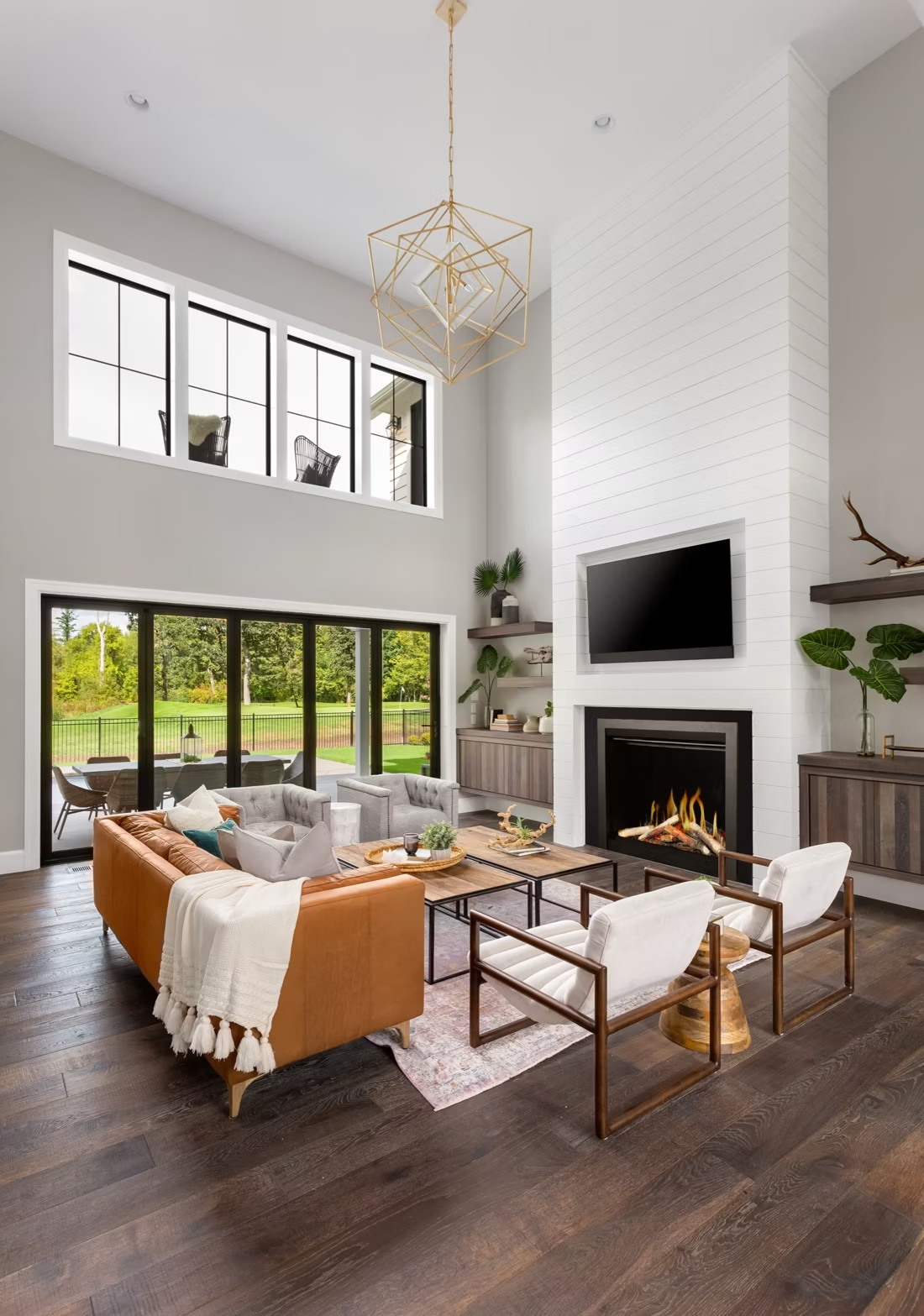
Four fuels. One honest answer for Fleming County.
Three steps. No salesperson until you're ready.
Tell us about your project
Your zip code, your situation, and the fuel you're leaning toward—or let the answers point you to one.
See what's actually available
The brands dealers within 100 miles genuinely carry—real options, never a catalog mirage.
Get your dealer & Project Guide
A trusted local dealer, plus the free Project Guide & Parts List that names every component of the job.
Frequently Asked Questions
Which fuel works best in Fleming County?
It depends on the home and the household. Wood remains a strong choice in rural Fleming County—oak and hickory from private land or a Daniel Boone National Forest permit burn long and hot, and a wood stove keeps working through winter power outages that hit rural lines hardest. Gas is the low-maintenance option for homes with propane service (natural gas lines are limited outside Flemingsburg), giving instant heat with no wood-hauling. Pellet stoves are a solid middle path—less labor than cordwood, with regional supply from Lignetics and Hamer Pellet Fuel keeping fuel accessible without long hauls. Electric fireplaces work well as supplemental heat in bedrooms or additions, but with 4,846 heating degree days, most Fleming County homes still want a primary fuel with more heat output. Many households here run wood or pellet as primary and gas or electric as backup or convenience heat in secondary rooms.
Do I need a permit to install a fireplace in Fleming County?
Generally yes, for anything beyond a plug-in electric unit. Wood stoves, wood inserts, gas fireplaces, gas inserts, and pellet stoves typically require a building permit through the local building authority, and gas installations also need a licensed gas-fitter for the line connection. Because Fleming County is largely rural, permit requirements and inspection timelines can vary between properties inside Flemingsburg city limits and those in the unincorporated county—it's worth confirming with your installer before work begins. Electric fireplaces usually skip the permit process unless they involve new wiring for a built-in unit. Most established hearth retailers in the area handle the paperwork as part of the installation quote, so you're not tracking down permit offices yourself.
Are there air quality restrictions on wood burning in Fleming County?
No—Fleming County has no air quality non-attainment designations or wood-burning curtailment programs. Unlike basin or valley communities that deal with winter inversions, Fleming County's rolling terrain doesn't trap smoke the way a low-lying region can. That said, a properly sized, EPA-certified stove still burns cleaner and more efficiently than an old smoke-dragon unit, and it's worth asking your dealer about current EPA emissions standards for any new wood stove or insert purchase—cleaner burning means less creosote buildup and fewer chimney fires, regardless of local air quality rules.
Can one local hearth retailer handle all four fuel types?
In a county with a population under 3,500, most hearth retailers serving Fleming County work primarily out of Flemingsburg or a nearby larger town and typically focus on two or three fuel types rather than carrying all four with equal depth. Wood and gas are the most commonly paired offerings, with pellet stoves often available through the same dealer given regional supply from brands like Lignetics and Greenway Renewable Energy. Electric fireplace inventory tends to be thinner locally, since demand is lower—some homeowners end up ordering electric units through a dealer that special-orders rather than stocks them. If you're comparing fuels side by side, ask a retailer directly what they carry in-showroom versus what they can order in.
How does service work in rural areas of Fleming County?
Most chimney sweeps and gas/pellet technicians covering Fleming County are based in Flemingsburg or drive in from a neighboring county, since the population here doesn't support a large in-county service industry on its own. Expect to book a service call and possibly pay a modest travel fee for outlying farms and hollows well off Route 32 or Route 11. Fall (September–October) is the easiest time to get a sweep or inspection scheduled before the winter burn season starts—waiting until the first cold snap means longer waits. If you're heating with wood as a primary fuel on a rural property, it's worth keeping a spare stovepipe brush and basic tools on hand between professional sweeps.
What's the typical cost range for fireplace installation across all fuel types in Fleming County?
Costs vary by fuel and by how much existing infrastructure is in place. Wood stove or insert installation: roughly $4,000–$8,500 for a typical retrofit, more if a new masonry chimney or full liner replacement is needed. Gas fireplace, insert, or stove: roughly $4,000–$10,000, with propane tank and line work pushing costs toward the higher end for homes without existing gas service. Pellet stove or insert: roughly $4,000–$7,000 for most installs. Electric fireplace: $200–$3,000 for the unit itself, plus $300–$1,000 in labor for anything beyond a simple plug-and-play placement. See the county + fuel pages above for cost detail tied to specific local retailers.
Wood, gas, pellet, or electric—how do I choose?
Match the fuel to your life, not the other way around. Wood: lowest fuel cost and total power-outage independence, but you're hauling and stacking. Gas: press a button, set a thermostat, no maintenance to speak of. Pellet: wood economics with automatic feeding, in exchange for weekly cleaning and a need for electricity. Electric: plugs in anywhere with honest supplemental heat. Nobody regrets the fuel that fits how they actually live.
Does a fireplace add value to my home?
On average, a fireplace adds back to the home about the same amount you spent installing it. Add the monthly savings from heating the rooms you actually use instead of the whole house—often hundreds of dollars a year—and the value case is strong before you even count what a fire does for how your family uses the room.
Can a fireplace actually lower my heating bill?
Yes—by creating a comfort zone. A furnace heats every square foot of the house just to warm the one room you're in; a gas fireplace on low burns roughly a sixth of the gas a typical furnace does. Set the furnace around 55–60 degrees as a baseline, then heat the rooms your family actually uses. Families who heat this way commonly save $20–$60 a month.
What are the biggest mistakes people make buying a fireplace?
Five come up constantly: budgeting for the unit but not the full job (vent, gas line, electrical, finish work); drowning in options instead of starting from style and fuel; buying without an in-home preview; handing installation to a handyman instead of a pro; and giving up out of sheer indecision. Every one is avoidable with a clear plan—step one, step two, step three.
Stove and Fireplace Dealers in Fleming County
Listings include WhyFire partner dealers, dealers we have verified as authorized for the brands we recommend, and established local businesses that carry hearth products. Every listing shows which one it is. The ones marked Preferred run on WhyFire's software, so they can show you real pricing and book your appointment right here. No manufacturer pays for placement. How we verify dealers →
Hardymon Lumber
Vonderhaar's Factory Outlet
Southern Ohio Stove Systems
Clark Propane Plus
Find your fireplace project in Fleming County.
Pick your fuel below to get matched with a trusted local dealer and receive a free Project Guide & Parts List—the exact parts, including the vent kit, for your Fleming County project.
Find Your Fireplace →