
Find the right hearth for your Crittenden County home.
Wood, gas, pellet, and electric fireplace resources for Marion and every small community across Crittenden County—from Frances and Tolu to Dycusburg and Mattoon. Get matched with a local hearth retailer who actually serves this stretch of western Kentucky.
Every Project Starts From One of These Five Situations
Rural, hardwood-heated western Kentucky, town by town.
Crittenden County sits in Kentucky's far-western Pennyrile region, near the Ohio River, in climate zone 4A with a heating season stretching from around mid-fall to early spring and average winter lows around 25°F. That's a moderate heating load—about half of what a place like Duluth, MN sees in a typical winter—but still enough that a wood stove, gas insert, or pellet unit earns its keep from late fall through early spring. The county's hardwood forests of oak, hickory, maple, and cherry have supplied firewood here for generations, and Marion's history as a fluorspar mining hub gave the county a working-class, self-reliant streak that shows up in how homes here are heated: split wood in the shed, a propane tank out back, or a pellet hopper filled from bags of Lignetics or Hamer Pellet Fuel picked up in town.
With a population just over 3,000 spread across Marion and a handful of unincorporated communities—Frances, Tolu, Dycusburg, Mattoon, Crayne—Crittenden County doesn't support a large number of dedicated hearth retailers, so this hub also accounts for dealers and technicians based in neighboring Livingston, Caldwell, and Union counties who regularly service Crittenden County homes. Pick your fuel below for local dealers, installation costs, and the resources that fit your project, whether you're heating a farmhouse outside Marion or a river cabin near Tolu.
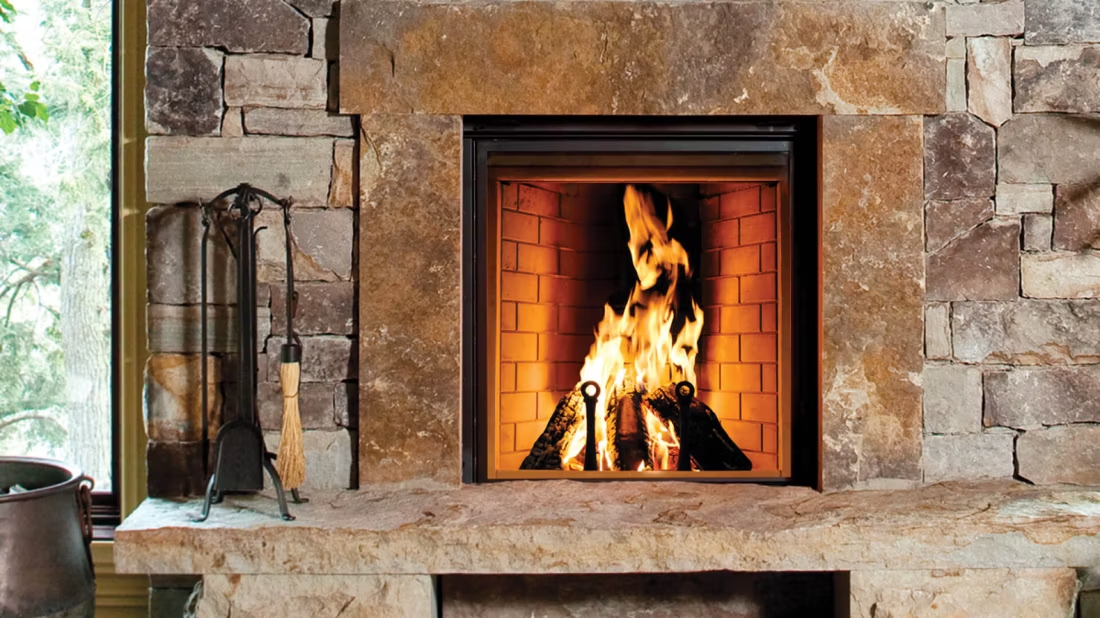
Four fuels. One honest answer for Crittenden County.
Three steps. No salesperson until you're ready.
Tell us about your project
Your zip code, your situation, and the fuel you're leaning toward—or let the answers point you to one.
See what's actually available
The brands dealers within 100 miles genuinely carry—real options, never a catalog mirage.
Get your dealer & Project Guide
A trusted local dealer, plus the free Project Guide & Parts List that names every component of the job.
Frequently Asked Questions
Which fuel works best in Crittenden County?
It depends on the home and the budget, but all four fuels have a real place here. Wood is the traditional choice given how much oak, hickory, maple, and cherry grows in the county's timberland—many households split their own or buy from a local supplier, and a good stove can carry a farmhouse through the 4,280-degree-day heating season on manageable fuel costs. Gas mostly means propane here, since natural gas mains don't extend much past Marion—propane inserts and stoves give you instant heat without cutting or hauling wood. Pellet is a solid middle ground, especially with regional brands like Lignetics, Hamer Pellet Fuel, and Greenway Renewable Energy stocked nearby, offering wood-like heat without the woodpile. Electric works well as a supplemental unit in a bedroom or den, but with winter lows only averaging around 25°F, it's rarely anyone's sole heat source here.
Do I need a permit to install a fireplace in Crittenden County?
Generally yes, though the process is more straightforward than in larger counties. New wood stoves, wood inserts, gas appliances, and pellet stoves typically require a building permit through the county's building or code enforcement office, and any new wood-burning appliance sold today must meet EPA 2020 NSPS emissions standards regardless of where you live. Propane installations also need the tank and line work handled by a licensed propane installer, which is usually coordinated by whoever supplies your propane. Electric fireplaces are usually permit-free unless you're doing a built-in with new wiring. Most local retailers serving Crittenden County will walk you through—or directly handle—the permitting, so it's rarely something you're navigating solo.
Are there air quality restrictions on wood burning in Crittenden County?
No—Crittenden County doesn't carry any air quality nonattainment designation or wood-burning curtailment program, unlike some river-valley counties further north or in the Ohio Valley industrial corridors. There's no winter inversion advisory system here and no voluntary burn-ban days to track. That said, any new wood stove installation still needs to meet EPA 2020 NSPS certification, and proper clearances and chimney height matter for keeping smoke away from neighboring homes—especially in tighter-spaced areas around Marion.
Can one local hearth retailer handle all four fuel types in a county this size?
It's less common here than in a bigger market. With a population around 3,000, Crittenden County doesn't support the density of hearth retailers you'd find in Paducah or Madisonville. Some dealers based in Marion carry two or three fuel types—often wood and propane gas, sometimes pellet—while full four-fuel showrooms with working displays are more likely found in neighboring counties along the Highway 60 or Interstate 24 corridors. Find My Fireplace matches you with whichever trusted dealer, in or near the county, actually carries and installs the fuel type you're after.
How does hearth service work in a rural county like this?
Most technicians who service Crittenden County are based in Marion or in a neighboring county seat and run routes out to the rural communities—Frances, Tolu, Dycusburg, Mattoon, and Crayne—rather than keeping a storefront in each. Expect to schedule a bit further ahead than you would in a city, and a small trip fee is common for the more outlying addresses near the Ohio River. Pre-season service in late summer or early fall is easier to book than a mid-January emergency call, so if you're heating with wood or propane through the winter, getting your sweep or inspection done early is worth it.
What's the typical cost range for fireplace installation across all fuel types in Crittenden County?
Costs run somewhat lower here than in metro markets, but the spread by fuel type holds a similar shape. Wood stove or insert installation: roughly $3,500–$8,500 depending on chimney work and whether it's new construction. Propane fireplace, insert, or stove: roughly $4,000–$9,500, with tank setup and line work affecting the higher end. Pellet stove or insert: roughly $3,500–$6,500 for a typical install. Electric fireplace: $200–$2,500 for the unit itself, plus $300–$1,000 in labor for anything beyond a simple plug-and-play placement. Exact pricing depends on which local dealer you're matched with and the specifics of your home.
Can a fireplace actually lower my heating bill?
Yes—by creating a comfort zone. A furnace heats every square foot of the house just to warm the one room you're in; a gas fireplace on low burns roughly a sixth of the gas a typical furnace does. Set the furnace around 55–60 degrees as a baseline, then heat the rooms your family actually uses. Families who heat this way commonly save $20–$60 a month.
Wood, gas, pellet, or electric—how do I choose?
Match the fuel to your life, not the other way around. Wood: lowest fuel cost and total power-outage independence, but you're hauling and stacking. Gas: press a button, set a thermostat, no maintenance to speak of. Pellet: wood economics with automatic feeding, in exchange for weekly cleaning and a need for electricity. Electric: plugs in anywhere with honest supplemental heat. Nobody regrets the fuel that fits how they actually live.
Should the dealer who sells my fireplace also install it?
Ideally, yes. A fireplace project involves vent pipe, gas line, electrical, and often tile or stone. Hire three or four separate trades and you own the liability and the game of telephone between them. One company selling and installing means one accountable party, start to finish—ask about factory training, on-time completion records, and what happens if an inspection fails.
Does a fireplace add value to my home?
On average, a fireplace adds back to the home about the same amount you spent installing it. Add the monthly savings from heating the rooms you actually use instead of the whole house—often hundreds of dollars a year—and the value case is strong before you even count what a fire does for how your family uses the room.
Stove and Fireplace Dealers in Crittenden County
Listings include WhyFire partner dealers, dealers we have verified as authorized for the brands we recommend, and established local businesses that carry hearth products. Every listing shows which one it is. The ones marked Preferred run on WhyFire's software, so they can show you real pricing and book your appointment right here. No manufacturer pays for placement. How we verify dealers →
Akridge Farm Supply
Master Sweeps
Synergy Gas
Hank Bros. True Value
Russell Electric
Find your fireplace in Crittenden County.
Tell us about your home and we'll match you with a trusted local dealer and send a free Project Guide & Parts List—the exact parts, including the vent kit, and a recommended installer for your Crittenden County project.
Find Your Fireplace →