
Find the right fireplace for your Butler County home.
Wood, gas, pellet, and electric fireplace resources for Morgantown, Woodbury, Rochester, and the rural communities scattered across Butler County. Find the right unit for a moderate Kentucky winter and connect with a trusted local hearth dealer.
Every Project Starts From One of These Five Situations
Moderate winters, deep wood-heat roots in Butler County, Kentucky.
Butler County sits in climate zone 4A with winters comparable to a moderate Midwest chill and an average winter low near 24°F—roughly half the winter heating load of a place like Duluth, MN, and mild enough that no single fuel dominates out of necessity. Oak, hickory, maple, and cherry grow throughout the county's hardwood forests along the Green River, and cutting your own firewood remains a normal part of life here for a lot of households. With a population under 3,000 spread across a mostly rural landscape, this isn't a county with dense retail infrastructure—but the wood-heat tradition runs strong, and gas, pellet, and electric options all work fine here too.
What you'll find on this hub: hearth retailers, service technicians, and fuel suppliers serving Butler County—from the county seat of Morgantown out to Woodbury, Rochester, and the smaller communities along the river bottoms. Because Butler County is sparsely populated, a fair number of dealers and technicians who cover it are actually based in nearby Bowling Green or Owensboro. Pick your fuel below to see local dealers, installation costs, and recommended units for a moderate-winter Kentucky home.
Four fuels. One honest answer for Butler County.
Three steps. No salesperson until you're ready.
Tell us about your project
Your zip code, your situation, and the fuel you're leaning toward—or let the answers point you to one.
See what's actually available
The brands dealers within 100 miles genuinely carry—real options, never a catalog mirage.
Get your dealer & Project Guide
A trusted local dealer, plus the free Project Guide & Parts List that names every component of the job.
Frequently Asked Questions
Which fuel works best in Butler County?
With winter lows averaging around 24°F and a winter heating load roughly half that of a much colder northern climate, Butler County's climate is moderate enough that all four fuels genuinely work as primary or supplemental heat—this isn't a place where one fuel wins by necessity. Wood remains the traditional choice, especially where oak and hickory are already coming off a family's own land; a mid-size cordwood stove handles the coldest stretches without trouble. Gas is mostly propane here rather than piped natural gas, given the rural setting, and it's the low-maintenance choice for households that don't want to manage a woodpile. Pellet stoves have a real regional supply chain—Hamer Pellet Fuel and Greenway Renewable Energy are both Kentucky-based, which keeps fuel logistics simpler than in areas that ship pellets in from out of state. Electric fireplaces work well as supplemental heat in bedrooms or additions, though they're rarely anyone's sole heat source in a county this cold in January.
Do I need a permit to install a fireplace in Butler County?
It depends on where in the county you're building. Kentucky allows rural counties to opt out of enforcing the state residential building code for single-family homes, and Butler County—like many similarly small counties—doesn't run a dedicated building permit office the way Warren or Daviess County does. That said, gas line work still falls under Kentucky's licensed gas-fitter requirements regardless of local permitting, and most insurance carriers will want documentation of a code-compliant installation before they'll cover a new wood stove or gas appliance. Practically, that means: gas hookups need a licensed installer no matter what, wood and pellet installs should still follow manufacturer clearances and local fire code even without a formal inspection, and it's worth confirming current requirements with the Butler County Judge-Executive's office before you start. Most hearth dealers serving the county have already navigated this and can tell you exactly what's required for your specific address.
Are there air quality restrictions on wood burning in Butler County?
No. Butler County has no nonattainment designation and no history of winter inversion events or wildfire smoke advisories—the kind of thing that triggers voluntary or mandatory burn curtailments in places like the Klamath Basin or California's Central Valley. There's no local burn-ban ordinance tied to air quality here. That doesn't mean burning carelessly is a good idea—a well-seasoned load of oak or hickory in an EPA-certified stove still burns cleaner and safer than green wood in an old smoke dragon—but you won't run into curtailment days or advisory restrictions the way homeowners in western nonattainment counties do.
Can one local retailer handle all four fuel types?
Within Butler County itself, dedicated hearth showrooms are limited given the population—under 3,000 spread across a rural footprint doesn't support a large retail base. Most residents end up working with a multi-fuel dealer based in Bowling Green or Owensboro, both about 30-45 minutes out, and those retailers typically do carry wood, gas, pellet, and electric under one roof with working showroom displays of each. If you're set on a strictly local, in-county option, expect fewer choices and possibly a longer lead time for parts—it's worth asking any dealer you're considering how often they actually service Morgantown, Woodbury, or Rochester addresses versus just being willing to.
How does service work in a rural county like Butler?
Most chimney sweeps, gas technicians, and pellet stove service techs covering Butler County are based in Bowling Green or Owensboro and drive in on a route basis rather than being locally headquartered. That usually means a modest travel fee for the visit, and it means pre-season scheduling—ideally August or September—gets you a slot much more easily than a mid-December emergency call when every tech in the region is booked solid. If you're out toward Rochester or the more remote stretches along the Green River, it's worth asking upfront whether a tech services your specific area regularly, since some limit rural routes to certain days of the week.
What's the typical cost range for fireplace installation across all fuel types in Butler County?
Costs here track close to national averages, since Butler County's moderate climate doesn't demand the heavier-duty venting or insulation work you'd see in harsher zones. Wood stove or insert installation: roughly $3,500–$8,000 depending on chimney condition and whether new masonry work is needed. Gas fireplace, insert, or stove: about $4,000–$9,000, with propane tank and line setup adding to the cost for homes without existing service. Pellet stove or insert: typically $3,800–$6,500, with Hamer Pellet Fuel and Greenway Renewable Energy keeping ongoing fuel costs reasonable locally. Electric fireplace: $200–$2,500 for the unit itself, plus $300–$1,000 in labor for anything beyond a simple plug-in install. Exact pricing depends on the retailer and your home's specific setup—the county + fuel pages above break this down further.
How much should I budget for a fireplace?
For an average home—covering the fireplace, the vent pipe, and basic installation—a budget between $3,900 and $5,500 gives you a lot of options across wood, gas, and pellet. By the time you add finish work, gas line, and electrical, the average complete installation lands between $5,000 and $12,000 all-in. In a remodel or new build, a good rule is to put about 2.5% of the total project cost toward the fireplace.
Wood, gas, pellet, or electric—how do I choose?
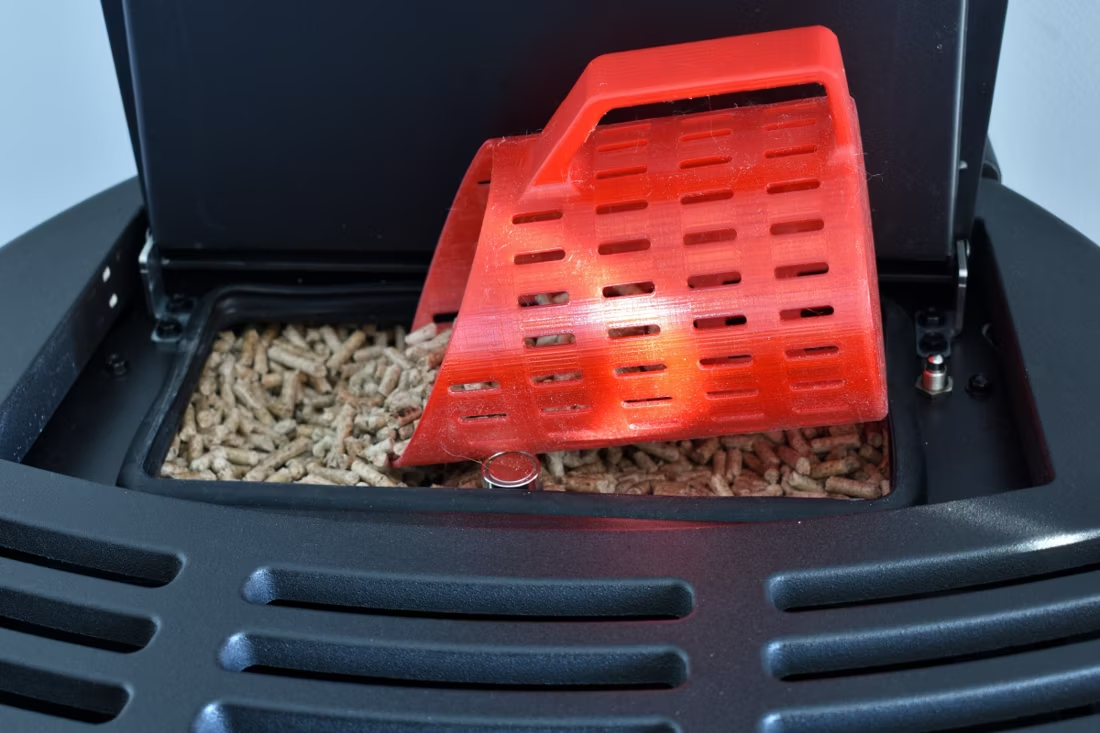
Match the fuel to your life, not the other way around. Wood: lowest fuel cost and total power-outage independence, but you're hauling and stacking. Gas: press a button, set a thermostat, no maintenance to speak of. Pellet: wood economics with automatic feeding, in exchange for weekly cleaning and a need for electricity. Electric: plugs in anywhere with honest supplemental heat. Nobody regrets the fuel that fits how they actually live.
Can I install a fireplace myself?
If you're putting a fire in your house on purpose, it's best to work with an expert. Unless you're genuinely experienced in framing, gas line, vent pipe, and the national code on clearances to combustibles, have a professional do it—and ideally the same company that sells you the fireplace, so warranty, service, and liability all live under one roof.
Can a fireplace actually lower my heating bill?
Yes—by creating a comfort zone. A furnace heats every square foot of the house just to warm the one room you're in; a gas fireplace on low burns roughly a sixth of the gas a typical furnace does. Set the furnace around 55–60 degrees as a baseline, then heat the rooms your family actually uses. Families who heat this way commonly save $20–$60 a month.
Stove and Fireplace Dealers in Butler County
Listings include WhyFire partner dealers, dealers we have verified as authorized for the brands we recommend, and established local businesses that carry hearth products. Every listing shows which one it is. The ones marked Preferred run on WhyFire's software, so they can show you real pricing and book your appointment right here. No manufacturer pays for placement. How we verify dealers →
Mr. Fireplace
31W-Bowling Green
Get matched with a hearth dealer serving Butler County.
Tell us about your home and we'll match you with a trusted local dealer and send a free Project Guide & Parts List—the exact parts, vent kit, and recommended installer for your fireplace project in Butler County.
Find Your Fireplace →