
Find the right hearth for your Bath County home.
Wood, gas, pellet, and electric fireplace resources for Owingsville, Sharpsburg, Salt Lick, and every rural community across Bath County. See what a local hearth retailer can actually install and get a straightforward plan for your project.
Every Project Starts From One of These Five Situations
Foothills heating in Bath County, Kentucky.
Bath County sits in the eastern Kentucky foothills, bordering the Daniel Boone National Forest, with about 5,046 heating degree days and average winter lows near 22°F—a moderate but genuine heating season, cooler than Louisville but nowhere near the extremes of a place like Duluth MN. Oak, hickory, maple, and cherry are the woods most homeowners here already know from their own woodlots or a neighbor's tree service, and plenty of Bath County households have burned one or more of them in a stove for generations. With no air quality non-attainment issues in the county, there's no curtailment schedule to plan around—burn decisions come down to your own supply, chimney condition, and how you want to heat, not a local advisory.
What you'll find on this hub: hearth retailers, service technicians, and fuel suppliers covering Owingsville, Sharpsburg, Salt Lick, and the smaller communities spread across the county's roughly 280 square miles. Pick your fuel below to get specifics—local dealers, typical installation costs, recommended units, and the permit and venting details that apply to a rural Kentucky county like this one. Whether you're replacing an aging wood stove on a farm outside Sharpsburg or adding a gas insert in town, this page is the starting point.
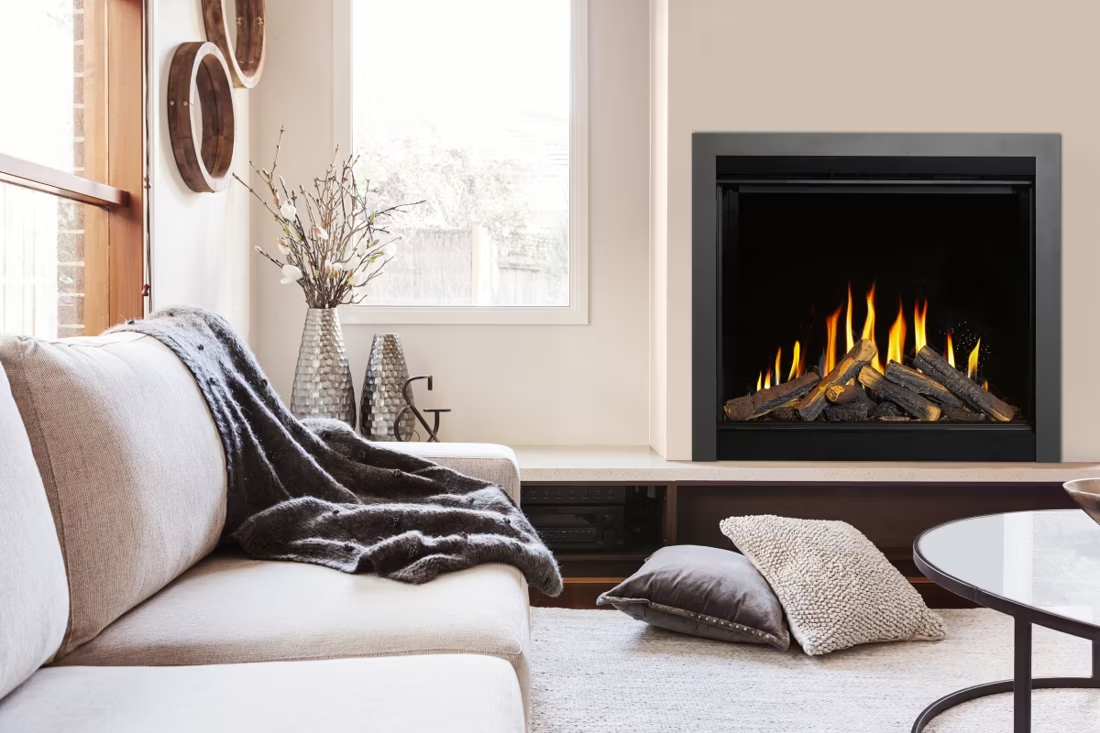
Four fuels. One honest answer for Bath County.
Three steps. No salesperson until you're ready.
Tell us about your project
Your zip code, your situation, and the fuel you're leaning toward—or let the answers point you to one.
See what's actually available
The brands dealers within 100 miles genuinely carry—real options, never a catalog mirage.
Get your dealer & Project Guide
A trusted local dealer, plus the free Project Guide & Parts List that names every component of the job.
Frequently Asked Questions
Which fireplace fuel makes the most sense for a Bath County home?
It depends on your setup and your goals. Wood is the traditional choice here—with oak, hickory, maple, and cherry all growing locally, many Bath County households have access to affordable firewood through their own land, a neighbor, or a local logger, and a good stove can carry a home through the coldest stretch of a Kentucky winter. Gas is the low-maintenance option, mostly propane in this county since natural gas service is limited outside town centers—no wood to split or stack, and it's ready the moment you flip a switch. Pellet stoves split the difference: less labor than wood, with brands like Lignetics and Hamer Pellet Fuel available regionally, though you're depending on bagged fuel rather than a woodlot. Electric fireplaces work well as supplemental heat in a bedroom or den, but with average winter lows around 22°F, they're rarely anyone's primary heat source here. Many homes end up pairing a wood or pellet stove as primary heat with gas or electric in secondary rooms.
Do I need a permit to install a wood stove or gas fireplace in Bath County?
In most cases yes, though requirements are lighter than in larger urban counties. New wood stoves, wood inserts, gas fireplaces, gas inserts, and pellet stoves typically require a building permit through the local jurisdiction, and any gas line work should be done by a licensed gas-fitter with its own permit. If you're cutting your own firewood on Daniel Boone National Forest land rather than sourcing it privately, you'll need a Forest Service cutting permit—check with the district office before you head out with a chainsaw. Electric fireplaces generally don't require a permit unless you're hardwiring a built-in unit into a new circuit. Most local hearth retailers who install wood, gas, or pellet appliances handle the permitting as part of the job, so you typically aren't filing paperwork yourself.
Is there anything I need to know about wood smoke or burning restrictions in Bath County?
Bath County has no air quality non-attainment designation and no winter burn curtailment program, unlike some western counties that deal with basin inversions. That means there's no local advisory system telling you which days to avoid burning. That said, good burning practice still matters for your own chimney and indoor air—seasoned hardwood (oak and hickory both need a full year or more to dry properly) burns cleaner and reduces creosote buildup compared to green wood. If you're installing a new stove, choosing an EPA-certified unit will cut visible smoke and improve efficiency regardless of local regulation.
Can a single hearth retailer near Bath County handle wood, gas, pellet, and electric?
Many retailers serving this part of eastern Kentucky carry at least three of the four fuel types, and some multi-fuel dealers based in Mount Sterling or Winchester stock working displays of wood, gas, and pellet units side by side, which is useful if you're still deciding between them. Smaller, more rural dealers may focus mainly on wood and pellet, since those are the fuels most in demand outside town limits. Electric fireplace lines are less consistently stocked by dealers who specialize in solid-fuel appliances, so if electric is your main interest, it's worth confirming a retailer actually carries and installs those units before assuming they do.
How does fireplace service work for rural properties outside Owingsville or Sharpsburg?
Most technicians covering Bath County are based in or near Owingsville, Mount Sterling, or Winchester and travel out to farms and rural properties throughout the county. Expect a modest trip fee for calls farther from town, and know that scheduling gets tighter as the weather turns cold—booking your annual chimney sweep or gas inspection in late summer or early fall, before the first cold snap, is easier than trying to get someone out during a January freeze. If you're on a wood stove as your only heat source, having a backup plan (a small electric heater, a stocked woodpile) for the days between a service call and any needed repair is worth thinking through ahead of winter.
What does fireplace installation typically cost across fuel types in Bath County?
Costs run in line with typical rural Kentucky pricing. Wood stove or insert installation: roughly $3,800–$8,000 depending on chimney condition and whether new masonry or liner work is needed. Gas fireplace, insert, or stove: roughly $4,000–$9,500, with propane tank and line setup adding to the cost if you don't already have service. Pellet stove or insert: roughly $4,000–$6,500 for a typical install. Electric fireplace: $200–$2,800 for the unit itself, plus $300–$1,000 in labor for anything beyond a simple plug-in placement. Exact numbers depend on your home's chimney or venting situation—the county + fuel pages above go deeper on cost drivers for each fuel.
Can a fireplace actually lower my heating bill?
Yes—by creating a comfort zone. A furnace heats every square foot of the house just to warm the one room you're in; a gas fireplace on low burns roughly a sixth of the gas a typical furnace does. Set the furnace around 55–60 degrees as a baseline, then heat the rooms your family actually uses. Families who heat this way commonly save $20–$60 a month.
Can I install a fireplace myself?
If you're putting a fire in your house on purpose, it's best to work with an expert. Unless you're genuinely experienced in framing, gas line, vent pipe, and the national code on clearances to combustibles, have a professional do it—and ideally the same company that sells you the fireplace, so warranty, service, and liability all live under one roof.
How much should I budget for a fireplace?
For an average home—covering the fireplace, the vent pipe, and basic installation—a budget between $3,900 and $5,500 gives you a lot of options across wood, gas, and pellet. By the time you add finish work, gas line, and electrical, the average complete installation lands between $5,000 and $12,000 all-in. In a remodel or new build, a good rule is to put about 2.5% of the total project cost toward the fireplace.
Does a fireplace add value to my home?
On average, a fireplace adds back to the home about the same amount you spent installing it. Add the monthly savings from heating the rooms you actually use instead of the whole house—often hundreds of dollars a year—and the value case is strong before you even count what a fire does for how your family uses the room.
Stove and Fireplace Dealers in Bath County
Listings include WhyFire partner dealers, dealers we have verified as authorized for the brands we recommend, and established local businesses that carry hearth products. Every listing shows which one it is. The ones marked Preferred run on WhyFire's software, so they can show you real pricing and book your appointment right here. No manufacturer pays for placement. How we verify dealers →
Barnhill Chimney Company
Clark Propane Plus
D & J True Value Hardware
Hardy Gas Company Inc.
Vonderhaar's Factory Outlet
Hardymon Lumber
Jackson Propane-Beattyville
Wood Energy Warehouse
Find your fireplace match in Bath County.
Pick your fuel below and I'll match you with a trusted local dealer and a free Project Guide & Parts List—the parts, the vent kit, and the right recommendation for your Bath County project.
Find Your Fireplace →