
Find the Right Fireplace for Your Allen County Home.
Wood, gas, pellet, and electric fireplace resources for Scottsville and every community across Allen County, Kentucky. Find the right unit for your home and get matched with a trusted local hearth retailer.
Every Project Starts From One of These Five Situations
A moderate, hardwood-rich heating season in Allen County, Kentucky.
Allen County sits in the rolling farm country of south-central Kentucky, just north of the Tennessee line, with Scottsville as the county seat. With a moderate winter heating season and average winter lows near 26°F, the heating season here is real but far milder than what a Duluth, MN or Bismarck, ND homeowner deals with—most Allen County homes need consistent supplemental or primary heat from about November through March, not a six-month siege. The county's oak, hickory, maple, and cherry forests have supplied firewood to local homes for generations, and with no formal air-quality non-attainment designation, there's no curtailment schedule or burn-ban bureaucracy to navigate—just sound chimney maintenance and a properly sized, correctly installed unit.
This hub rolls up everything hearth-related across Allen County: retailers, service technicians, and fuel suppliers serving Scottsville and the surrounding rural communities and crossroads that make up the rest of the county. Pick your fuel below to get into specifics—local dealers, typical installation costs, and the resources that match your project, whether you're heating a farmhouse on hardwood or adding a gas insert for convenience.
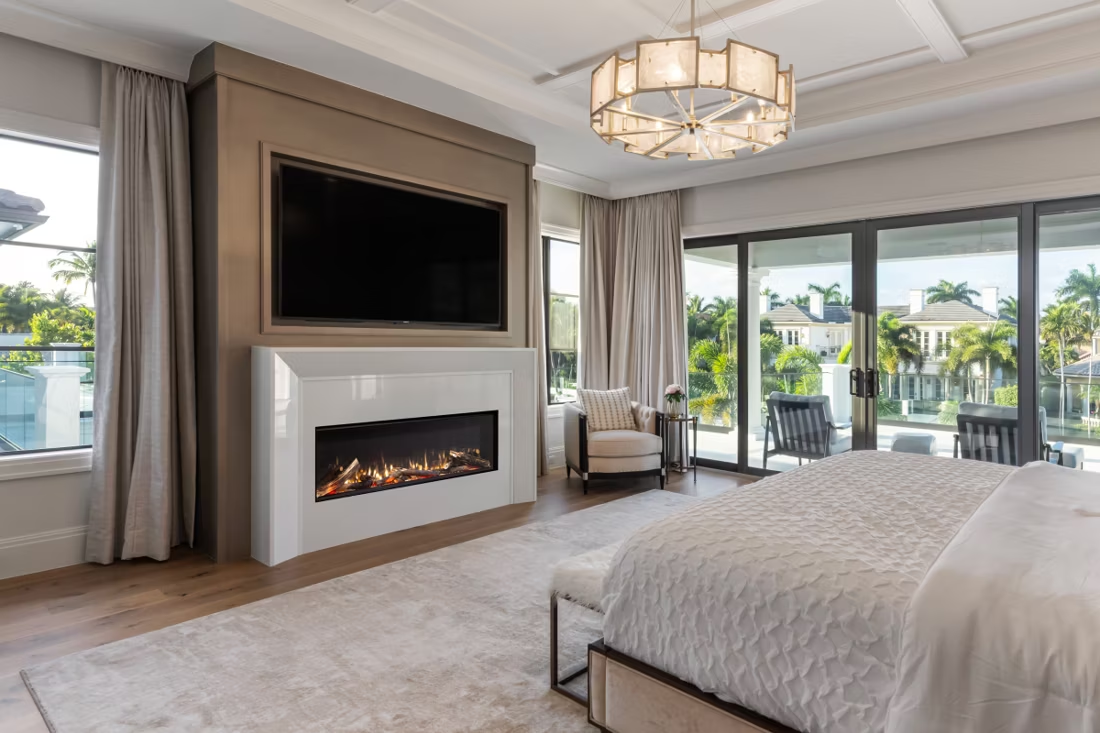
Four fuels. One honest answer for Allen County.
Three steps. No salesperson until you're ready.
Tell us about your project
Your zip code, your situation, and the fuel you're leaning toward—or let the answers point you to one.
See what's actually available
The brands dealers within 100 miles genuinely carry—real options, never a catalog mirage.
Get your dealer & Project Guide
A trusted local dealer, plus the free Project Guide & Parts List that names every component of the job.
Frequently Asked Questions
Which fuel works best in Allen County?
It comes down to your home and how hands-on you want to be. Wood remains a strong, practical choice here—Allen County's oak and hickory forests produce dense, long-burning firewood, and with average winter lows around 26°F, a modern EPA-certified stove or insert handles the season without needing to run around the clock like it would in a place with a much longer, harsher heating season. Gas is the convenience pick, especially for homes relying on propane since natural gas service is limited in much of rural Allen County—no wood-splitting, instant on-demand heat. Pellet is the middle ground, and it's well supported regionally through brands like Lignetics, Hamer Pellet Fuel, and Greenway Renewable Energy. Electric works fine as supplemental heat for a bedroom or den, but given the moderate but real cold spells here, most homeowners still want a primary wood, gas, or pellet unit for the coldest stretches of the season.
Do I need a permit to install a fireplace in Allen County?
In most cases, yes. New wood stoves, wood inserts, gas fireplaces, gas inserts, gas stoves, and pellet stoves typically require a building permit through the local county building office, and wood-burning appliances need to meet current EPA 2020 NSPS emissions standards. Gas installations also call for a separate gas line permit and a licensed gas-fitter to handle the connection safely, especially in areas of the county relying on propane rather than piped natural gas. Electric fireplaces generally skip the permit process unless you're doing a built-in installation that involves new wiring or a dedicated circuit. Most local hearth retailers in and around Scottsville handle the permitting paperwork as part of a standard installation, so it's rarely something a homeowner has to manage solo.
Are there air quality restrictions on wood burning in Allen County?
No—unlike parts of the West that deal with winter inversions and non-attainment status, Allen County has no formal air-quality designation and no mandatory or voluntary burn-curtailment program. That said, good burning practices still matter for both efficiency and chimney health: well-seasoned oak or hickory (moisture content under 20%) burns hotter and cleaner than green wood, and newer EPA-certified stoves put out a fraction of the particulate matter of older pre-1988 units. If you're replacing an old smoke dragon, a certified stove or insert will burn less wood for more heat and cut down on the creosote buildup that drives most chimney fires in this region.
Can one local hearth retailer handle all four fuel types in Allen County?
Allen County is a small, rural county—population around 4,300—so the dealer footprint is thinner than in a larger metro area. Some homeowners find a single retailer near Scottsville that carries wood, gas, and pellet units, while electric or more specialized installs sometimes mean working with a dealer based a short drive away, often toward the Bowling Green area, which serves a wider swath of south-central Kentucky. That's exactly the kind of local knowledge Find My Fireplace exists to sort out—we're a matchmaker, not a retailer ourselves, and we'll point you to the trusted dealer or installer who genuinely covers your fuel and your part of the county rather than making you guess.
How does fireplace service work in a rural county like Allen?
Most chimney sweeps, gas techs, and pellet stove technicians serving Allen County are based either in Scottsville or in the Bowling Green area and travel out to cover the rest of the county. Expect a modest travel fee for calls out to the more rural parts of the county, and expect to book further ahead than you would in a denser market—there simply aren't as many technicians covering this population base. Scheduling annual service in late summer or early fall, before the first cold snap hits, is the easiest way to avoid a multi-week wait during peak heating season.
What's the typical cost range for fireplace installation across fuel types in Allen County?
Costs run in line with typical rural Kentucky pricing. Wood stove or insert installation: roughly $3,800–$8,000 for a standard install, more if new masonry chimney work is involved. Gas fireplace, insert, or stove: roughly $4,000–$10,000 depending on whether propane line work or venting modifications are needed. Pellet stove or insert: roughly $4,000–$7,000 for a typical install. Electric fireplace: $200–$3,000 for the unit itself, plus $300–$1,000 in labor for anything beyond a simple plug-and-play placement. Exact numbers depend on your home's existing venting, chimney condition, and which local dealer handles the work—that's part of what the free Project Guide & Parts List spells out once you're matched.
Does a fireplace add value to my home?
On average, a fireplace adds back to the home about the same amount you spent installing it. Add the monthly savings from heating the rooms you actually use instead of the whole house—often hundreds of dollars a year—and the value case is strong before you even count what a fire does for how your family uses the room.
Can I install a fireplace myself?
If you're putting a fire in your house on purpose, it's best to work with an expert. Unless you're genuinely experienced in framing, gas line, vent pipe, and the national code on clearances to combustibles, have a professional do it—and ideally the same company that sells you the fireplace, so warranty, service, and liability all live under one roof.
What is an in-home preview and do I need one?
It's a visit where a hearth professional measures your space, confirms the model you picked actually works in your home, and walks the specs—framing, gas line, venting, finish work—before anything is ordered. Some details you just can't know until you see the house. Never make a down payment without one; it's the single most-skipped step that burns buyers.
How much should I budget for a fireplace?
For an average home—covering the fireplace, the vent pipe, and basic installation—a budget between $3,900 and $5,500 gives you a lot of options across wood, gas, and pellet. By the time you add finish work, gas line, and electrical, the average complete installation lands between $5,000 and $12,000 all-in. In a remodel or new build, a good rule is to put about 2.5% of the total project cost toward the fireplace.
Stove and Fireplace Dealers in Allen County
Listings include WhyFire partner dealers, dealers we have verified as authorized for the brands we recommend, and established local businesses that carry hearth products. Every listing shows which one it is. The ones marked Preferred run on WhyFire's software, so they can show you real pricing and book your appointment right here. No manufacturer pays for placement. How we verify dealers →
Allen County Farmer's Service
31W-Bowling Green
Mr. Fireplace
Webbtown Propane Company
Farmer's Energy Propane Plus
Find your fireplace project in Allen County.
Tell us about your home and pick your fuel, and we'll match you with a trusted local dealer and send over a free Project Guide & Parts List—the exact parts, vent kit, and recommended installer for your Allen County project.
Find Your Fireplace →