
Find your fireplace match in Stevens County.
From Hugoton to Moscow, get matched with a local dealer who knows what actually works on the southwest Kansas plains—and what fuel setup fits your home and budget.
Every Project Starts From One of These Five Situations
Flat plains, 4,769 heating degree days, and a county sitting on one of the largest gas fields in North America.
Stevens County sits on the shortgrass prairie of far southwest Kansas, a landscape with almost no native tree cover. What oak, hickory, and osage orange you do see are mostly farmstead windbreaks—shelterbelts planted a generation or two ago under Dust Bowl-era conservation programs, not managed woodland. There's no national forest and no public-land firewood permit office anywhere near Hugoton or Moscow, which is the practical reason wood never became a heating fuel here the way it did in forested parts of the country. Winters are real but not extreme: average lows near 20°F and 4,769 heating degree days put the county well below the heating load of a place like Fargo, North Dakota, though the season still runs from roughly October through April.
What defines this county's heating story is underfoot, not overhead: Stevens County sits atop the Hugoton Gas Field, one of the largest natural gas fields ever discovered in North America. That geology means piped natural gas is the default fuel for nearly every home here, and it's why gas fireplaces and inserts are the standard, go-to choice for local retailers. Electric fireplaces are common too, mostly as supplemental units in bedrooms or additions. Wood and pellet appliances are genuinely rare—there's no local firewood industry and no pellet mill within the region, so pellet fuel has to be trucked in from distributors like Lignetics or Indeck Energy Services rather than picked up at a local store. There are no air-quality non-attainment concerns or burn restrictions in this county, so if you still want a wood stove for a shop or a hunting cabin, nothing regulatory stands in your way—it's a supply-chain and lead-time question, not a permitting one. This hub rolls up hearth retailers, techs, and fuel suppliers across the whole county so you can find what's actually installable near you.
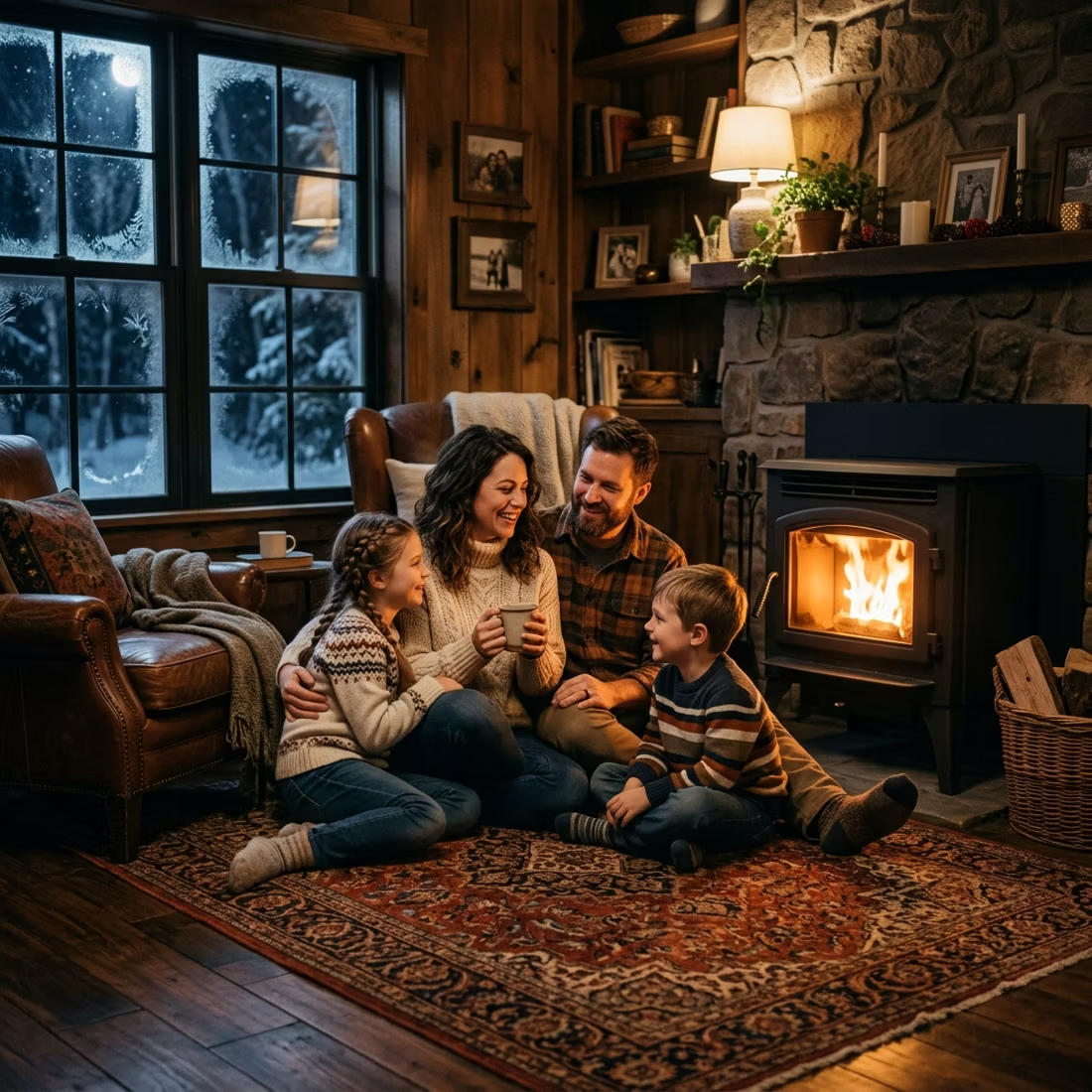
Four fuels. One honest answer for Stevens County.
Three steps. No salesperson until you're ready.
Tell us about your project
Your zip code, your situation, and the fuel you're leaning toward—or let the answers point you to one.
See what's actually available
The brands dealers within 100 miles genuinely carry—real options, never a catalog mirage.
Get your dealer & Project Guide
A trusted local dealer, plus the free Project Guide & Parts List that names every component of the job.
Frequently Asked Questions
Which fireplace fuel makes the most sense in Stevens County?
For most households here, it's gas or electric, and it isn't close. Stevens County sits directly on top of the Hugoton Gas Field, so piped natural gas reaches the overwhelming majority of homes in and around Hugoton and Moscow, and a gas fireplace or insert is usually the cheapest fuel to run through a 4,769-heating-degree-day winter. Electric fireplaces are common as a supplemental unit—a bedroom, a sunroom, a finished basement. Wood and pellet stoves exist here, but they're the exception: this is shortgrass prairie country with no national forest and no commercial firewood trade, so anyone running one is usually doing it by choice on a rural property rather than out of local convention.
Is wood heat even realistic out here given how few trees there are?
It's uncommon, and I'd rather tell you that plainly than pretend otherwise. Stevens County has almost no native forest—the oak, hickory, and osage orange you see are mostly farmstead shelterbelts planted decades ago as windbreaks, not a managed timber resource. Some rural homeowners still cut fallen osage orange, which burns extremely hot and dense, for occasional use in a shop stove or an outbuilding, but there's no active firewood industry supplying it and no public-land cutting permits nearby the way there would be near a national forest. The upside is that Stevens County has no air-quality non-attainment status and no burn-curtailment days, so if you want a wood stove for a cabin or workshop, there's no regulatory hurdle—just a longer search for fuel and a dealer willing to install it.
Can I actually get pellets delivered in Stevens County?
Not off a store shelf, no—there's no pellet mill or dedicated pellet retailer serving this part of southwest Kansas, which is why pellet fuel is treated as not-applicable for most local dealers. That said, regional distributors like Lignetics and Indeck Energy Services do move product through this part of the plains, usually via farm-supply or co-op channels, so a pellet stove owner here typically orders by the pallet ahead of winter rather than picking up a few bags as needed. If you're set on pellet heat, plan your fuel supply before the season starts, not during a cold snap.
Do I need a permit to install a gas fireplace in Stevens County?
Yes. New gas line work and appliance installs go through the county's building permit process, and the gas connection itself needs to be run by a licensed gas fitter, particularly since so many Stevens County homes tie directly into infrastructure built around the Hugoton Field. Electric fireplace installs usually skip the permit step unless you're adding a dedicated circuit for a built-in unit. Most retailers we match homeowners with handle the permitting and inspection scheduling as part of the install, so it's rarely something you're chasing down yourself.
What does a fireplace installation typically cost in Stevens County?
Gas fireplaces, inserts, and stoves generally run $4,500–$11,000 installed, with the wide range driven mostly by how much gas-line work is involved and whether you're converting an existing masonry opening or starting fresh. Electric fireplaces are far cheaper at the low end—$200–$3,000 for the unit—plus $400–$1,200 in labor if you're going beyond a simple plug-in placement into a built-in or a new circuit. Because wood and pellet units are special-order here, expect their installed cost to run higher than national averages once you factor in freight for the appliance and any custom venting work.
How does service and maintenance work in a county this small?
With a population under 4,500 spread across Hugoton, Moscow, and the surrounding farm country, Stevens County doesn't support a large bench of in-town hearth technicians, so service crews for gas inspections, electric installs, and the occasional wood chimney sweep often travel in from Liberal or Garden City. That's manageable most of the year, but scheduling gets tighter once temperatures drop in late fall, so booking your annual gas fireplace inspection in late summer—before the first cold snap—is the easiest way to avoid a multi-week wait.
What is an in-home preview and do I need one?
It's a visit where a hearth professional measures your space, confirms the model you picked actually works in your home, and walks the specs—framing, gas line, venting, finish work—before anything is ordered. Some details you just can't know until you see the house. Never make a down payment without one; it's the single most-skipped step that burns buyers.
How much should I budget for a fireplace?
For an average home—covering the fireplace, the vent pipe, and basic installation—a budget between $3,900 and $5,500 gives you a lot of options across wood, gas, and pellet. By the time you add finish work, gas line, and electrical, the average complete installation lands between $5,000 and $12,000 all-in. In a remodel or new build, a good rule is to put about 2.5% of the total project cost toward the fireplace.
Can a fireplace actually lower my heating bill?
Yes—by creating a comfort zone. A furnace heats every square foot of the house just to warm the one room you're in; a gas fireplace on low burns roughly a sixth of the gas a typical furnace does. Set the furnace around 55–60 degrees as a baseline, then heat the rooms your family actually uses. Families who heat this way commonly save $20–$60 a month.
Does a fireplace add value to my home?
On average, a fireplace adds back to the home about the same amount you spent installing it. Add the monthly savings from heating the rooms you actually use instead of the whole house—often hundreds of dollars a year—and the value case is strong before you even count what a fire does for how your family uses the room.
Stove and Fireplace Dealers in Stevens County
Listings include WhyFire partner dealers, dealers we have verified as authorized for the brands we recommend, and established local businesses that carry hearth products. Every listing shows which one it is. The ones marked Preferred run on WhyFire's software, so they can show you real pricing and book your appointment right here. No manufacturer pays for placement. How we verify dealers →
Premier Homes
Builders FirstSource-Garden City, Ks
Get matched with a local Stevens County dealer.
Tell us about your home and we'll put together a free Project Guide & Parts List—the right unit for a Stevens County winter, the vent kit it needs, and the local dealer we recommend for your project.
Find Your Fireplace →