
Find the right fireplace for your Pratt County home.
Wood, gas, pellet, and electric fireplace resources for every town in Pratt County—from Pratt to Cullison, Iuka, Coats, and Byers. Find the right unit for Kansas winters and connect with a trusted local hearth retailer.
Every Project Starts From One of These Five Situations
Plains heating in Pratt County, Kansas.
Pratt County sits in south-central Kansas, wheat and cattle country along the Ninnescah River, roughly halfway between Wichita and Dodge City. Winters are real here—winter lows average 19°F, the county logs just under 5,000 heating degree days a year, and Arctic cold fronts can drop temperatures fast across the open plains with almost nothing to block the wind (Pratt County's heating degree day count is less than half of what a place like Fargo, ND sees, but the lack of windbreaks makes a 20-degree day feel far colder than the number suggests). Wood heat has deep roots in this landscape: the osage orange hedgerows planted across the county during the Dust Bowl era turned out to be some of the hottest, longest-burning firewood in North America, and oak and hickory out of the river bottoms round out what most local wood-burners split and stack.
What you'll find on this hub: hearth retailers, service technicians, and fuel suppliers serving every corner of the county—from the county seat of Pratt out to Cullison, Iuka, Coats, and Byers. Pick your fuel below to get into the specifics: local dealers, realistic installation costs, and the resources that fit your project, whether you're heating a farmhouse outside Iuka or a house in town in Pratt.
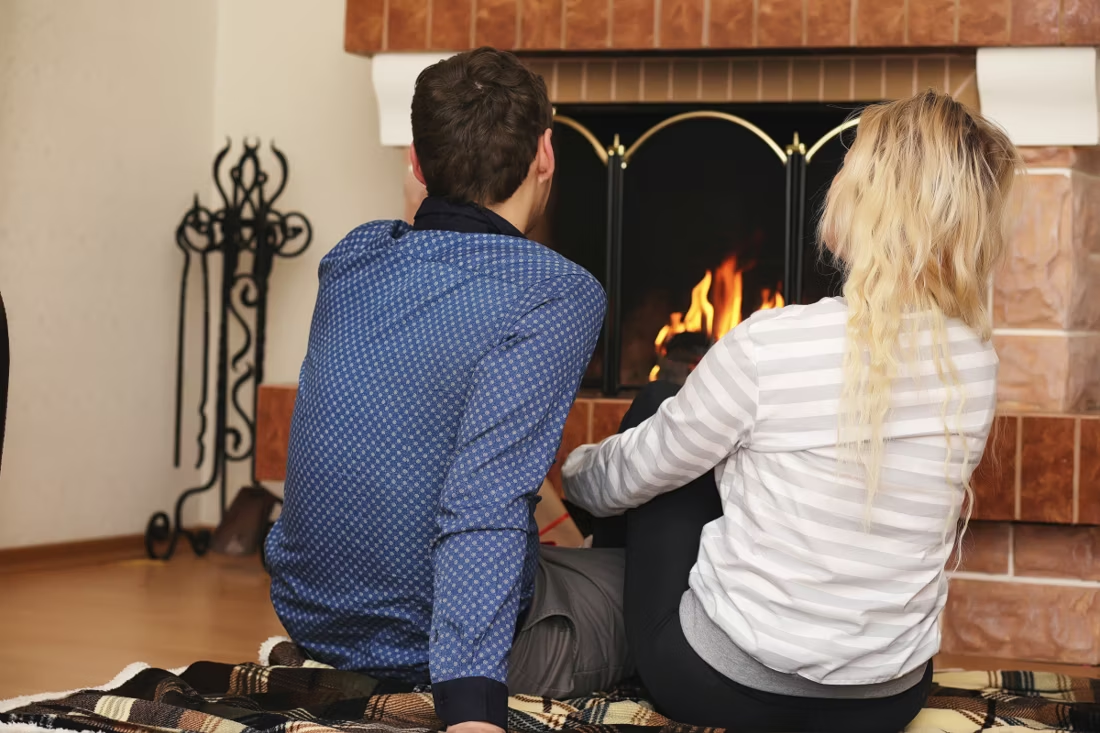
Four fuels. One honest answer for Pratt County.
Three steps. No salesperson until you're ready.
Tell us about your project
Your zip code, your situation, and the fuel you're leaning toward—or let the answers point you to one.
See what's actually available
The brands dealers within 100 miles genuinely carry—real options, never a catalog mirage.
Get your dealer & Project Guide
A trusted local dealer, plus the free Project Guide & Parts List that names every component of the job.
Frequently Asked Questions
Which fuel works best in Pratt County?
It depends on your home and your priorities, but Pratt County's mix of long open winters and abundant local hardwood makes wood a genuinely competitive option here. Osage orange—the dense, thorny hedge trees planted across this part of Kansas as windbreaks during the Dust Bowl era—burns hotter and longer than almost any other wood in North America, and it's often available for little more than the cost of cutting and hauling, alongside oak and hickory out of the Ninnescah River bottoms. Wood stoves handle Pratt County's cold fronts well and keep working through the ice storms that occasionally take out rural power lines. Gas is the low-maintenance choice—natural gas service is available in the city of Pratt, while most farms and homes outside town run on propane; either way, gas fireplaces give instant heat with no wood to split or stack. Pellet stoves are a solid middle path—Lignetics and Indeck Energy Services both distribute pellets into this part of Kansas, so fuel supply isn't the challenge it can be in more remote counties. Electric fireplaces work well as supplemental heat in a bedroom or addition, but with winter lows averaging 19°F and nearly 5,000 heating degree days a year, they're rarely anyone's whole-house solution. Most Pratt County homeowners end up combining a wood or pellet appliance as primary heat with gas or electric in secondary rooms.
Do I need a permit to install a fireplace in Pratt County?
Yes, in most cases. New wood stoves, wood inserts, gas fireplaces, gas inserts, gas stoves, and pellet stoves typically require a building permit, and gas installations need a separate gas-line permit along with a licensed installer for the gas connection. If you live inside city limits—Pratt, Cullison, Iuka, Coats, or Byers—check with your city hall first, since most incorporated towns in the county issue their own building permits. Outside city limits, permitting runs through the Pratt County building and zoning office. Electric fireplaces usually don't require a permit unless you're hardwiring a built-in unit into a new circuit. Most hearth retailers serving Pratt County handle the permit paperwork as part of the installation, so it's rarely something a homeowner has to chase down alone.
Are there air quality restrictions on wood burning in Pratt County?
Not in the way some counties deal with it. Pratt County has no reported non-attainment status, no winter inversion pattern, and no mandatory or voluntary burn-curtailment program—the flat, open plains here don't trap smoke the way a mountain basin does. That said, new wood stove installations are still expected to meet EPA 2020 NSPS certification, which matters for efficiency and creosote buildup as much as for emissions. Given how dense osage orange and hickory burn, a certified, properly-sized stove will pull more usable heat out of less wood than an old uncertified unit—worth considering even without a regulatory push behind it.
Can one local hearth retailer handle all four fuel types?
With a county population under 7,500, Pratt County doesn't have a hearth retailer on every corner—most homeowners work with a dealer based in or near the city of Pratt, or make the drive to a larger multi-fuel retailer in Hutchinson or Wichita for specialty installs. Many of the smaller local shops carry wood and pellet as their core lines and can special-order gas units, while full four-fuel showrooms with wood, gas, pellet, and electric displays side by side tend to show up in the bigger regional markets an hour or so away. If you're cross-shopping fuels, ask any local dealer up front which types they install directly versus which they'd need to subcontract or refer out—in a rural county like this, that referral network is often how the whole system actually works.
How does service work in rural areas of Pratt County?
Service in Pratt County generally means a technician traveling out from Pratt itself, or in some cases from Hutchinson or Wichita, to reach outlying farms and the smaller towns—Cullison, Iuka, Coats, Byers, and the crossroads in between. Expect a modest trip charge for calls well outside town, and expect scheduling to tighten up fast once the first hard freeze hits—booking an annual chimney sweep or gas inspection in September or October, ahead of the coldest stretch, is far easier than trying to get someone out during a January cold front. If you're heating a rural property with wood or pellet as your primary source, keeping a backup fuel on hand—a propane heater, extra pellets, or seasoned osage orange split and ready—is common sense given how far help may have to travel.
What's the typical cost range for fireplace installation across all fuel types in Pratt County?
Costs run in familiar ranges for this part of Kansas, though rural installs can push higher once travel and chimney work are factored in. Wood stove or insert: roughly $4,000–$8,500 installed, more if new masonry or a full chimney liner is needed. Gas fireplace, insert, or stove: about $4,000–$10,000, with propane conversions and line work pushing toward the higher end for homes outside city gas service. Pellet stove or insert: typically $4,000–$7,000. Electric fireplace: $200–$2,500 for the unit itself, plus $300–$1,000 in labor for anything beyond a simple plug-in installation. Exact numbers depend on your home's existing venting, chimney condition, and how far a crew has to travel—a local dealer can give you a firm number once they've seen the site.
Wood, gas, pellet, or electric—how do I choose?
Match the fuel to your life, not the other way around. Wood: lowest fuel cost and total power-outage independence, but you're hauling and stacking. Gas: press a button, set a thermostat, no maintenance to speak of. Pellet: wood economics with automatic feeding, in exchange for weekly cleaning and a need for electricity. Electric: plugs in anywhere with honest supplemental heat. Nobody regrets the fuel that fits how they actually live.
Can I install a fireplace myself?
If you're putting a fire in your house on purpose, it's best to work with an expert. Unless you're genuinely experienced in framing, gas line, vent pipe, and the national code on clearances to combustibles, have a professional do it—and ideally the same company that sells you the fireplace, so warranty, service, and liability all live under one roof.
I know I want a fireplace—where do I actually start?
Do two things today: snap a photo of the wall or fireplace you want to transform, and take a tape measure to the space—width, height, depth. Those two artifacts answer most of a hearth professional's first questions. Then settle fuel (wood, gas, pellet, or electric) and set a realistic budget: $3,900–$5,500 covers fireplace, vent, and basic install for most homes.
Can a fireplace actually lower my heating bill?
Yes—by creating a comfort zone. A furnace heats every square foot of the house just to warm the one room you're in; a gas fireplace on low burns roughly a sixth of the gas a typical furnace does. Set the furnace around 55–60 degrees as a baseline, then heat the rooms your family actually uses. Families who heat this way commonly save $20–$60 a month.
Stove and Fireplace Dealers in Pratt County
Listings include WhyFire partner dealers, dealers we have verified as authorized for the brands we recommend, and established local businesses that carry hearth products. Every listing shows which one it is. The ones marked Preferred run on WhyFire's software, so they can show you real pricing and book your appointment right here. No manufacturer pays for placement. How we verify dealers →
Home Lumber & Supply
Rube's
Ebeling Pools Inc
Get matched with a local dealer in Pratt County.
Pick your fuel below and we'll match you with a trusted local dealer and send a free Project Guide & Parts List—the exact parts, including the vent kit, for your project.
Find Your Fireplace →