
Fireplace heat built for Osborne County winters.
Wood, gas, pellet, and electric fireplace resources for every town in Osborne County—from the county seat of Osborne to Downs, Natoma, Alton, and Portis. Find the right unit for a 5,584-HDD Kansas winter and connect with a trusted local hearth retailer.
Every Project Starts From One of These Five Situations
Wood-heat traditions run deep across Osborne County, Kansas.
Osborne County sits in the Solomon River valley of north-central Kansas, a landscape of wheat and sorghum fields, cattle pasture, and the shelterbelt hedgerows planted across the Great Plains in the early 20th century. Winters here are real but not extreme—the average low runs around 14°F, and the county logs roughly 5,584 heating degree days a season, noticeably milder than the 9,000-plus HDD winters of Fargo, North Dakota, but still cold enough that a home needs genuine heat capacity for weeks at a stretch. Oak and hickory come off farm woodlots and river-bottom timber, while osage orange—the same dense hedge wood planted for generations as living fence along Kansas section lines—burns hot and long once it's had a season to dry out. It's some of the densest, longest-burning firewood available in this part of the state.
With just over 2,750 residents spread across the county, Osborne County doesn't have a dozen hearth showrooms—but it does have local retailers, service technicians, and fuel suppliers who cover the towns and farmsteads from Osborne itself out to Downs, Natoma, Alton, Portis, and the unincorporated crossroads in between. Pick your fuel below to see local dealers, typical installation costs, and the specifics for your project—whether you're heating a farmhouse on the Solomon River or a home right on Main Street in Osborne.
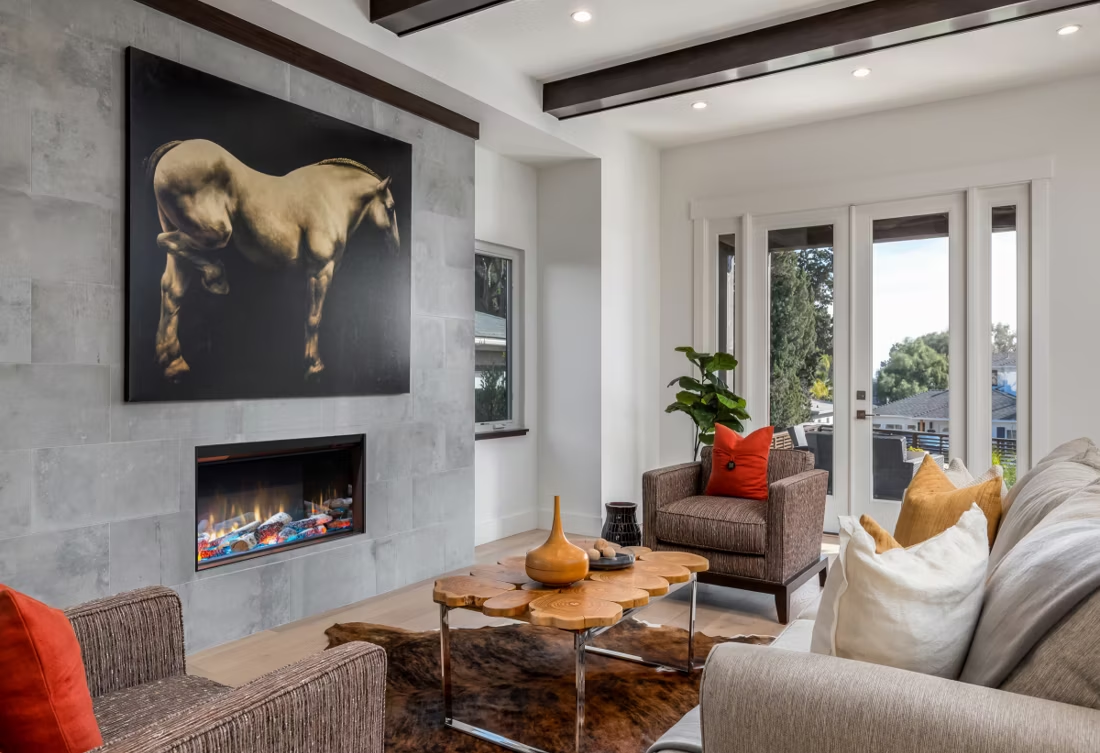
Four fuels. One honest answer for Osborne County.
Three steps. No salesperson until you're ready.
Tell us about your project
Your zip code, your situation, and the fuel you're leaning toward—or let the answers point you to one.
See what's actually available
The brands dealers within 100 miles genuinely carry—real options, never a catalog mirage.
Get your dealer & Project Guide
A trusted local dealer, plus the free Project Guide & Parts List that names every component of the job.
Frequently Asked Questions
Which fireplace fuel works best in Osborne County?
It depends on what's already at your house and how much workload you want to take on. Wood is a strong, low-cost option here—oak and hickory come off local woodlots, and osage orange (the old hedge-fence tree planted across this part of Kansas) burns dense and long once seasoned, which matters when overnight lows sit in the teens. Propane is the practical choice for most rural Osborne County homes, since piped natural gas service is limited outside the larger towns—a propane fireplace or insert gives you instant heat without hauling wood. Pellet stoves are a middle path, with Lignetics and Indeck Energy Services bags available through regional farm-supply channels, though you're relying on a supply chain rather than your own woodlot. Electric fireplaces work well as supplemental heat in a bedroom or sunroom but won't carry a home through a Kansas cold front on their own. Plenty of Osborne County households run wood or propane as primary heat with electric backup in one or two rooms.
Do I need a permit to install a fireplace in Osborne County?
Requirements vary by whether you're inside city limits—Osborne, Downs, Natoma, Alton, and Portis each handle building permits locally—or out in unincorporated Osborne County, where permitting typically runs through the county's building or zoning office. Regardless of jurisdiction, any new wood stove or insert sold today has to meet EPA emissions standards, and gas work involving a new line or connection generally needs a licensed propane installer or gas fitter. Electric fireplaces usually skip the permit process unless you're hardwiring a built-in unit into a new circuit. Most local hearth retailers pull the necessary permits as part of the installation, so it's worth asking upfront rather than tracking down the paperwork yourself.
Are there air quality restrictions on wood burning in Osborne County?
No. Osborne County has no reported air quality non-attainment issues, wildfire smoke advisories, or winter inversion problems—unlike basin regions in the mountain West, this stretch of the Solomon River valley doesn't trap smoke the way a bowl-shaped valley does. That means there are no curtailment days or burn bans tied to air quality here, and wood heat remains a straightforward, unrestricted option. The main consideration is simply burning well-seasoned oak, hickory, or osage orange in a properly sized, EPA-certified appliance so you get clean, efficient combustion rather than a smoky, inefficient fire.
Can I find a dealer that carries all four fuel types in Osborne County?
It's worth checking, but with a county population under 3,000, don't assume a full multi-fuel showroom sits right in town. Many Osborne County homeowners end up working with a hearth retailer based in a larger regional hub—places like Hays or Salina—that travels into the county for consultations and installs, alongside any local dealers who focus on one or two fuels. If you're cross-shopping wood, propane, pellet, and electric, ask a retailer directly which lines they stock versus which they can special-order; in a rural market like this, availability can vary more than it would in a bigger city.
How does fireplace service work in a rural county like this?
Most chimney sweeps, gas techs, and pellet service technicians who cover Osborne County are based outside it—typically in Hays, Beloit, or another regional center—and drive in to reach Osborne, Downs, Natoma, Alton, and Portis. Expect a modest trip fee for farmstead calls well outside town, and expect to book ahead: rural service routes fill up fast in the fall as everyone tries to get their wood stove swept or their propane insert checked before the first hard freeze. Scheduling your annual service in August or September, rather than waiting for the first cold snap, is the easiest way to avoid a multi-week wait.
What does fireplace installation typically cost across fuel types in Osborne County?
Costs run in line with typical Midwest rural installs. Wood stove or insert: roughly $4,000–$8,500, more if new chimney chase work is needed. Propane fireplace, insert, or stove: roughly $4,000–$9,500, with the range driven mostly by whether an existing propane line and tank setup is already in place. Pellet stove or insert: roughly $4,000–$7,000 for a standard install. Electric fireplace: $200–$2,500 for the unit itself, plus $300–$1,000 in labor for anything beyond a plug-in placement. Ask your local dealer for a written estimate that separates unit cost, venting or gas-line work, and labor—that breakdown makes it much easier to compare quotes.
Wood, gas, pellet, or electric—how do I choose?
Match the fuel to your life, not the other way around. Wood: lowest fuel cost and total power-outage independence, but you're hauling and stacking. Gas: press a button, set a thermostat, no maintenance to speak of. Pellet: wood economics with automatic feeding, in exchange for weekly cleaning and a need for electricity. Electric: plugs in anywhere with honest supplemental heat. Nobody regrets the fuel that fits how they actually live.
Can a fireplace actually lower my heating bill?
Yes—by creating a comfort zone. A furnace heats every square foot of the house just to warm the one room you're in; a gas fireplace on low burns roughly a sixth of the gas a typical furnace does. Set the furnace around 55–60 degrees as a baseline, then heat the rooms your family actually uses. Families who heat this way commonly save $20–$60 a month.
Can I install a fireplace myself?
If you're putting a fire in your house on purpose, it's best to work with an expert. Unless you're genuinely experienced in framing, gas line, vent pipe, and the national code on clearances to combustibles, have a professional do it—and ideally the same company that sells you the fireplace, so warranty, service, and liability all live under one roof.
I know I want a fireplace—where do I actually start?
Do two things today: snap a photo of the wall or fireplace you want to transform, and take a tape measure to the space—width, height, depth. Those two artifacts answer most of a hearth professional's first questions. Then settle fuel (wood, gas, pellet, or electric) and set a realistic budget: $3,900–$5,500 covers fireplace, vent, and basic install for most homes.
Stove and Fireplace Dealers in Osborne County
Listings include WhyFire partner dealers, dealers we have verified as authorized for the brands we recommend, and established local businesses that carry hearth products. Every listing shows which one it is. The ones marked Preferred run on WhyFire's software, so they can show you real pricing and book your appointment right here. No manufacturer pays for placement. How we verify dealers →
Heartland Building Center
Pestinger Hearth Products
Rube's
Alan Witte Sales
Find your fireplace in Osborne County.
Tell us about your project and we'll match you with a trusted local dealer and send a free Project Guide & Parts List—the exact parts, including the vent kit, for your fuel and your Osborne County home.
Find Your Fireplace →