
Steady heat for the High Plains winters of Norton County.
Wood, gas, pellet, and electric fireplace resources for Norton, Almena, Lenora, Edmond, and the farms and ranches between them. Find the right unit for your home and connect with a trusted local hearth retailer.
Every Project Starts From One of These Five Situations
Wind, wide-open plains, and long heating seasons in Norton County, Kansas.
Norton County sits on the rolling High Plains of northwest Kansas, with a heating season comparable to Fargo, North Dakota, more than most people expect from Kansas. Average winter lows near 14°F, and the open terrain means wind chill often does as much damage as the thermometer reading. Oak, hickory, and osage orange are the wood species most local burners rely on—osage orange in particular is prized here for its dense, long-burning coals, a Plains-country tradition that goes back generations on farms and ranches across the county.
This hub covers the whole county: Norton itself, plus Almena, Lenora, Edmond, and the unincorporated farm communities that make up most of Norton County's roughly 3,500 residents. Pick your fuel below to see local dealers, typical installation costs, and recommended units for your specific project. Whether you're heating a farmhouse outside Almena or a home in town, this is the starting point.
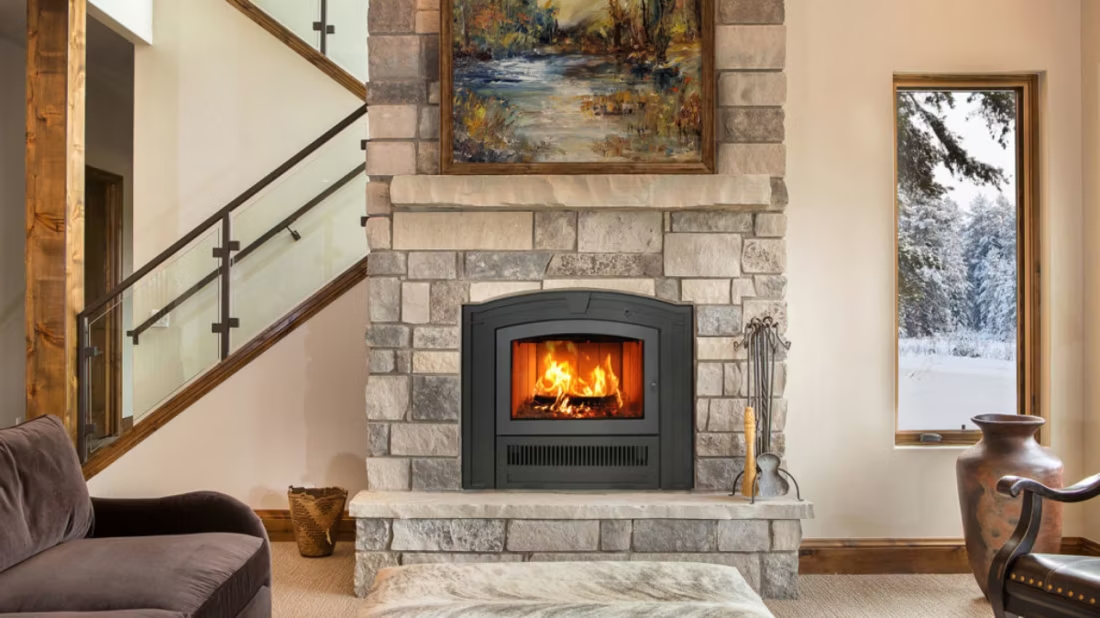
Four fuels. One honest answer for Norton County.
Three steps. No salesperson until you're ready.
Tell us about your project
Your zip code, your situation, and the fuel you're leaning toward—or let the answers point you to one.
See what's actually available
The brands dealers within 100 miles genuinely carry—real options, never a catalog mirage.
Get your dealer & Project Guide
A trusted local dealer, plus the free Project Guide & Parts List that names every component of the job.
Frequently Asked Questions
Which fuel works best in Norton County?
It depends on your home and how you use it. Wood is the traditional choice for rural Norton County—osage orange and oak burn long and hot, and a wood stove keeps working when winter storms knock out power on the open plains, which happens more than most homeowners would like. Gas is the low-maintenance option where propane or natural gas service reaches—no wood-splitting, consistent heat, good for daily convenience. Pellet stoves are a middle path: wood-like heat without the labor of cutting and stacking, though pellet supply (Lignetics, Indeck Energy Services) typically comes from dealers outside the immediate county, so it's worth confirming delivery before committing. Electric is best treated as supplemental—a bedroom or sunroom unit, not primary heat through a Norton County winter with lows in the mid-teens. Many farmhouses here run wood or propane as primary heat with a smaller electric unit for a room that doesn't get enough BTUs otherwise.
Do I need a permit to install a fireplace in Norton County?
In most cases, yes, though requirements are lighter here than in more urban counties. New wood stoves, wood inserts, gas fireplaces, gas inserts, gas stoves, and pellet stoves generally require a building permit, and gas work requires a licensed gas-fitter for the line connection. Within city limits—Norton, Almena, Lenora, Edmond—permits typically run through the city office; outside city limits, unincorporated Norton County has fewer inspection requirements, though a permit is still often needed for insurance purposes. Electric fireplaces usually don't require a permit unless you're hardwiring a built-in unit into a new circuit. Most local hearth retailers handle the permitting paperwork as part of the installation, so you rarely have to navigate it alone.
Are there air quality restrictions on wood burning in Norton County?
No—Norton County has no air quality non-attainment status and no burn-ban program tied to inversions or wildfire smoke, unlike parts of the West. Wood burning here is regulated mainly through standard building code (EPA-certified stoves for new installs) rather than daily air-quality advisories. That said, given the county's open, windy terrain, chimney draft and spark arrestor maintenance matter more here than smoke concerns—high plains wind can push embers and affect draft performance, so annual chimney inspection is worth doing regardless of any regulatory requirement.
Can one local hearth retailer handle all four fuel types?
In a county this size, multi-fuel dealers are the norm rather than the exception—with roughly 3,500 residents spread across Norton County, a retailer that only sold one fuel type would struggle to stay in business. Most dealers serving the area carry wood stoves and inserts alongside gas units, and many also stock at least one pellet model, with electric units as an easy add-on since they need no venting. If a dealer specializes narrowly, it's usually because they're a fuel supplier (firewood or pellets) rather than a full hearth retailer, or because they're focused on propane appliances specifically. Ask directly what's in stock or available for order—rural dealers here often special-order units rather than keep large showroom inventory.
How does service work in a rural county like Norton?
Most technicians covering Norton County are based in Norton itself or drive in from a neighboring county, so expect to schedule ahead rather than get same-day service, especially outside the town of Norton. Farms and ranches around Almena, Lenora, and Edmond should plan for a modest travel fee on service calls—often folded into a minimum service charge rather than itemized separately. Because winter storms on the plains can take out power and roads for days, it's smart to schedule wood chimney sweeps and gas unit inspections in September or October, before the first cold front, rather than waiting until a unit is needed and a technician's calendar is already full.
What's the typical cost range for fireplace installation across all fuel types in Norton County?
Costs in Norton County tend to run at or slightly below national averages, reflecting lower regional labor rates. Wood stove or insert installation: roughly $4,000–$8,000 for a typical install, more if new chimney construction is needed on an older farmhouse. Gas fireplace, insert, or stove: roughly $4,000–$9,500, with propane conversions often on the lower end where a tank and line are already in place. Pellet stove or insert: roughly $4,000–$6,500 for most installs. Electric fireplace: $200–$2,500 for the unit itself, plus $300–$1,000 in labor for anything beyond a simple plug-in wall unit. For a specific plan tied to your home, the county + fuel pages above break down costs by fuel type in more detail.
Wood, gas, pellet, or electric—how do I choose?
Match the fuel to your life, not the other way around. Wood: lowest fuel cost and total power-outage independence, but you're hauling and stacking. Gas: press a button, set a thermostat, no maintenance to speak of. Pellet: wood economics with automatic feeding, in exchange for weekly cleaning and a need for electricity. Electric: plugs in anywhere with honest supplemental heat. Nobody regrets the fuel that fits how they actually live.
How much should I budget for a fireplace?
For an average home—covering the fireplace, the vent pipe, and basic installation—a budget between $3,900 and $5,500 gives you a lot of options across wood, gas, and pellet. By the time you add finish work, gas line, and electrical, the average complete installation lands between $5,000 and $12,000 all-in. In a remodel or new build, a good rule is to put about 2.5% of the total project cost toward the fireplace.
Does a fireplace add value to my home?
On average, a fireplace adds back to the home about the same amount you spent installing it. Add the monthly savings from heating the rooms you actually use instead of the whole house—often hundreds of dollars a year—and the value case is strong before you even count what a fire does for how your family uses the room.
Can I install a fireplace myself?
If you're putting a fire in your house on purpose, it's best to work with an expert. Unless you're genuinely experienced in framing, gas line, vent pipe, and the national code on clearances to combustibles, have a professional do it—and ideally the same company that sells you the fireplace, so warranty, service, and liability all live under one roof.
Stove and Fireplace Dealers in Norton County
Listings include WhyFire partner dealers, dealers we have verified as authorized for the brands we recommend, and established local businesses that carry hearth products. Every listing shows which one it is. The ones marked Preferred run on WhyFire's software, so they can show you real pricing and book your appointment right here. No manufacturer pays for placement. How we verify dealers →
Bird's Alternatives
Heartland Building Center
Fireplace Stone And Patio - Kearney
Builders Warehouse Inc
Five Star Flooring
Find your fireplace project in Norton County.
Pick your fuel below, and we'll match you with a trusted local dealer and send a free Project Guide & Parts List—the parts, the vent kit, and the recommended installer for your specific home.
Find Your Fireplace →